
It is fair to call MEXC one of the most feature‑rich crypto platforms in the world, and that level of complexity comes with real upsides and some hidden downsides. Look, you and I both know crypto exchanges are not all the same. One platform can feel super cheap to use, with tons of coins and big features, and another one can feel safer but slow, limited, and expensive.
In this MEXC exchange review, I will cover its trading fees, supported coins, leverage trading, security features, and real user experience. I will also explain whether MEXC is safe, legit, and suitable for beginners, along with its pros and cons and best alternatives.
MEXC Exchange Review (At a Glance)
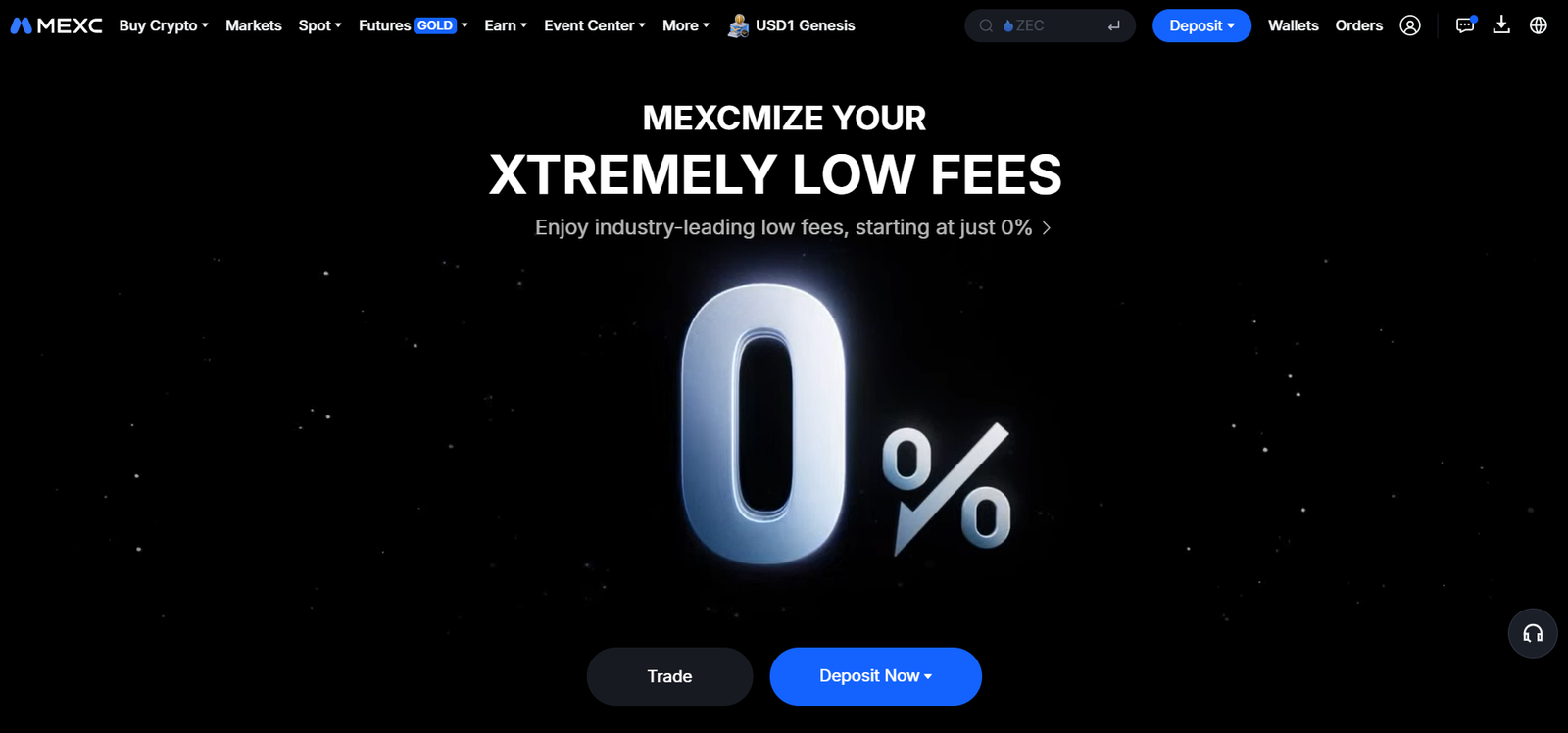
MEXC is a global crypto exchange offering more than 3,000 coins and over 1,400 futures pairs with near‑zero trading fees. You see, I’ve tested dozens of exchanges, and the amount of altcoins here is honestly kind of overwhelming.
The platform processes billions of dollars every day and has more than 40 million users across about 170 countries. It lists new tokens very quickly, offers leverage up to 500x on certain perpetual futures, and runs its own DEX+ aggregator for decentralized tokens.
| Year founded | 2018 |
| Headquarters | Victoria, Seychelles |
| Users (2026) | 40 million+ |
| Supported coins | 3,000+ |
| Futures contracts | 1,400+ |
| Spot trading fees | 0% maker, 0.05% taker |
| Futures trading fees | 0% maker, 0.02% taker |
| Maximum leverage | up to 500x |
| Native token | MX |
| Regions served | ~170 countries |
| Restricted regions | USA, Canada, Mainland China, Singapore, Hong Kong, North Korea, Iran, and more |
MEXC Review: My Honest Pros and Cons
MEXC Supported/Restricted Countries and Regions
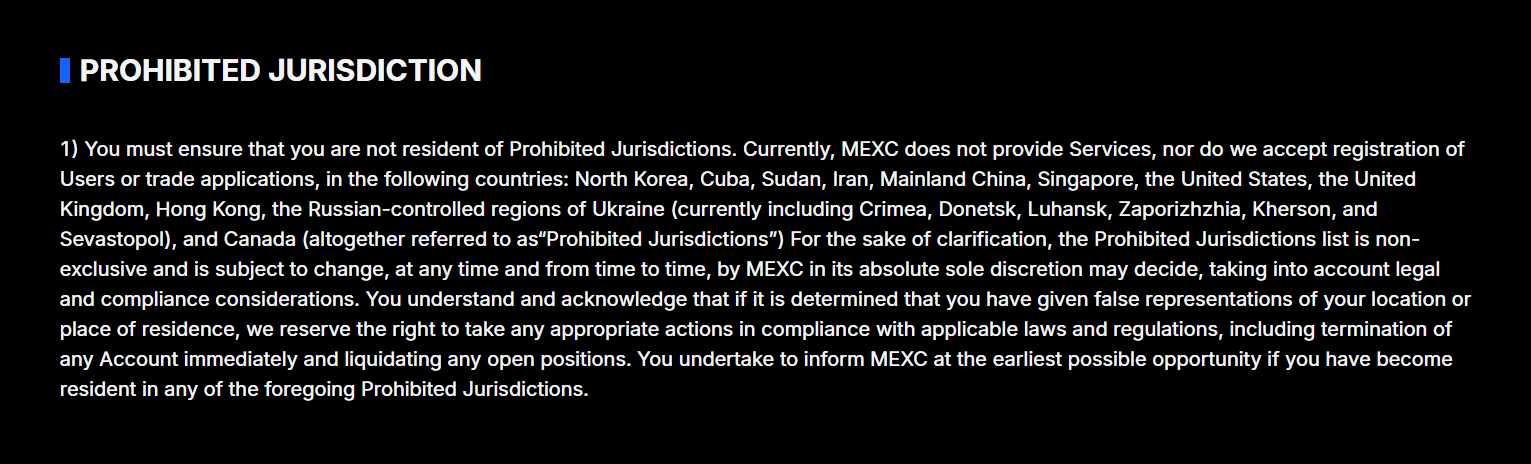
The MEXC exchange operates in over 170 jurisdictions, but it excludes several major countries due to local laws. You can access the site from most of Asia, Europe, and South America without any problems.
Basically, if you live in North Korea, Cuba, Sudan, Syria, or Iran, you are totally blocked from the platform. Recently, they also had to stop serving users in the United Kingdom and parts of Europe because of new local laws regarding crypto promotions. However, during my MEXC review, I found that people still use it due to its no-KYC trading nature by using VPNs.
| North America | United States: total prohibition (people use through VPNs); Canada: total prohibition |
| East & South Asia | Mainland China (total), Hong Kong (total), North Korea (total), Singapore (total), Japan: app unavailable on iOS/Android, South Korea: no app, India: web access only (redirect to mexc.co) |
| Southeast Asia | Indonesia (no Android app, redirect), Malaysia (redirect to mexc.fm), Philippines (redirect to mexc.co) |
| Middle East & Africa | Iran (total), Sudan (total), Nigeria: redirects to alternate domain |
| Europe & Eurasia | United Kingdom: no app, restricted services; Russian‑controlled regions of Ukraine (Crimea, Donetsk, Luhansk, Sevastopol) are fully banned |
| Americas & Caribbean | Cuba (total) |
Is MEXC Available in the US?
No, MEXC is officially not available for residents of the United States. It blocks all US IP addresses, and it does not allow you to select “United States” when you try to sign up for an account. Well, some people try to use a VPN to get around this, but I really do not recommend doing that at all.
The reason they are banned is because the SEC and other US regulators have very strict rules, and MEXC does not want to follow those rules right now. They prefer to stay unregulated in the US so they can offer high leverage and fast altcoin listings.
I guess it is a trade-off they made to keep their fees low for the rest of the world. So, I would say, you should look for more regulated local crypto exchanges like Kraken or Coinbase if you are living in America.
Who is MEXC Best Suited For??
MEXC fits you best when you want many altcoins, fast listings, anonymous trading, low fees, and advanced trading tools, and you can accept the downsides of weaker local protections.
I usually describe it like this, and I guess you will know where you belong.
So, you are a strong fit if:
- You mainly trade spot or futures, and you want access to many small and mid-cap coins that big “strict” exchanges do not list quickly. MEXC is almost always among the first to list new tokens, including meme coins, GameFi projects, and AI‑related coins. You can even vote on new listings through the Kickstarter program.
- You like advanced tools like OCO, trailing stop, and copy trading, and you already understand basic risk management. The exchange offers many order types, a professional‑grade charting interface with TradingView integration, and risk‑management features like hedge mode and adjustable margin modes.
- You care a lot about trading fees. The zero maker fees and very low taker fees mean you can scalp or swing trade without worrying about high costs.
You are a weak fit if:
- You live in a prohibited country (like the US, UK, or Canada).
- You need strong “local regulator support” and the ability to complain to a local authority that can actually act. Well, you will not get that in many places where regulators have openly said they did not authorize MEXC.
- You plan to park long-term savings there. Generally, I do not agree with doing that on any exchange, but it feels extra risky on a platform like MEXC that gets so many “account frozen” complaints.
Read more: best no-KYC crypto exchanges
MEXC Background and Reputation
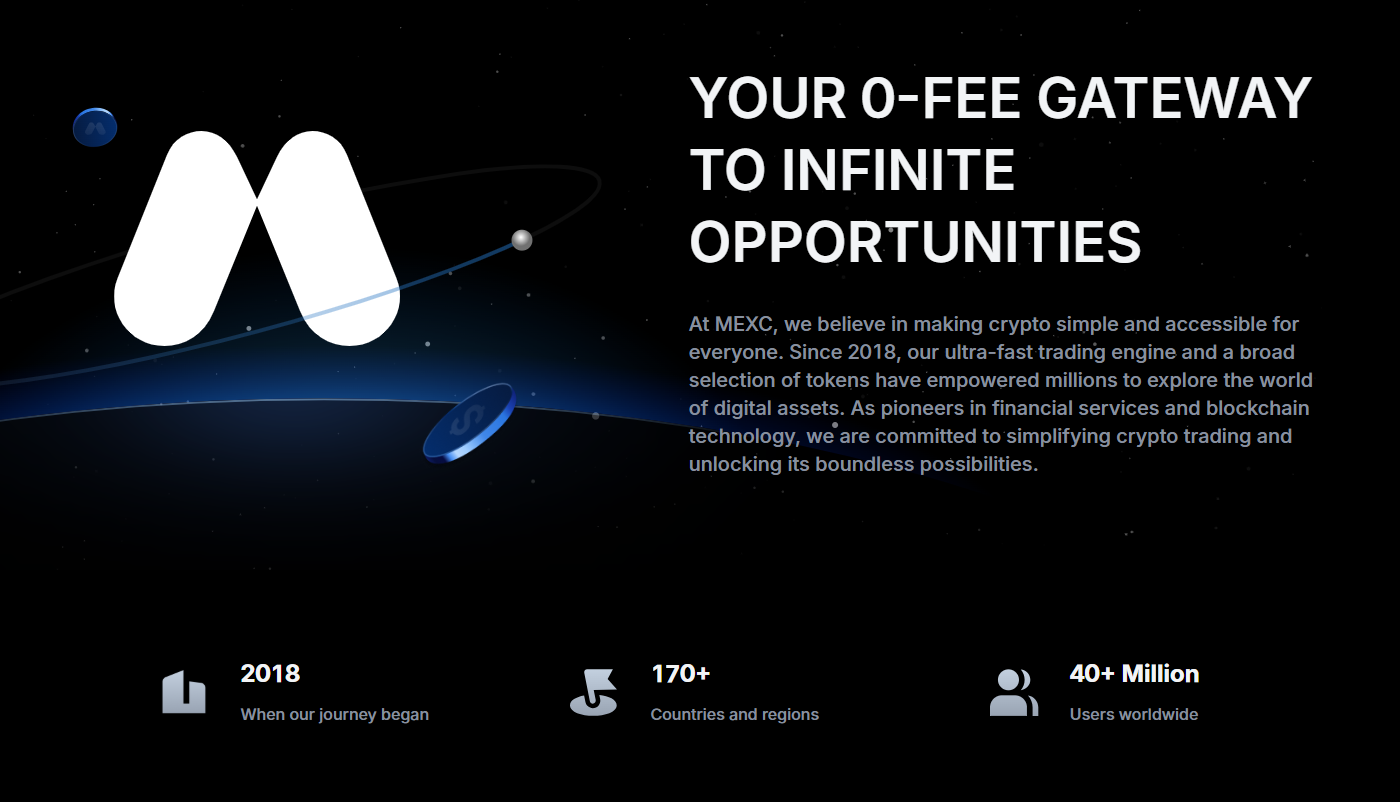
MEXC has a strong “growth and listings” reputation, but it also has a public reputation gap because multiple regulators have issued warnings about it. Generally, MEXC markets itself as an exchange that started in 2018 and focuses on speed, access, and low fees. I see that message repeated on its official about page and also across major app store listings.
But again, at the same time, I also see a pattern: several government or semi-government regulators have publicly stated that MEXC was not licensed or not authorized in their jurisdiction. Well, that fact does not automatically mean “scam,” but it does mean you should not expect local protections.
Company Overview
The company behind MEXC operates through multiple entities but is believed to be (not 100% sure) headquartered in Seychelles and controlled by a private group of founders. Also, in early marketing materials, the exchange identified itself as MXC Group.
It has subsidiaries in Singapore, Estonia, and Lithuania that handle payment processing and local operations. But again, the corporate structure isn’t as transparent as those of exchanges like Coinbase or Kraken.
Today, Vugar Usi Zade serves as CEO, and Ryder Junji is widely acknowledged as the founder (again, not 100% sure). The team consists of veteran finance and blockchain professionals, but their names are not publicized as openly as those of other exchanges’ leadership.
Regulation & Licensing
MEXC is not a licensed exchange in major “strict” markets, and even multiple regulators have publicly warned that MEXC was not authorized in their areas.
You can see the pattern clearly:
- Financial Conduct Authority posted a warning that “MEXC Global Ltd” was not authorized or registered by the FCA.
- Securities and Futures Commission placed MEXC on its alert list as a “suspicious virtual asset trading platform,” saying it was not licensed and had been targeting Hong Kong investors.
- BaFin warned consumers about MEXC and the services it was offering, tied to authorization issues.
- British Columbia Securities Commission added MEXC to its Investment Caution List and urged residents to use caution.
- The Ontario Securities Commission also published an investor warning page about MEXC.
- Australian Securities and Investments Commission (via its MoneySmart alert list) warned consumers about “MEXC Global” and said it was unlicensed in Australia.
Right, you can still choose to use MEXC in locations where it is allowed. Yet you should do it with a clear mind: stronger regulation usually means more customer protection, more forced standards, and an easier path for disputes. You see, we both know crypto is already risky, so extra uncertainty is a bit much for some people.
MEXC Reviews and Ratings (Reddit and TrustPilot)
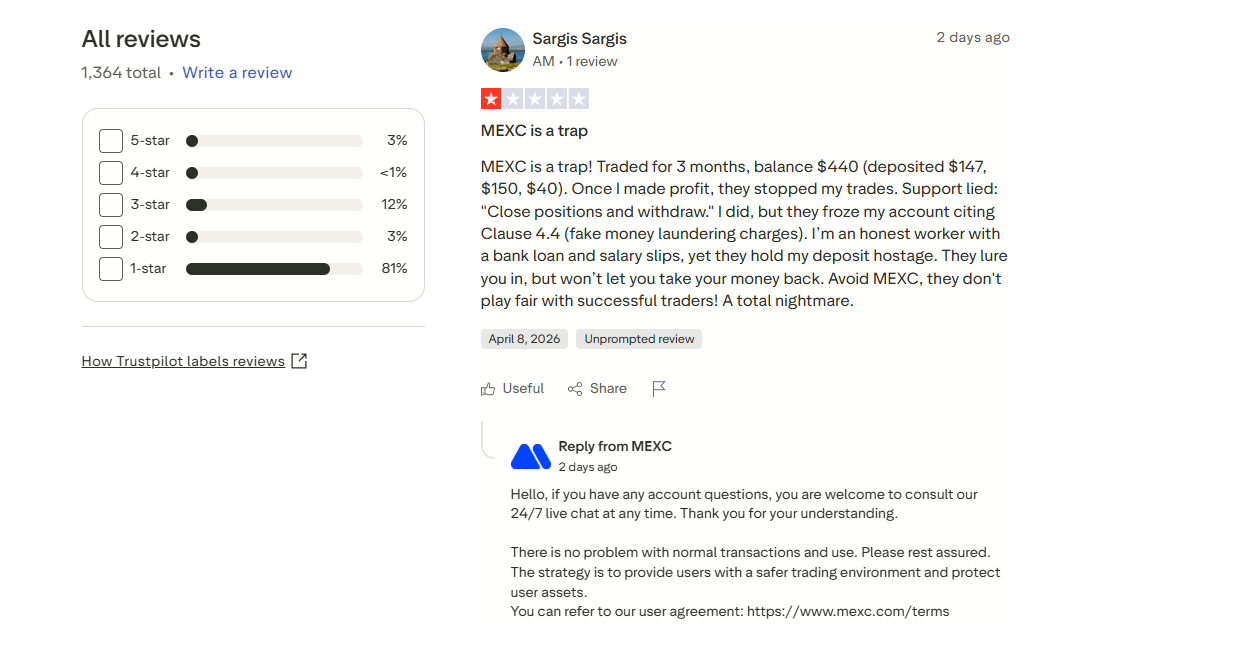
The MEXC exchange gets a very mixed public review profile. It has a high volume of complaints about frozen accounts and withdrawal issues, even while app stores show strong star ratings.
- Trustpilot shows a special warning label for MEXC that says the company’s rating is unavailable due to a breach of guidelines. That is unusual, and it matters. Trustpilot also shows a heavy tilt toward 1-star reviews (81% on the pages I checked), and a lot of the written complaints focus on withdrawals, account freezes, and “risk review” delays.
- Reddit threads often repeat similar themes: users claim sudden account restrictions, confusion, and long support back-and-forth. You must treat social posts as “one side,” but the repeated pattern is still worth noticing.
Now, let me balance that “bad vibe” a little, because the story is not one-sided. App stores show strong star ratings and large download numbers, and that means a lot of people use the app and are happy enough to keep it installed.
So, I see it like this: everyday trading can feel fine for many users, but the moment an automated system flags your account, the experience can flip fast.
I personally haven’t experienced account freezes, but I noticed that the platform’s risk systems can be aggressive. I recommend withdrawing profits regularly and not leaving large sums on any single exchange.
How to Get Started on MEXC?
You can start quickly with an email or phone sign-up, but you should set up security first and treat KYC as a “feature unlock” step, not just paperwork.
Step 1: Create an Account
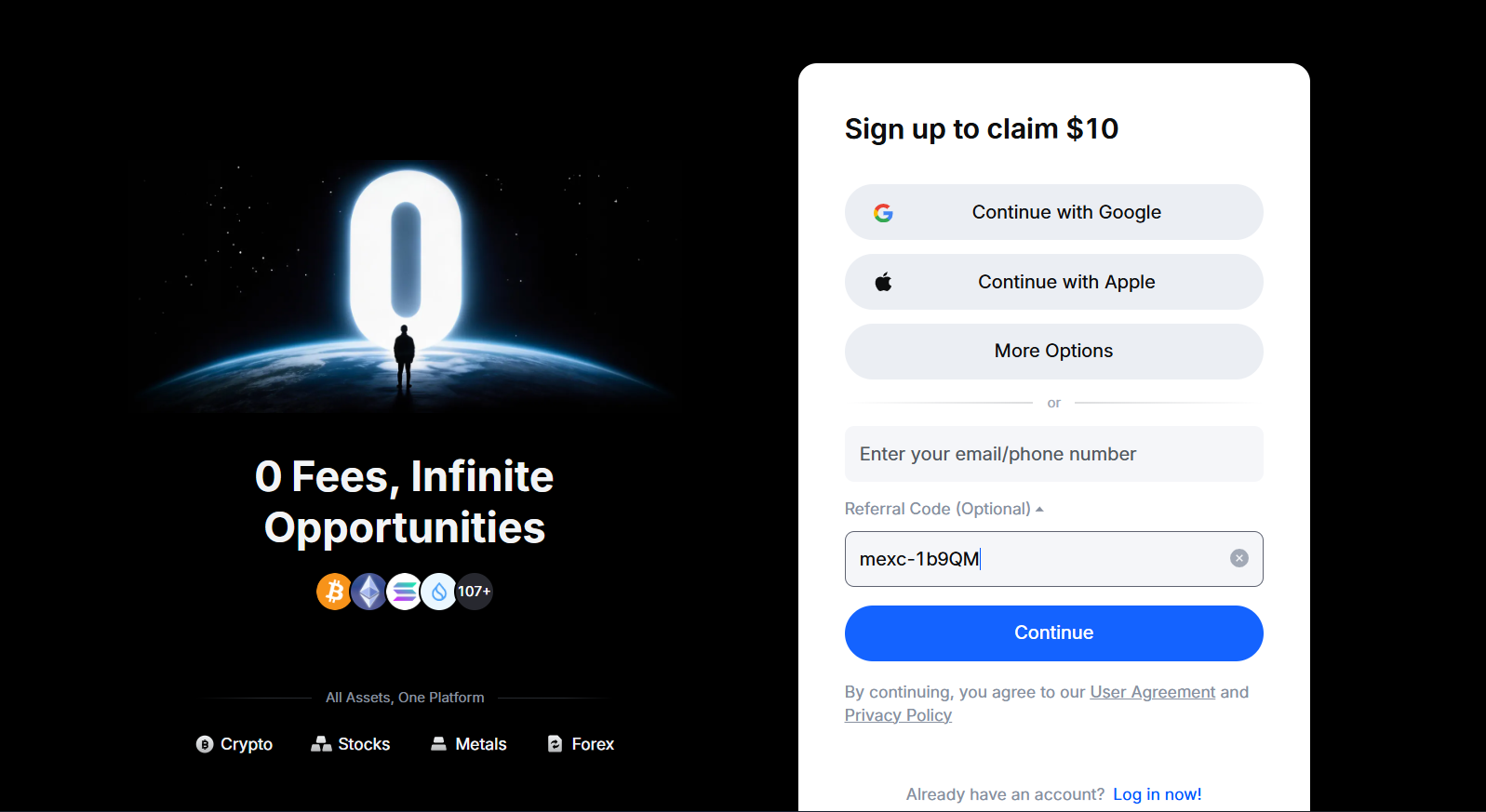
You can create your account using email or phone, and MEXC also supports sign-up options like Google login on the web page. Here, you need to make sure you set a unique password that isn’t used on any other service.
Now, after you submit your information, MEXC will send you a verification code, so you can enter the code to activate your account. Now, during registration, you can also use the MEXC referral code to grab some free sign-up bonuses and fee rebates.
Step 2: Set Up 2FA and Security Measures
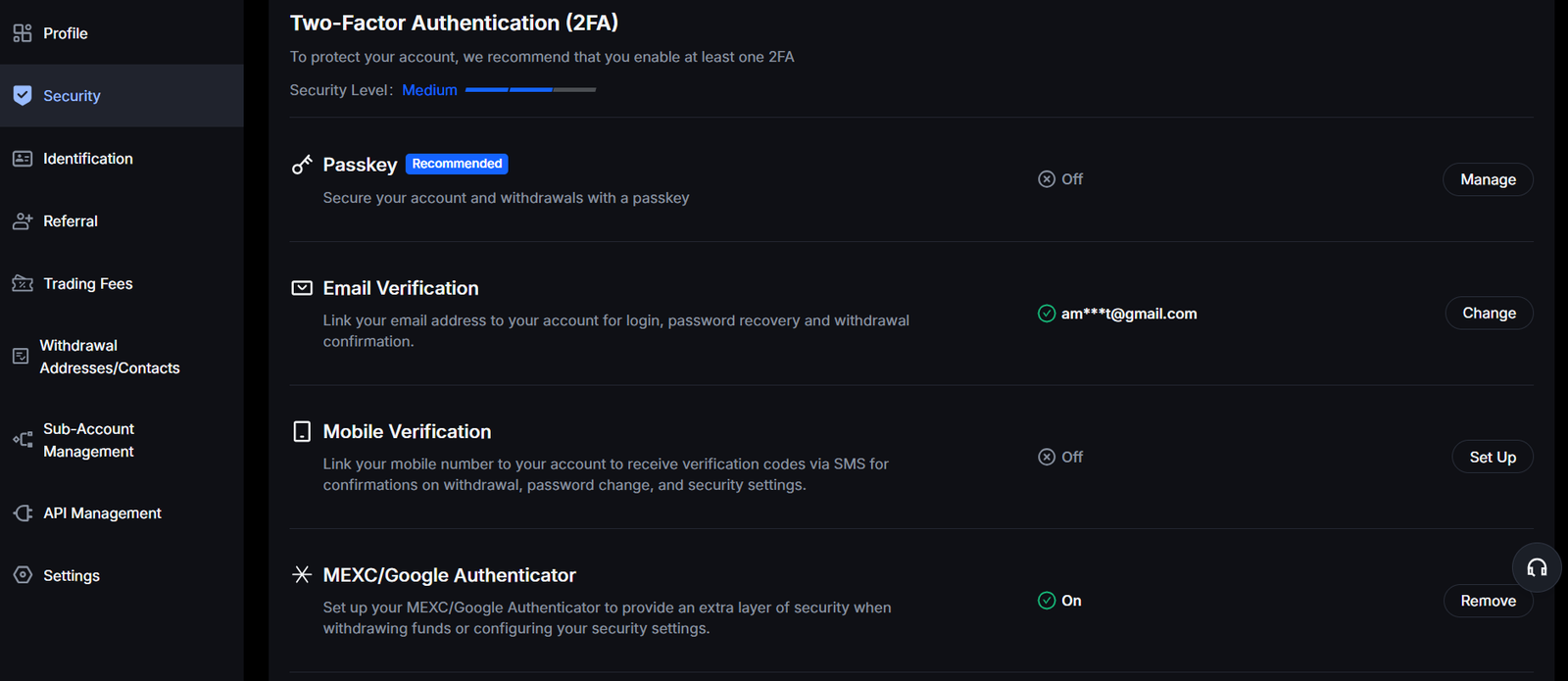
You should enable 2FA before you deposit, because it blocks a lot of common account takeovers. MEXC gives you multiple security tools:
- A Google Authenticator
- A passkey system exists, too. This can use biometrics (fingerprint/face) for authentication and can reduce repeated 2FA code entry for withdrawals.
- An anti-phishing code tool lets you set a 1–6 character code so official emails include your code.
Step 3: Complete KYC Verification (Optional)
As I discussed earlier, you can open an account and start basic trading without full KYC, but you will unlock higher limits and more features with KYC.
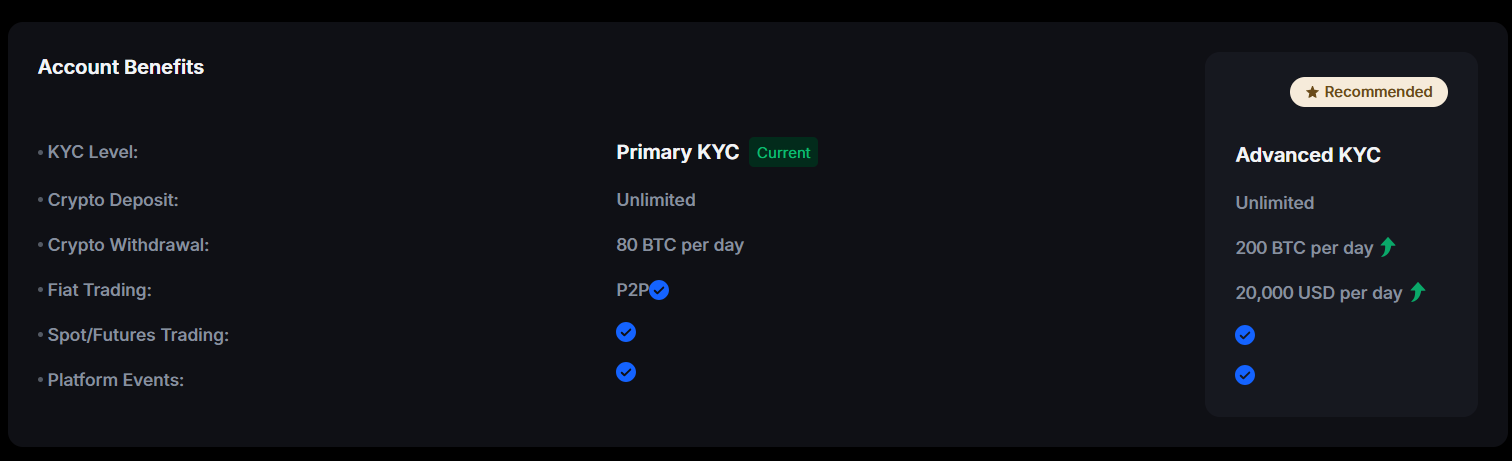
MEXC has a tiered KYC system:
- Trading without ID verification gives you a 10 BTC per day withdrawal limit.
- Primary KYC uses government ID and raises the daily withdrawal limit to 80 BTC equivalent.
- Advanced KYC adds facial verification and raises the limit to 200 BTC equivalent.
So, KYC is “optional” in the sense that you can start, but it is not optional in the sense that you can ignore it forever and still expect full access.
Step 4: Deposit Funds
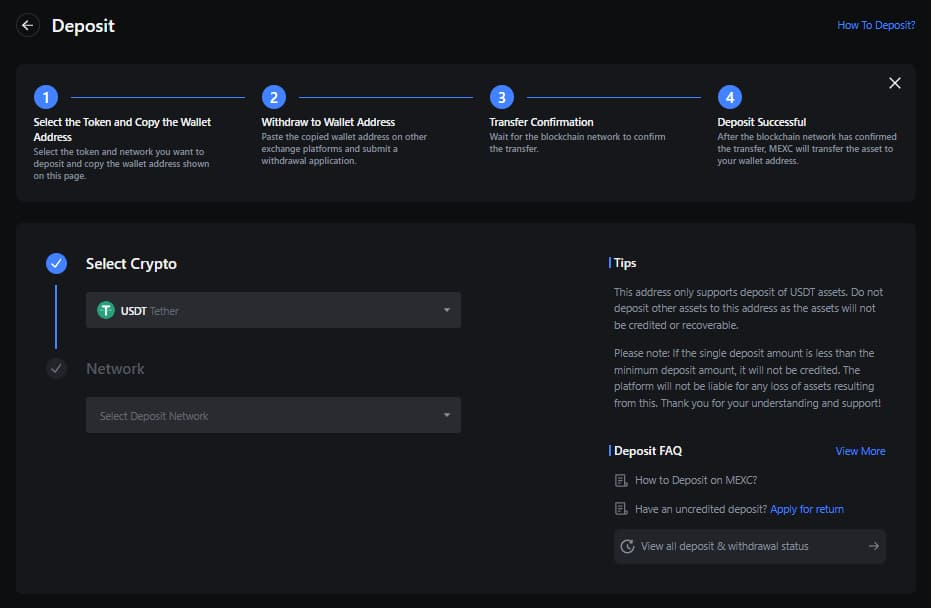
You can fund your account with crypto deposits or even with fiat methods that depend on your country and KYC level.
Generally, crypto deposits are the simplest “just send it” path. But it must match the network correctly, or you can lose funds. To deposit crypto, go to “Wallet”, then “Deposit”, and finally choose your cryptocurrency and network.
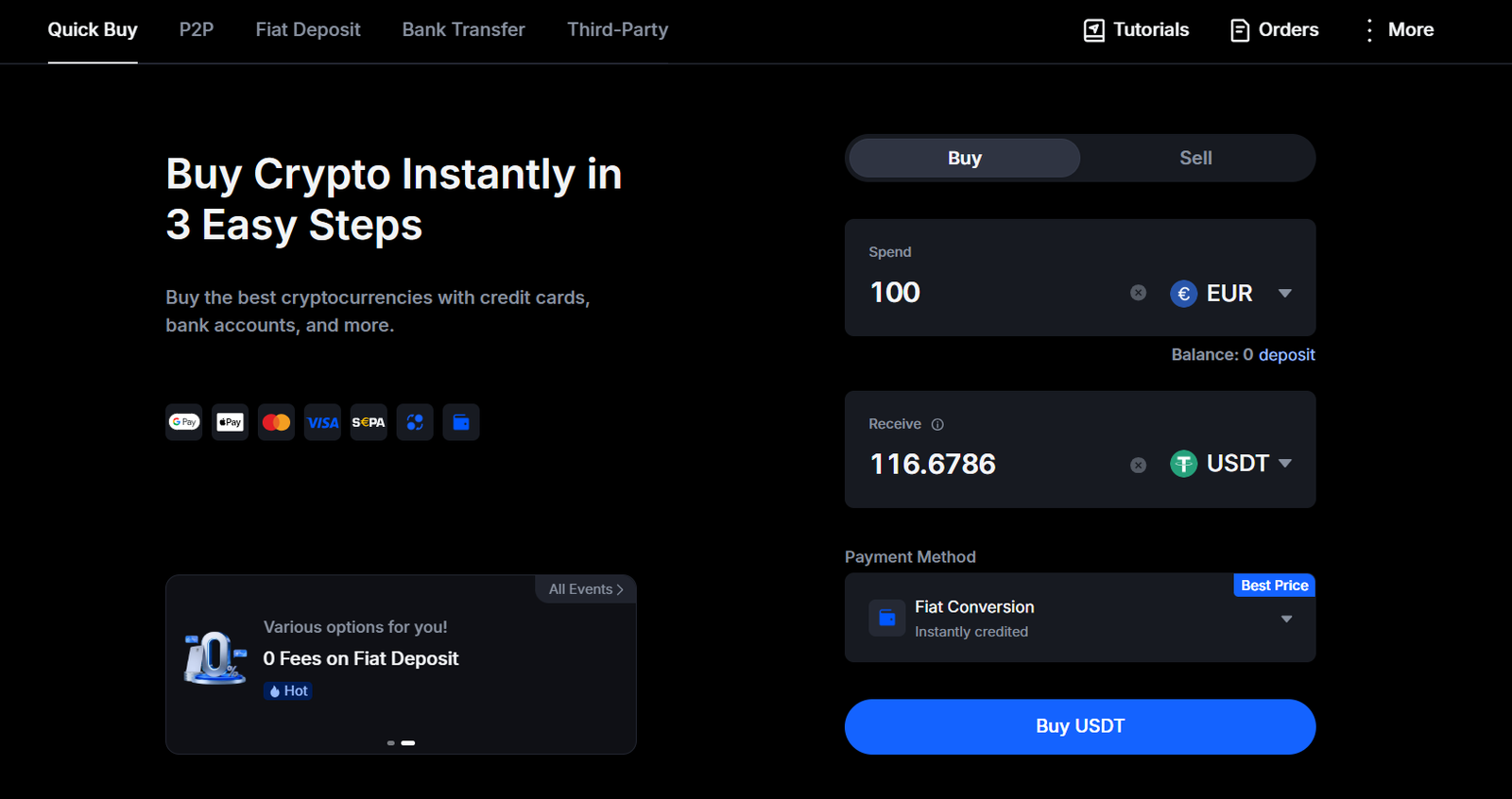
Plus, fiat options exist too. It supports 50+ fiat currencies for buying crypto and mentions multiple deposit rails depending on region. You need to go to the “Buy Crypto” section to deposit fiat.
Note: MEXC also accepts cards from Visa and Mastercard across 38 supported countries and lists a 2% processing fee, and Advanced KYC is mandatory for card buying (24-48 hours).
Step 5: Start Cryptocurrency Trading
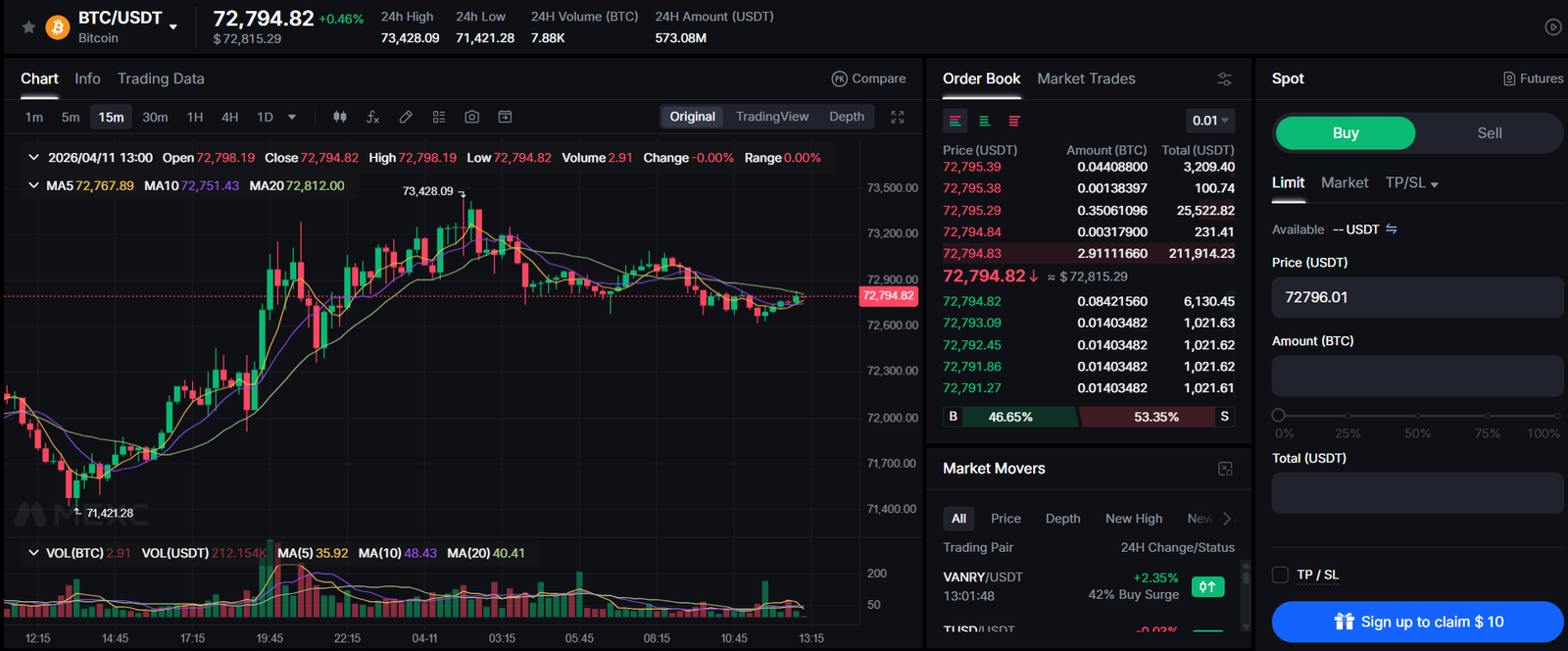
You can trade spot, futures, Convert, and other products as soon as your wallet has funds, but you should learn the order tools first so you do not “market buy” into a bad price. MEXC supports multiple spot order types, including Limit, Market, TP/SL, OCO, and Trailing Stop.
To start trading on MEXC, you need to go to: Trade > Spot/Futures > Choose a trading pair > enter amount > set leverage (if required) > adjust order types > hit buy button.
How to Delete MEXC Account?
You can delete your account from the mobile app only (not the website) after you withdraw your funds and bring total assets below 5 USDT.
You can go to the app, then Security, then “Delete Account,” and also, you cannot delete when total assets exceed 5 USDT. So, make sure to withdraw all your funds. Of course, why leave??
MEXC User Experience: Is It Beginner-Friendly (Ease of Use)??
The MEXC exchange feels beginner-usable for basic spot buys, but it can get kinda busy once you open futures, bots, and promotions.
I see two different experiences, and you might relate to one of them.
- A beginner who only wants to buy a coin and hold can use quick-buy tools and Convert. Basically, Convert is marketed as instant and “zero fees,” which is simple for new users.
- A more active trader will see a lot more menus and options: spot zones, futures, copy trading, grid bots, and DEX+. That is useful, but it can also overwhelm you on day one.
Now, there are many buttons, charts, and flashing numbers, and they can feel overwhelming for a new person. But once you spend about 30 minutes clicking around, the layout starts to make sense.
Well, the search bar works great, and the overall design is very similar to other big exchanges like Binance. I think the learning curve is a bit steep, but it pays off because you get access to so many tools.
Trading Engine and Display Responsiveness
The trading engine is actually very impressive because it can handle 1.4 million transactions per second. I have never seen the charts lag, even when the price of Bitcoin is moving thousands of dollars in a single minute.
Everything feels snappy and responsive, and this is exactly what you need when you are trying to exit a trade fast. The platform uses top-tier servers to ensure that you do not get “system busy” errors during big market crashes.
MEXC Mobile App Review
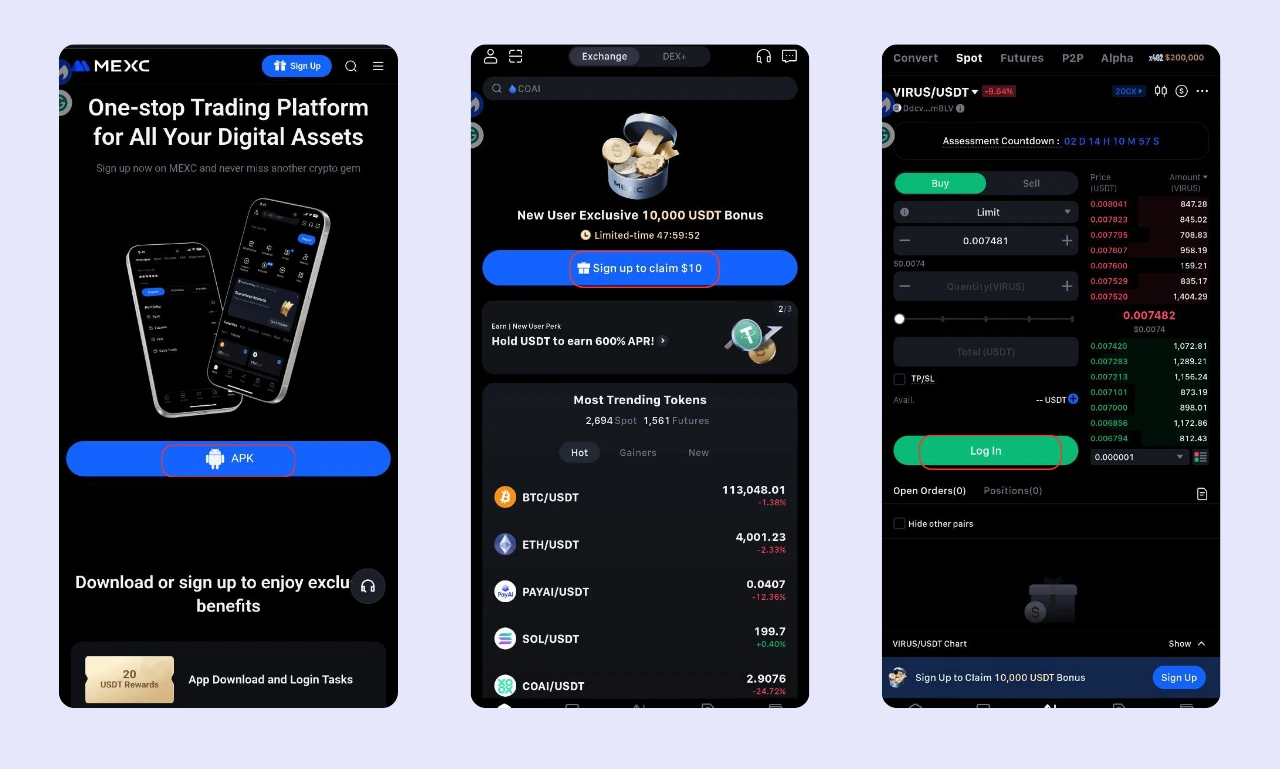
The MEXC mobile app looks popular and highly rated, but you should still read recent reviews because complaints often focus on support, pop-ups, and blocked withdrawals.
- On Google Play, the MEXC app shows 4.5 stars, 269K reviews, and 10M+ downloads.
- On App Store (US listing), the MEXC app shows 4.7 stars with 7.6K ratings.
Well, that is a strong signal that a lot of people use the app daily and feel okay with it. But yes, at the same time, I see very sharp complaints about withdrawals and risk control in public reviews too, including on the App Store review pages.
Also, in some countries (Japan, South Korea, India), the app isn’t available in the official store, so you have to download it from a direct link. Well, that can be a bit of a hassle and may raise security concerns for less technical users.
So, I see the app as “good enough to trade,” but not “good enough to trust blindly.”
MEXC Key Features & Products Reviewed
Buy and Sell Crypto
You can buy and sell crypto on MEXC through spot markets, quick-buy, and Convert, and MEXC also offers fiat rails in some regions.
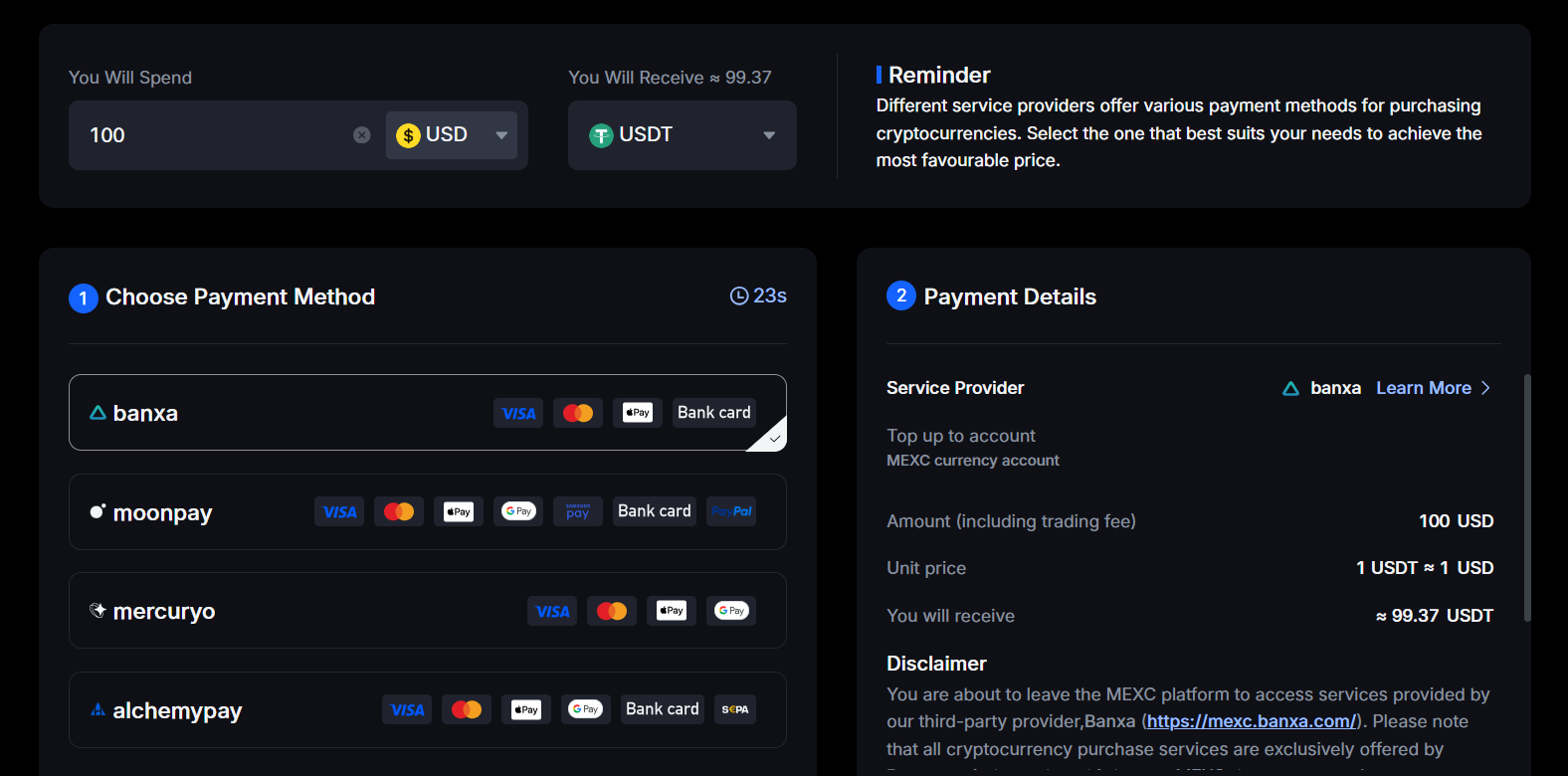
Also, you can purchase coins using a credit or debit card through partners like Simplex and MoonPay, but fees vary widely and can reach several percent.
You can also use the P2P marketplace to buy USDT, USDC, BTC, and ETH directly from other users using fiat. Here, Escrow protects both sides until payment is confirmed.
In my MEXC review, I find that for the fiat deposit/withdrawal part, the P2P option is slightly better because you can often avoid the 3-5% processing fees that third-party vendors charge.
Advanced Order Types
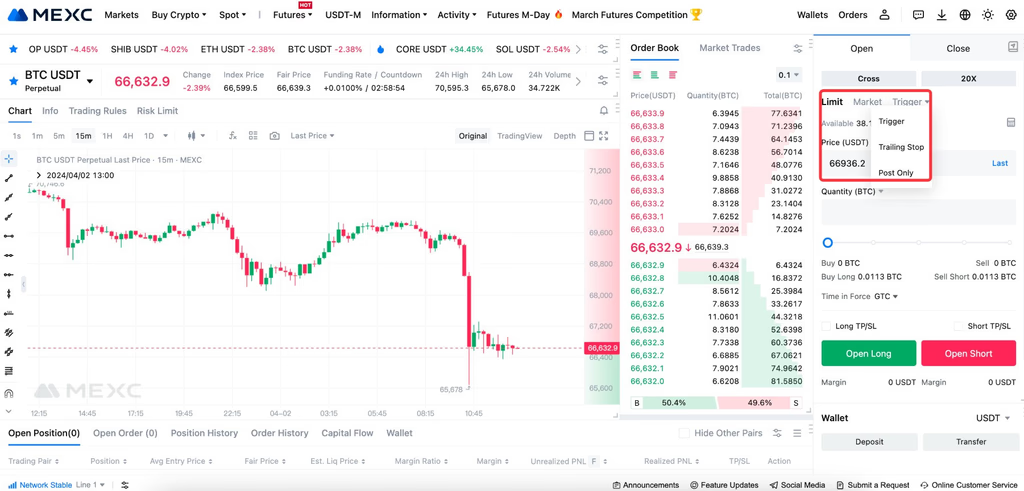
The MEXC trading terminal includes several order types that allow you to control your entry and exit points with high precision:
- Limit Order: You can easily set a specific price at which you are willing to buy or sell an asset. The trade only executes if the market price reaches your level, and this ensures you never pay more than you intended.
- Market Order: This executes your trade immediately at the current best available price in the order book. Now, because it prioritizes speed over price, you might experience a bit of slippage during thin liquidity periods.
- Trigger Order (Stop-Limit): You can specify a “trigger price” that, once reached, automatically places a limit order on the book. Generally, this is perfect for “breakout” trading, where you only want to enter if a certain resistance level is broken.
- Stop-Market Order: It triggers a market order as soon as your stop price is hit.
- Trailing Stop: Here, you can set a percentage or dollar amount that the stop-loss follows as the price moves in your favor. So, if you are long on BTC and it rises from $70,000 to $75,000, your stop moves up with it, but it stays fixed if the price starts to fall.
- Iceberg order: It hides the true size of your order by breaking it into smaller visible chunks. Basically, this is useful if you’re moving a large amount and don’t want to impact the price.
- OCO (One Cancels the Other): You place two orders, and when one executes, the other automatically cancels.
High Leverage Futures Trading
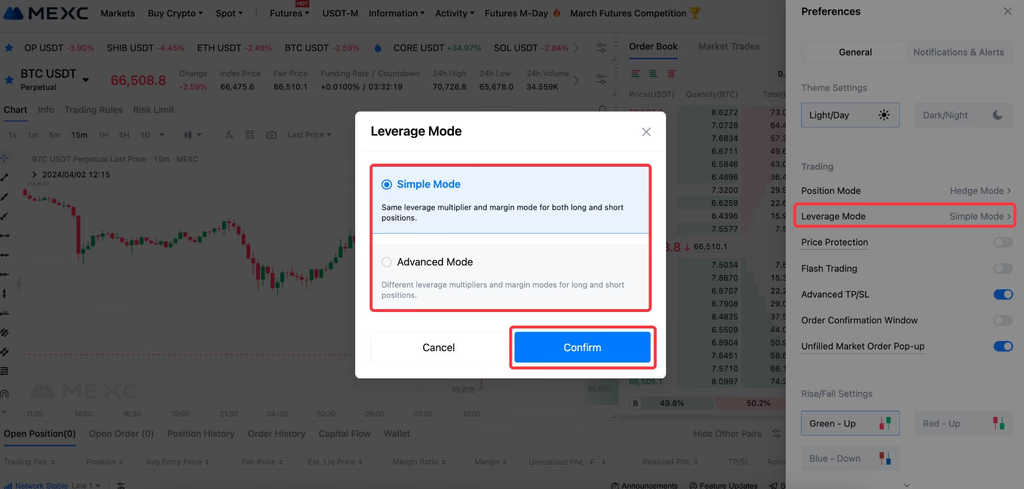
MEXC offers extremely high leverage on some futures pairs, and you should treat that power like a sharp knife. MEXC has up to 500x leverage on BTCUSDT and ETHUSDT futures, and up to 200x on some other large pairs like SOLUSDT, XRPUSDT, DOGEUSDT, and ADAUSDT.
You can also adjust max leverage on specific contracts over time (for example, cutting a contract from 75x to 50x). So, leverage is not one fixed number across everything.
You can choose between Cross Margin, where your entire balance backs your positions, and Isolated Margin, which limits your risk to a single trade. By the way, they also offer Coin-M futures, where you can use the underlying asset as collateral instead of stablecoins.
Now, I will say it straight: high leverage is where most beginners blow up. You can win fast, and you can even lose much more faster.
MEXC Earn Products: Staking and Lending
MEXC’s Earn section provides several ways to generate passive income:
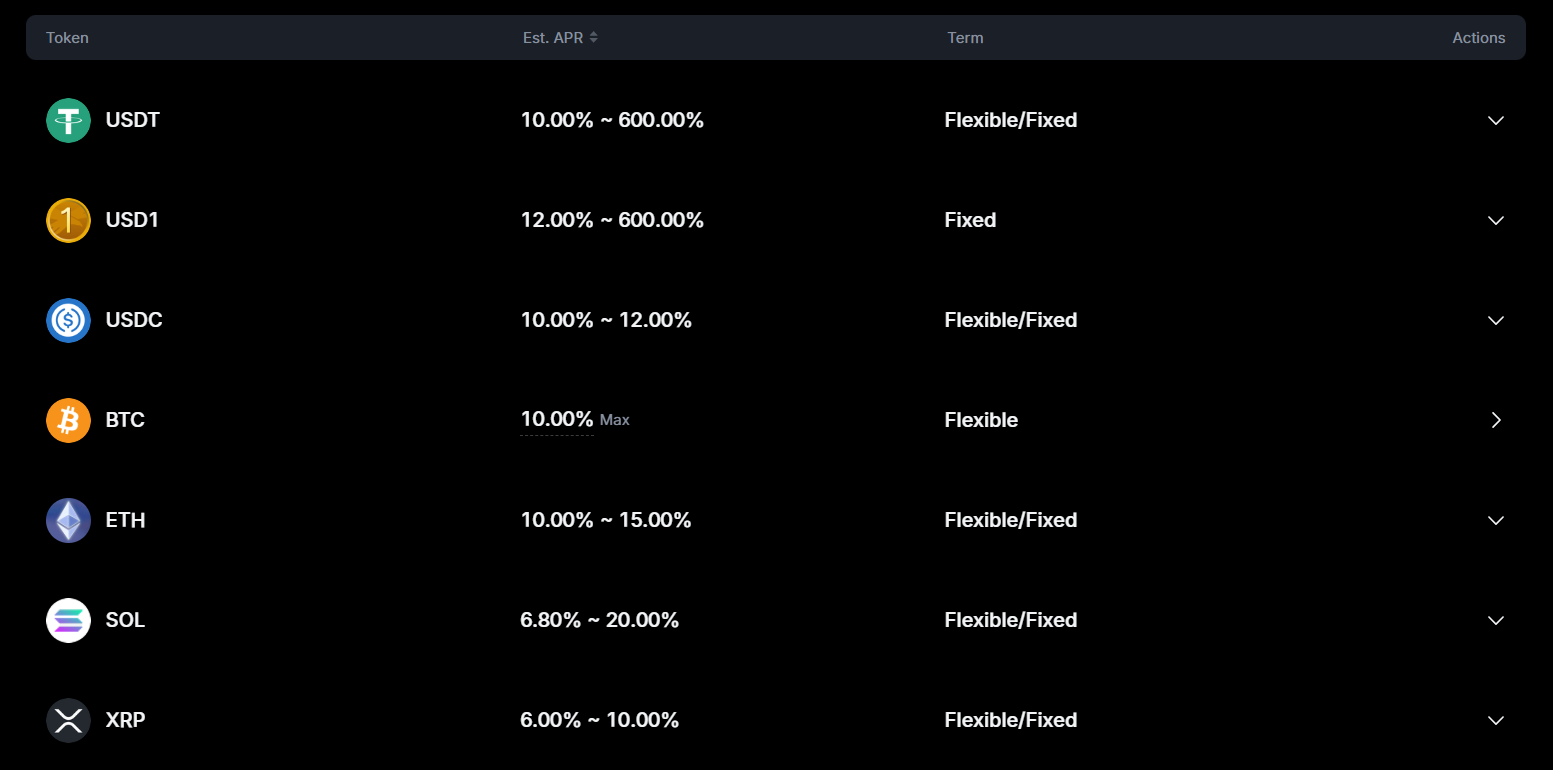
Flexible staking: You can deposit coins into a flexible savings account and earn daily interest that you can redeem anytime. You can say it is similar to a savings bank account. So, here, rates are lower (often around 1–5% APY for major coins like BTC or ETH) but convenient.
Fixed staking: This time, you can lock your tokens for a set period (14, 30, 60 days or longer) to earn higher yields. I saw rates above 20% APY on some smaller tokens and promotional products. The trade‑off is that you can’t withdraw until the term ends.
Launchpool and Kickstarter: You can hold or stake MX tokens to participate in new token launches. You have to vote with MX tokens to support projects and receive a share of the newly issued tokens.
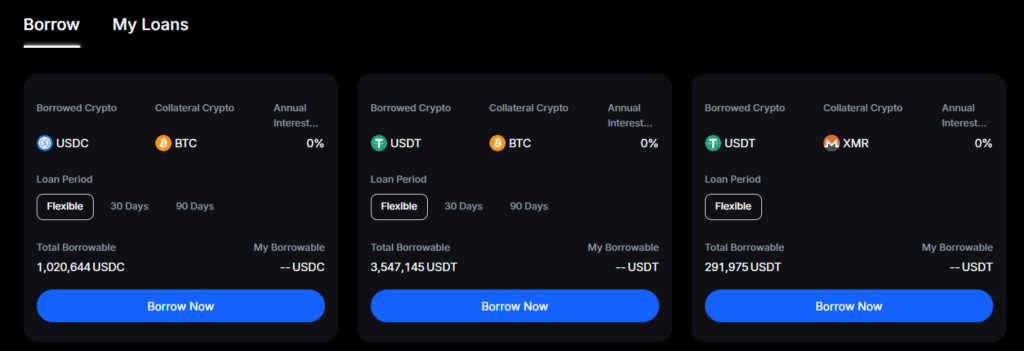
Lending: You can lend out stablecoins or other tokens for set terms. Borrowers pay interest that flows back to you. MEXC matches lenders and borrowers via the platform.
Dual investment and structured products: These are actually some complex earn products that combine options strategies with fixed yields. These usually offer high returns if the price stays within a certain range, but may require advanced knowledge.
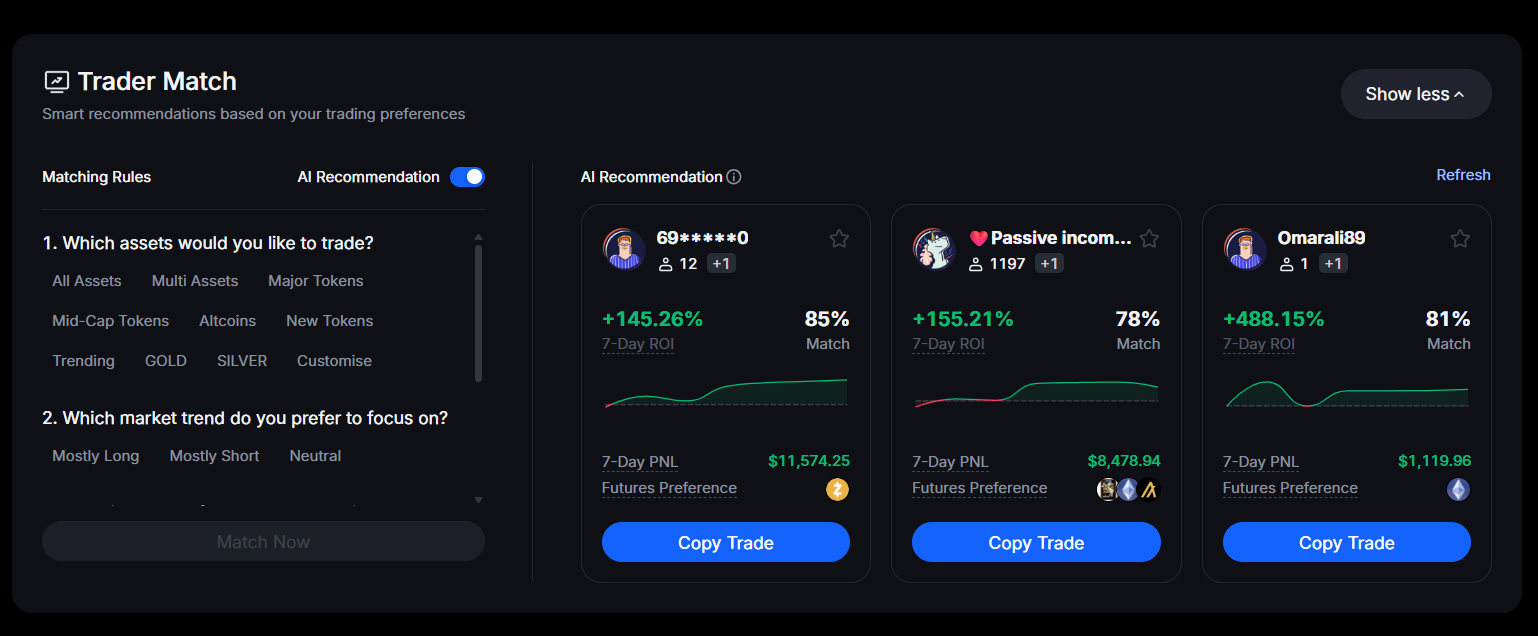
MEXC Copy Trading
MEXC Copy Trading allows you to mirror the real-time moves of “Master Traders” who have verified track records. The system currently handles over $1 billion in monthly copy trade volume. You can analyze metrics like ROI (Return on Investment), total PnL, and maximum drawdown before committing your funds.
- Smart Ratio: This mode automatically adjusts your trade size based on your account balance relative to the master trader. So, if they have $10,000 and you have $1,000, your position will be exactly 10% of theirs to maintain the same risk profile.
- Fixed Amount: You can even set a strict dollar value for every trade the master trader opens, such as $50 per position. Now, this is best if you want to keep your exposure completely predictable, regardless of how aggressive the leader becomes.
- Risk Controls: You can also set your own Stop-Loss Ratio and Take-Profit Ratio on top of the master trader’s settings.
Grid Trading Bots
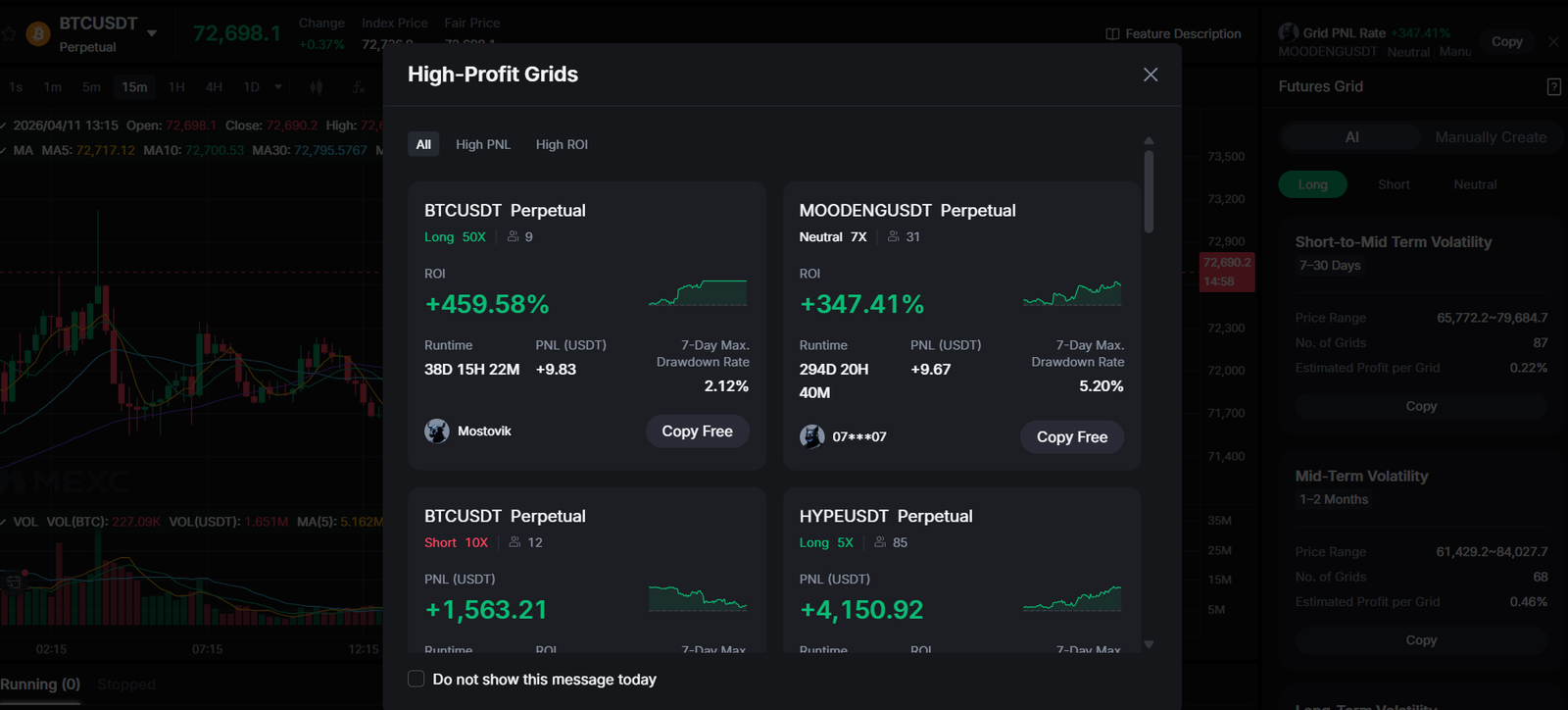
MEXC features built-in Trading Bots that automate the “buy low, sell high” strategy within a defined price range. Basically, you can launch a bot in under a minute using the AI Strategy. Now, this will analyze the last 7 or 30 days of price action to set the optimal parameters.
- Spot Grid: The bot places a ladder of buy and sell orders, and when a sell order fills, it instantly places a new buy order at the level below, and this captures small profits from sideways movement.
- Futures Grid: This allows you to apply the same logic with leverage. Well, you can choose Neutral, Long, or Short modes depending on your bias for the overall market direction.
- Infinity Grid: Here, unlike standard grids that have a top and bottom price limit, the Infinity Grid keeps your position value constant. So, as the price goes up, it sells the “profit” portion to maintain your initial investment value, and it never “runs out” of sell orders.
MEXC DEX+
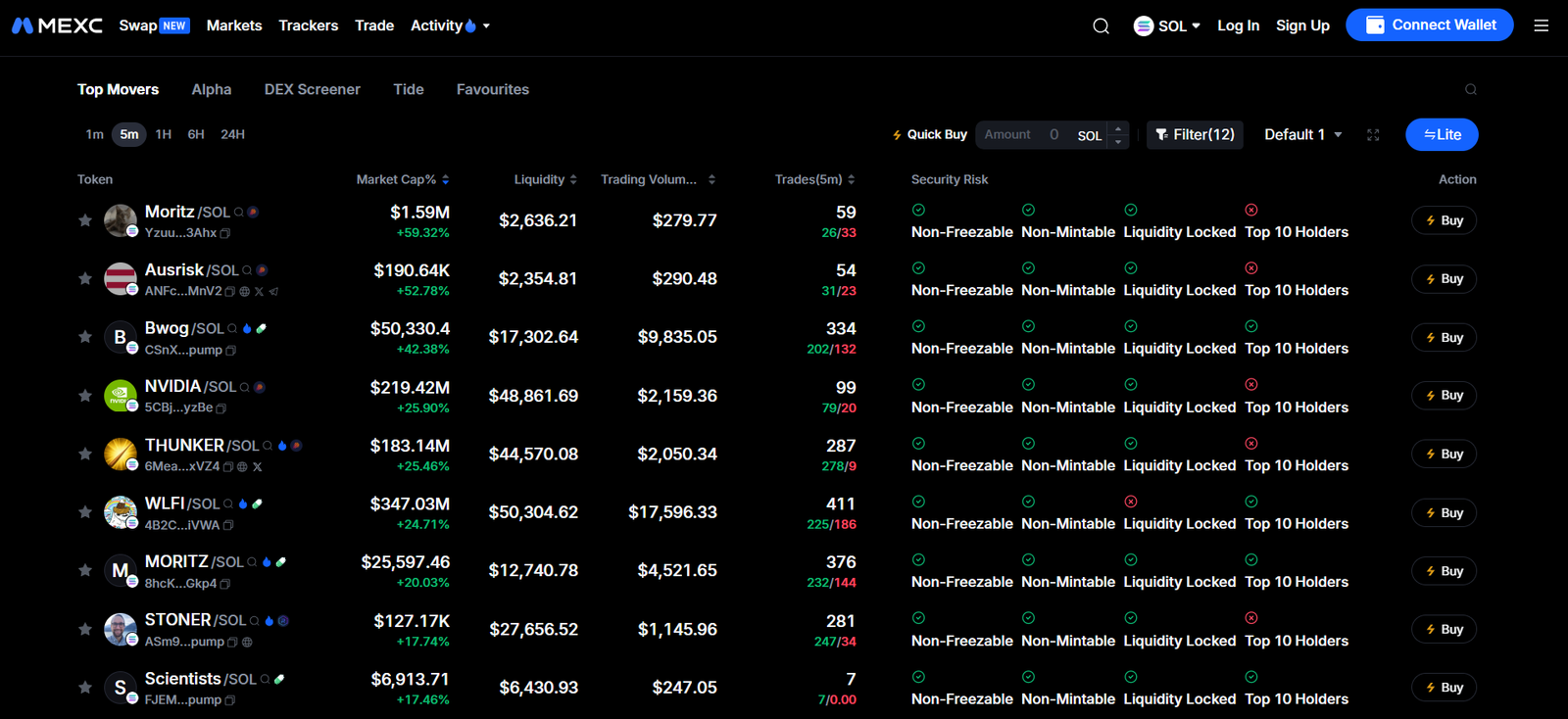
Okay, MEXC DEX+ is a DEX aggregator that integrates multiple DEXs to optimize routes and reduce slippage, and it also claims support for 10,000+ on-chain assets. It lowers the entry barrier by removing the need to manage private keys or do outside wallet transfers in the typical “DeFi manual” way.
You can swap tokens across multiple blockchains (e.g., Solana, BNB Chain) without paying traditional gas fees because the trades are settled within MEXC’s system.
Plus, I found it convenient to access on‑chain tokens and memecoins without leaving the app. DEX+ charges a flat 1% fee on swaps, which is higher than the spot market but still reasonable given the convenience.
What are the MEXC Fees?
MEXC offers some of the lowest trading fees in the industry, but other costs like withdrawals and third‑party deposits can add up. But still, its fees are way lower than those of other top crypto exchanges like Coinbase, Binance, and Kraken.
| Trading Type | Maker Fee | Taker Fee |
|---|---|---|
| Spot | 0.00% | 0.05% |
| Futures | 0.00% | 0.02% |
Trading Fees
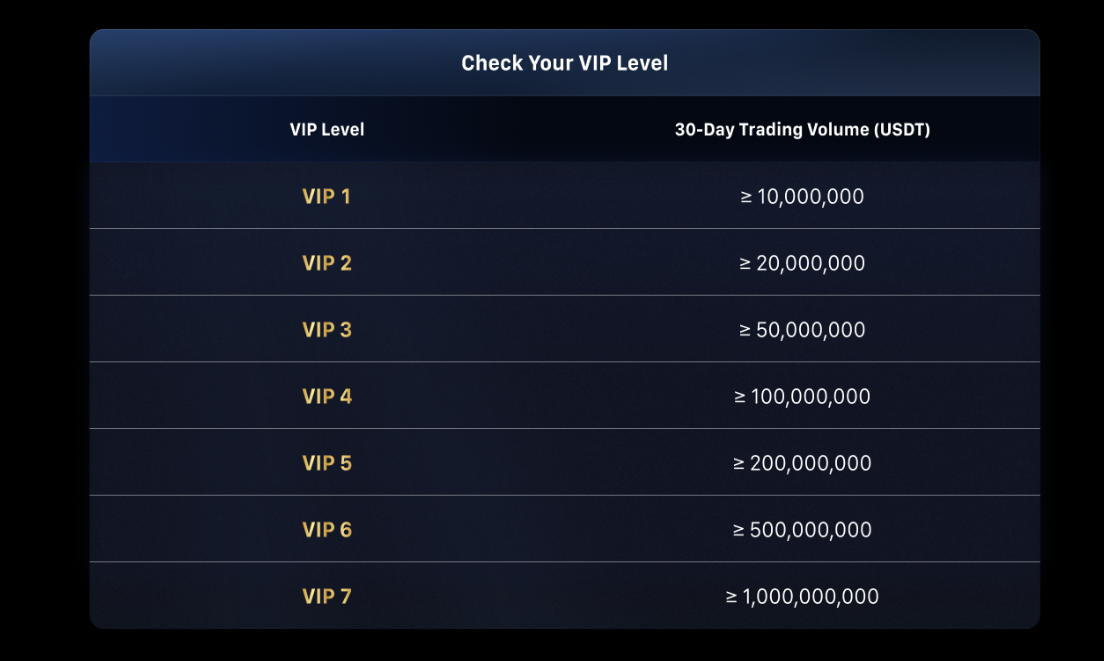
- Spot trading fees: Maker fees are 0%. Taker fees are 0.05% for most users. Then, you can reduce taker fees to 0.04% if you hold MX tokens or reach VIP 1 status, and then, at higher VIP levels (determined by 30‑day trading volume or MX holdings), drop taker fees to as low as 0.015%.
- Futures trading fees: Maker fees are 0%. Taker fees start at 0.02%. Now, by holding MX tokens or climbing the VIP ladder, you can cut taker fees to 0.01% or lower. Plus, funding rates are charged every eight hours between long and short positions, of course, not by the exchange.
- DEX+ trades: DEX+ charges a flat 1% fee per swap. Because it aggregates liquidity from multiple decentralized pools, this fee covers network costs and service.
Deposit and Withdrawal Fees
Deposits are always free on MEXC. Now, fiat deposit fees depend on the payment method, and it can be between 2-7%.
Next, MEXC uses network-based withdrawal fees that can change with blockchain congestion, and withdrawal limits depend on your KYC level.

There are also withdrawal limits on MEXC:
- You get 10 BTC equivalent per day with no verification.
- You get 80 BTC equivalent per day with Primary KYC.
- You get 200 BTC equivalent per day with Advanced KYC.
- You can reach higher levels (like 400 BTC daily) with institutional processes
Payment Methods
To fund your MEXC account or cash out, you can use:
- Credit/debit cards through Simplex, MoonPay, and Banxa. It supports major fiat currencies like USD, EUR, GBP, BRL, and INR. But here, fees are often high, so you can consider this a last resort.
- Bank transfers via third‑party services. Generally, in some regions you can use SEPA (Europe) or local bank transfers; in others, transfers aren’t supported.
- Peer‑to‑Peer (P2P) marketplace supporting Vietnamese Dong (VND), Russian Ruble (RUB), and South Korean Won (KRW).
- Cryptocurrency deposits from other wallets or exchanges. This is usually the cheapest way to fund your account.
Is MEXC Exchange Safe to Use? Security Measures Reviewed
Good part, MEXC has not suffered a major hack and implements standard security practices, but the worst part, the platform still operates in an offshore jurisdiction. Well, here are the top security measures I found and tested during my recent MEXC exchange review:
- Cold and hot wallet separation: MEXC keeps more than 95% of user assets in cold storage, and only a small percentage stays in hot wallets for daily liquidity.
- Two‑factor authentication (2FA): It is mandatory for logins, withdrawals, and account changes. You can choose between SMS and authenticator apps.
- Anti‑phishing codes: You can set a unique phrase that appears in official MEXC emails to help you detect phishing attempts.
- Withdrawal allowlist and IP restrictions: You can add specific addresses and restrict logins to specific IP addresses or regions. Well, these features prevent unauthorized withdrawals even if someone obtains your credentials.
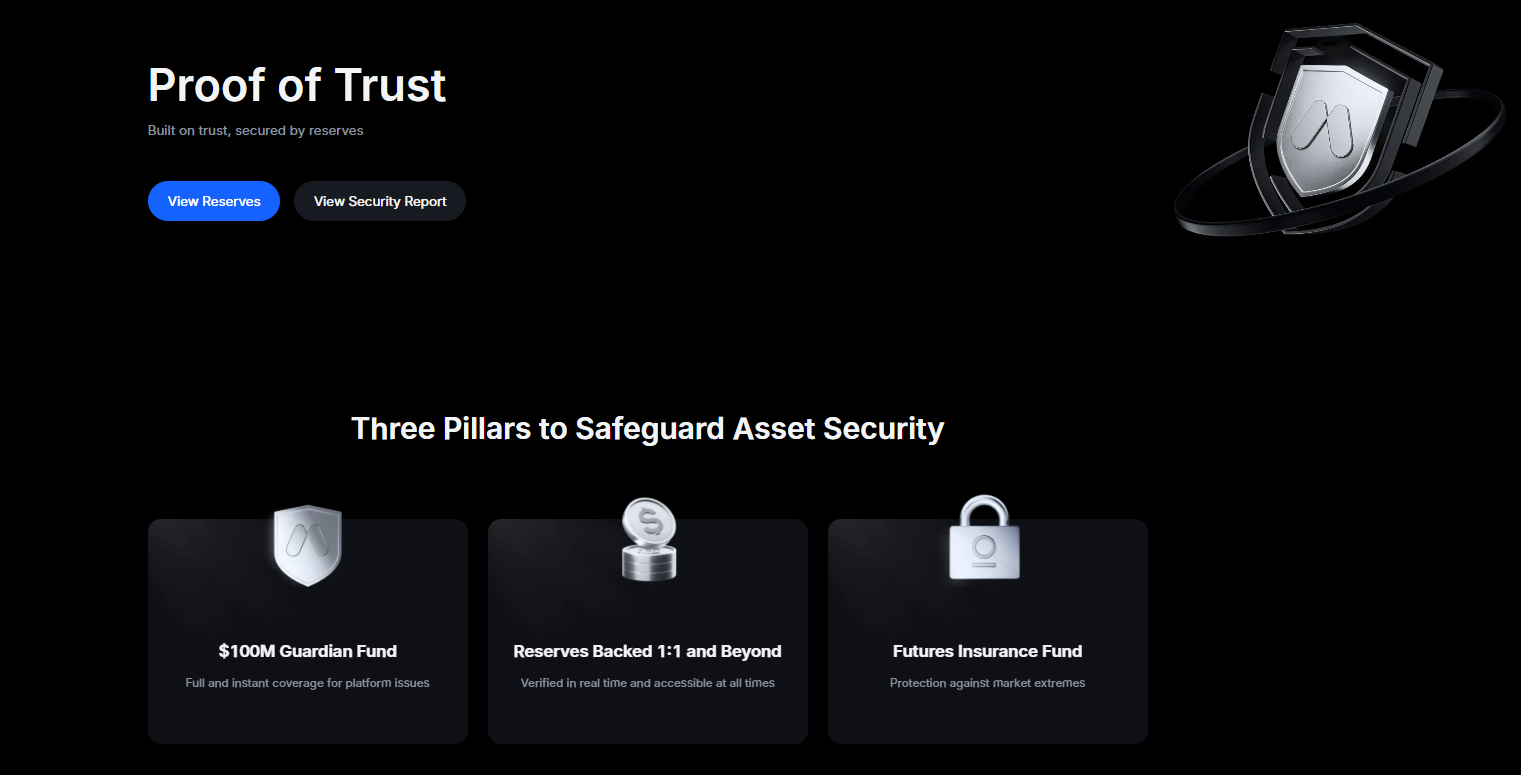
- Proof‑of‑reserves: MEXC publishes bi‑monthly snapshots showing more than 100% asset coverage. Third‑party auditors (Hacken) verify the reserves on the chain.
- Guardian Fund: A $100 million fund reserved to reimburse users in case of platform breaches or technical failures. It’s similar to the SAFU fund on Binance, although the decision to deploy it remains at MEXC’s discretion.
- Third‑party audits: The exchange partners with cybersecurity firms like Hacken and CertiK for penetration testing and risk assessments. It also works with compliance companies such as Elliptic, Sumsub, and LSEG for anti‑money laundering monitoring.
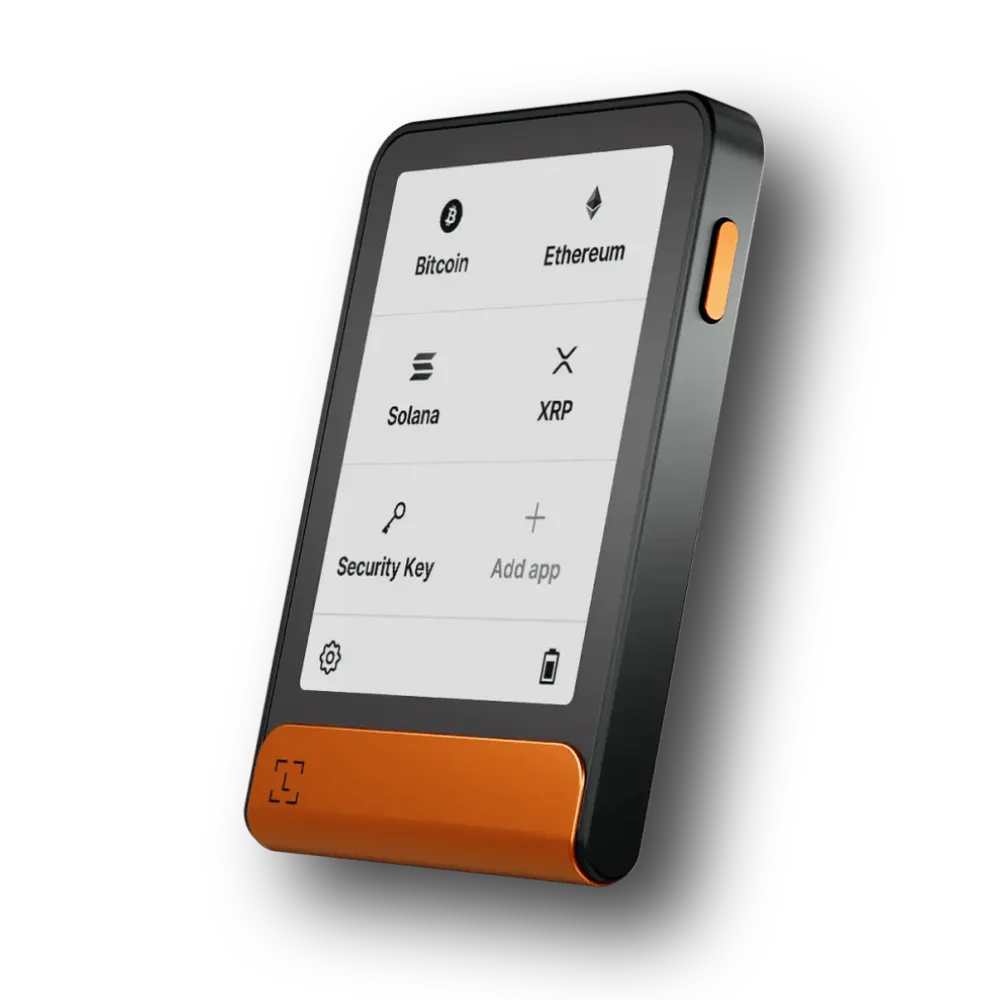
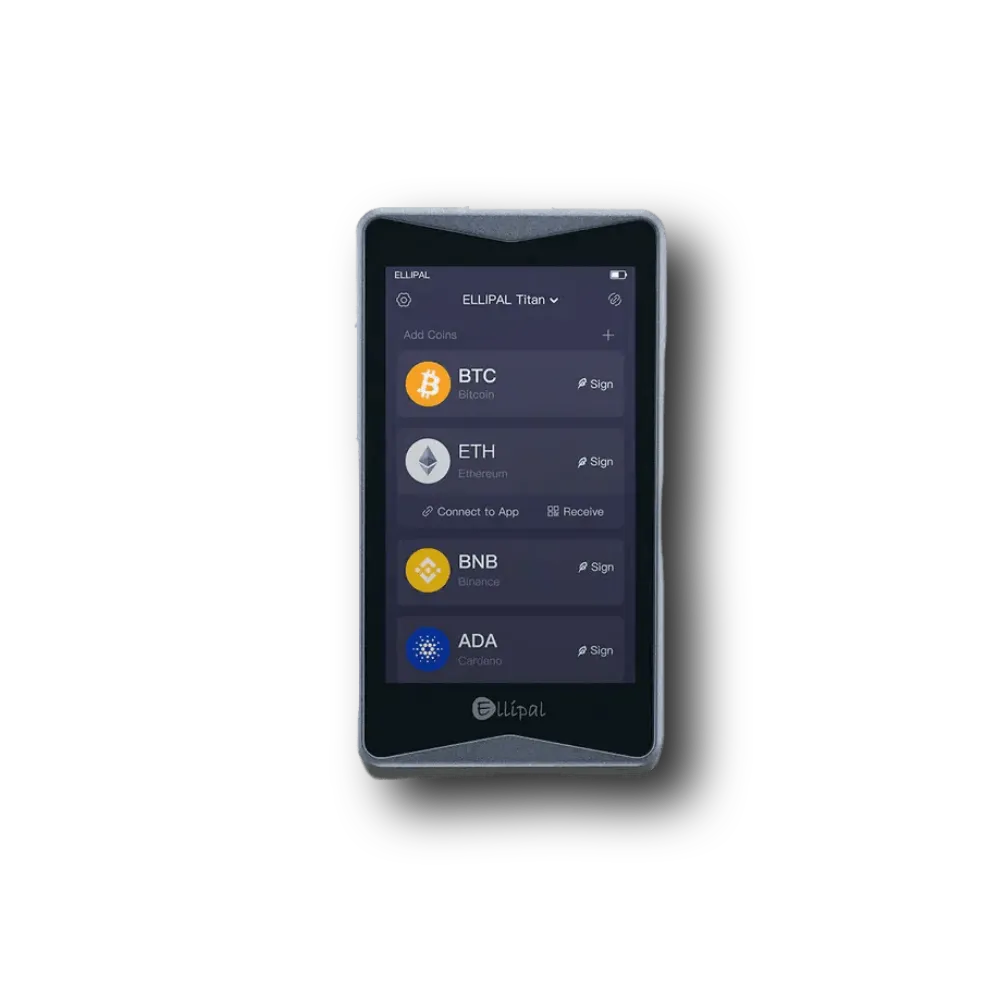
Now, I recommend you to store your long-term holdings or crypto assets in cold storage crypto wallets only…
MEXC History and Hacks
MEXC has not had a widely confirmed “major exchange hot-wallet wipeout” story become the main headline recently, but users and researchers still report threats like API-key theft campaigns and account access issues.
You see, one major real-world risk I want you to highlight is phishing and malware around API keys. The Hacker News reported in January 2026 about a malicious Chrome extension that stole MEXC API keys, enabled withdrawals, and sent credentials to attackers.
A similar write-up from SC World also described malicious extensions targeting MEXC API keys.
So, even without a “platform hacked” headline, you can still lose funds through your own device getting compromised. Hence, you should lock down your browser, avoid random extensions, and avoid giving withdrawal permissions to API keys unless you truly need it.
I also see a lot of talk about “risk control” and account freezes, and MEXC itself posts policy language saying accounts can be frozen upon detection of unauthorized automated trading activity. So, safety is not just “hack or not hack.” Safety is also about how the platform treats you under automated rules.
MEXC Alternatives: Other Crypto Exchanges
The top MEXC alternative cryptocurrency exchanges are Binance, Bybit, KuCoin, and Coinbase….
Now, I’ll keep it simple, because you do not need a giant list.
For strong regulation and safer “mainstream” access
- Coinbase tends to fit you better if you live in the US and want a strong compliance posture.
- Kraken often fits you better if you want a long-running exchange with a more regulated feel in multiple markets.
Now, for strong futures tools and high activity (outside prohibited regions)
- Bybit is a common pick for derivatives-focused traders, but you still need to verify availability in your location.
- Bitget is another large player that many traders compare against MEXC on fees and features.
For broad altcoin access (similar vibe)
- Binance has huge liquidity in many regions, but rules vary by country, and it also has strict compliance in many markets.
- KuCoin and Gate.io often show up in the same “lots of coins” discussions, but you should judge them using the same checklist you used for this mexc review.
| Criteria | MEXC | Binance | Bybit | KuCoin | Coinbase |
|---|---|---|---|---|---|
| Launched | 2018 | 2017 | 2018 | 2017 | 2012 |
| Supported Coins | 3,000+ | 350+ | 600+ | 700+ | 250+ |
| Spot Trading Fees | 0% maker / 0.05% taker | 0.1% (can be lower) | 0.1% | 0.1% | ~0.5%–1.5% |
| Futures Fees | 0% maker / 0.02% taker | 0.02% / 0.05% | 0.02% / 0.055% | 0.02% / 0.06% | Not supported |
| Max Leverage | Up to 500× | Up to 125× | Up to 100× | Up to 100× | No leverage |
| KYC Mandatory | No (for basic use) | Yes (mandatory) | Yes (mostly required) | Yes | Yes (mandatory) |
| U.S. Availability | Not available | Binance.US only | Not available | Not available | Fully available |
| Fiat Support | Limited (3rd party) | Strong | Moderate | Moderate | Very strong |
| Best For | Altcoins + low fees | All-round trading | Derivatives trading | Altcoins + features | Beginners + US users |
MEXC Review: Customer Support
MEXC offers 24/7 online customer service chat, but public reviews often complain about slow or unhelpful responses during account restriction events. But, at the same time, many Trustpilot reviews describe frustration with “robot replies,” long waits, and unclear timelines, especially around risk review cases.
So, I see support like this: it might be okay for basic questions, but it can feel very rough during serious account issues.
Generally, they are helpful for basic questions like “where is my deposit,” but for complex issues, you might wait for a few days. I guess they are just overwhelmed by the huge number of users they have added recently.
So, if you have a problem, I suggest using their Telegram group or Twitter as well because sometimes the social media teams move faster.
Conclusion & Final Verdict
To sum up my MEXC exchange review, it is a strong choice for active traders who want lots of altcoins and advanced tools, but it is a weak choice for anyone who needs strong local protections or lives in a prohibited region. You see, the platform’s strengths include access to thousands of tokens, zero‑fee maker orders, high leverage, and innovative tools like DEX+ and copy trading.
But again, on the downside, the offshore regulatory status, regional restrictions (including in the United States), limited fiat support, and slow customer service can be deal‑breakers for some users.
Hence, you should respect the risks. You see multiple regulators publicly warning that MEXC is not authorized in their jurisdictions, and you see many loud complaints about withdrawals and risk control.
FAQs (Frequently Asked Questions)
Is MEXC a legit exchange?
Yes, MEXC is a legitimate cryptocurrency exchange, but it operates from Seychelles and lacks tier‑one regulatory licences. The platform has processed billions in daily volume and has been running since 2018 without a major hack. It is registered as a Money Services Business in the U.S. and has held various licences in Estonia and Australia.
Still, you should be aware of regulatory warnings issued by Canada’s BCSC, Austria’s FMA, and Germany’s BaFin. You know, regulator warnings and user complaints mean you should treat it as a higher risk than a fully licensed local platform.
Which country owns the MEXC exchange?
MEXC is headquartered in Victoria, Seychelles. The exchange was initially founded under the name MXC in 2018 and later rebranded to MEXC Global. Also, it does not have a single “parent country” as a traditional bank might have, and this allows them to operate globally without following the strict rules of any one specific nation.
Is the MEXC Global exchange founder anonymous?
Yes, the exact founder details are not fully public, but sources identify “Ryder Junj” as the main founder and early leader. MEXC does not clearly publish a founder’s name on its official “About” page, so you should assume the founder story is not fully public and may differ across unofficial sources.
Why is MEXC banned in the USA?
MEXC is banned because it does not have the necessary licenses from the SEC and FinCEN. Basically, instead of spending millions on legal fees and changing their business model to fit US rules, they chose to block US users entirely to save money.
Is KYC mandatory on MEXC?
No, KYC is not mandatory for basic crypto‑to‑crypto trading, but it is required for higher withdrawal limits and access to fiat services. Generally, without KYC, you can deposit and trade crypto, but withdrawals are limited to roughly 10 BTC per day.