
The best US-based crypto exchanges in 2026 are Kraken, Coinbase, Crypto.com, Robinhood, Gemini, Binance.US, and Pionex.US/Webot. Kraken ranks first overall because it offers a strong mix of low fees, useful trading tools, solid security, proper US licensing, and reliable USD funding.
This guide covers the seven best crypto exchanges in the United States you can actually trust, with real numbers on fees, state coverage, and coin selection.
Note: The term “USA-licensed” in this guide means each platform has the needed US registrations or state permissions for the services it offers. It does not mean the US government guarantees your crypto or protects every loss.
Top 7 Best Crypto Exchanges in the United States Ranked
I tested top American crypto exchanges based on their security, trading fees, state availability, supported coins, USD funding methods, and trading features. Here is my list of the 10 best crypto exchanges in the USA.
- Kraken: Best overall US crypto exchange
- Coinbase: Best US-licensed exchange for beginners
- Crypto.com: Best all-in-one crypto app in the U.S.
- Robinhood: Best US-approved exchange for stocks and crypto
- Gemini: Best compliance-focused exchange in the United States
- Binance.US: Best exchange for low spot trading fees
- Pionex.US/Webot: Best US-based platform for automated trading bots
Most Popular US-Based Cryptocurrency Exchanges Compared
Coinbase, Kraken, and Crypto.com pull in the most daily traders among all USA-licensed crypto exchanges right now. Robinhood and Gemini aren’t far behind, especially among people who also trade stocks. Binance.US and Pionex.US serve smaller but loyal user bases who care more about fees or bot trading than brand name.
Here’s a quick side-by-side look at how the 7 best US crypto exchanges compare:
| US-Based Exchange | US States | Base Fee (Taker) | Coins Supported | Main USD Funding | Best For |
|---|---|---|---|---|---|
| Kraken | 47 states | 0.80% | 400+ | ACH, wire, debit card | Advanced traders |
| Coinbase | 50 states + DC, PR | Up to 0.60% | 200+ | ACH, wire, debit, PayPal | Beginners |
| Crypto.com | 49 states | 0.075% (App) | 350+ | ACH, wire, cards | Mobile-first users |
| Robinhood | 50 states | ~0.4%–2% spread | 20–30 | ACH, debit, direct deposit | Stock and crypto combo |
| Gemini | 50 states + DC, PR | 0.40% | 90+ | ACH, wire, debit, PayPal | Security-focused traders |
| Binance.US | 38 states + DC | 0.01%–0.02% | 180+ | ACH and third-party debit | Lowest fees |
| Pionex.US/Webot | 47 states | 0.50% | Hundreds | ACH, wire, debit | Automated bot trading |
Best US-Based Crypto Exchanges: Detailed Reviews
1. Kraken
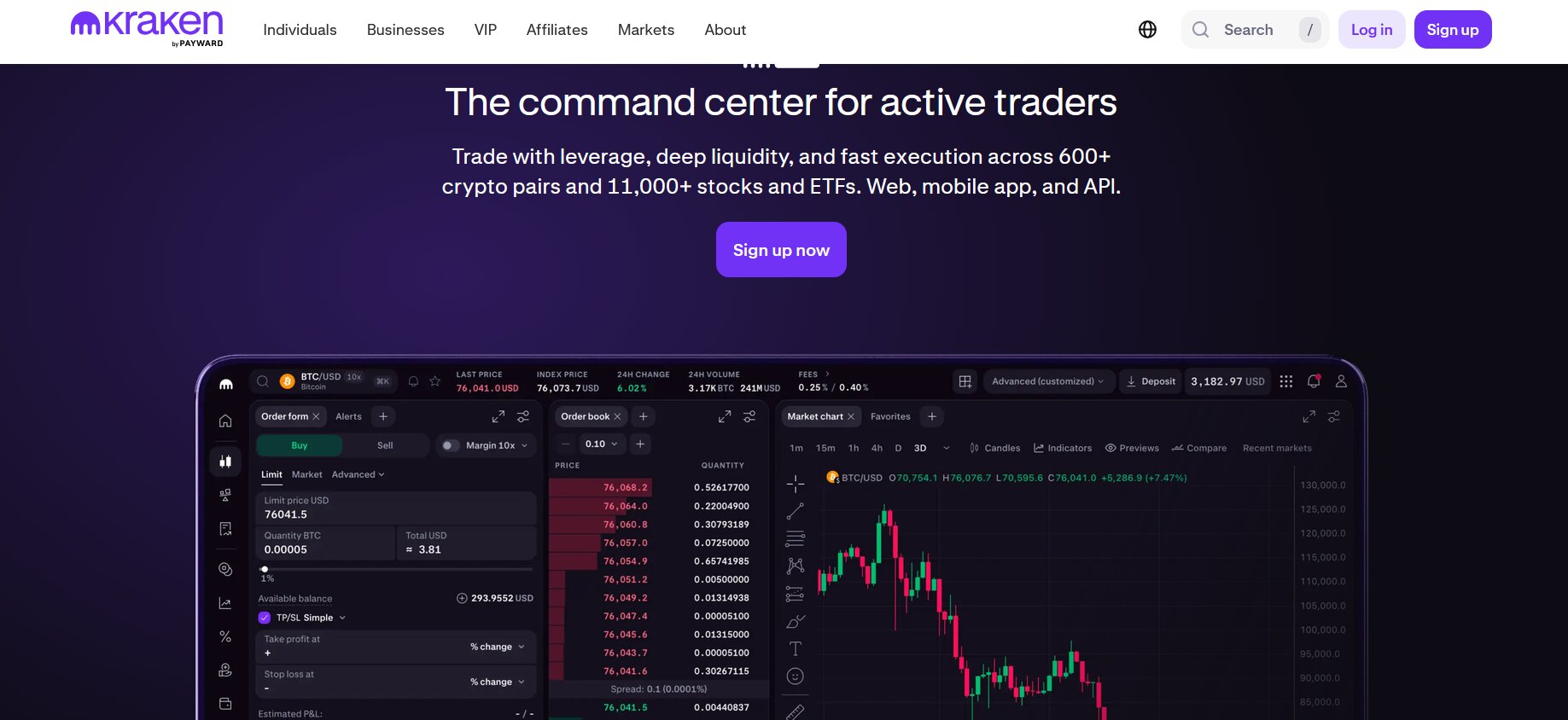
Kraken is the most secure crypto exchange for US traders. Actually, founded back in 2011, it’s one of the oldest exchanges still standing, and that kind of track record actually means something in an industry full of platforms that vanished overnight.
Kraken Pro, the exchange’s advanced trading interface, charges some of the lowest fees among major US platforms once your volume climbs, though the order book can kind of overwhelm someone who just wants to buy Bitcoin fast. Basically, casual traders get access to over 400 cryptocurrencies, while serious traders get margin trading, futures through Kraken Derivatives US, and even commission-free stock trading bolted onto the same account.
Kraken also holds a Wyoming Special Purpose Depository Institution charter, making it the first crypto company to land an actual state-level bank charter in the US. The exchange isn’t available everywhere, though. New York, Washington, and Maine residents can’t sign up. Kraken recently filed confidentially for a US IPO too, following a funding round that valued the company near $20 billion, so it’s not going anywhere anytime soon.
I have also covered licensed New York crypto exchanges; you can check that list if you are from NY…
Key Specifications |
|
|---|---|
| US License | FinCEN-registered MSB, state money transmitter licenses, Wyoming SPDI bank charter |
| US State Availability | 47 states (unavailable in New York, Washington, and Maine) |
| Trading Fees | 0.4% maker / 0.8% taker on Kraken Pro, dropping with volume |
| Supported Coins | 400+ tokens |
| USD Funding Methods | ACH, wire transfer, debit card, PayPal |
| Trading Features | Spot, margin, futures (Kraken Derivatives US), staking, stock and ETF trading |
2. Coinbase
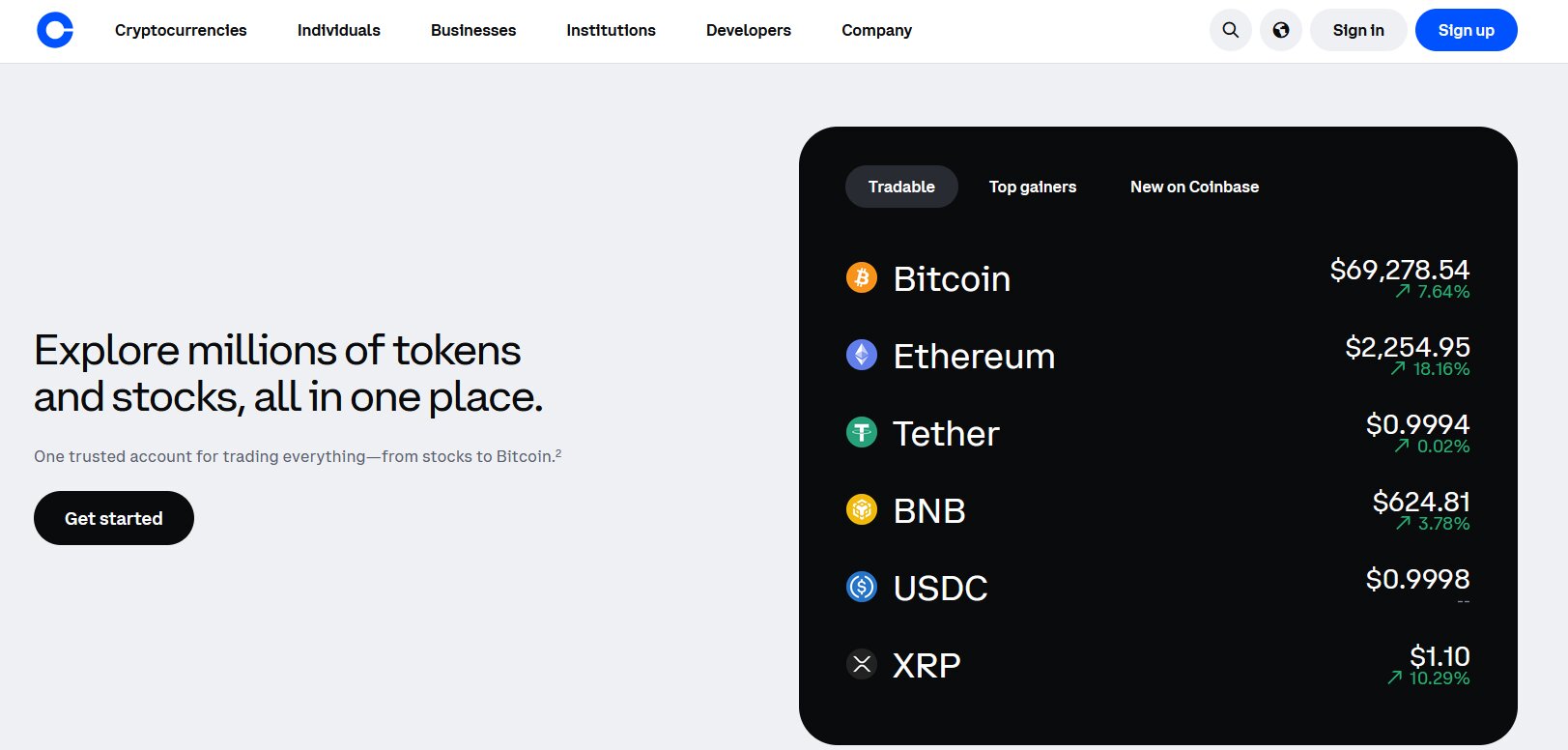
Coinbase is the best US crypto exchange for beginners who want a simple and familiar platform. It’s the only major exchange on this list available in all 50 states, including New York, thanks to its NYDFS BitLicense secured back in 2017. Coinbase, Inc. is registered with FinCEN as a Money Services Business, and its parent company, Coinbase Global, trades publicly on Nasdaq under the ticker COIN.
The basic buying screen makes crypto purchases very easy. You can connect a bank account, use a debit card, set recurring purchases, and buy supported assets with just a few steps. Now, Coinbase Advanced provides order books, charts, limit orders, APIs, and lower volume-based pricing. The app also offers staking, USDC rewards, a self-custody wallet, Base network access, and regulated US crypto futures.
Key Specifications |
|
|---|---|
| US License | FinCEN MSB, money transmitter licenses in all states, NYDFS BitLicense |
| US State Availability | 50 States plus DC and Puerto Rico (staking on new funds paused in California, New Jersey, Wisconsin, and Maryland) |
| Trading Fees | 0.40%–0.60% maker/taker on Advanced Trade; simple app fees run higher (up to 1.5% per trade) |
| Supported Coins | 200+ tokens |
| USD Funding Methods | ACH (free), wire transfer, debit card, PayPal, Coinbase Card |
| Trading Features | Spot trading, staking, perpetual futures (BTC, ETH), stock and ETF trading, Coinbase One membership |
3. Crypto.com
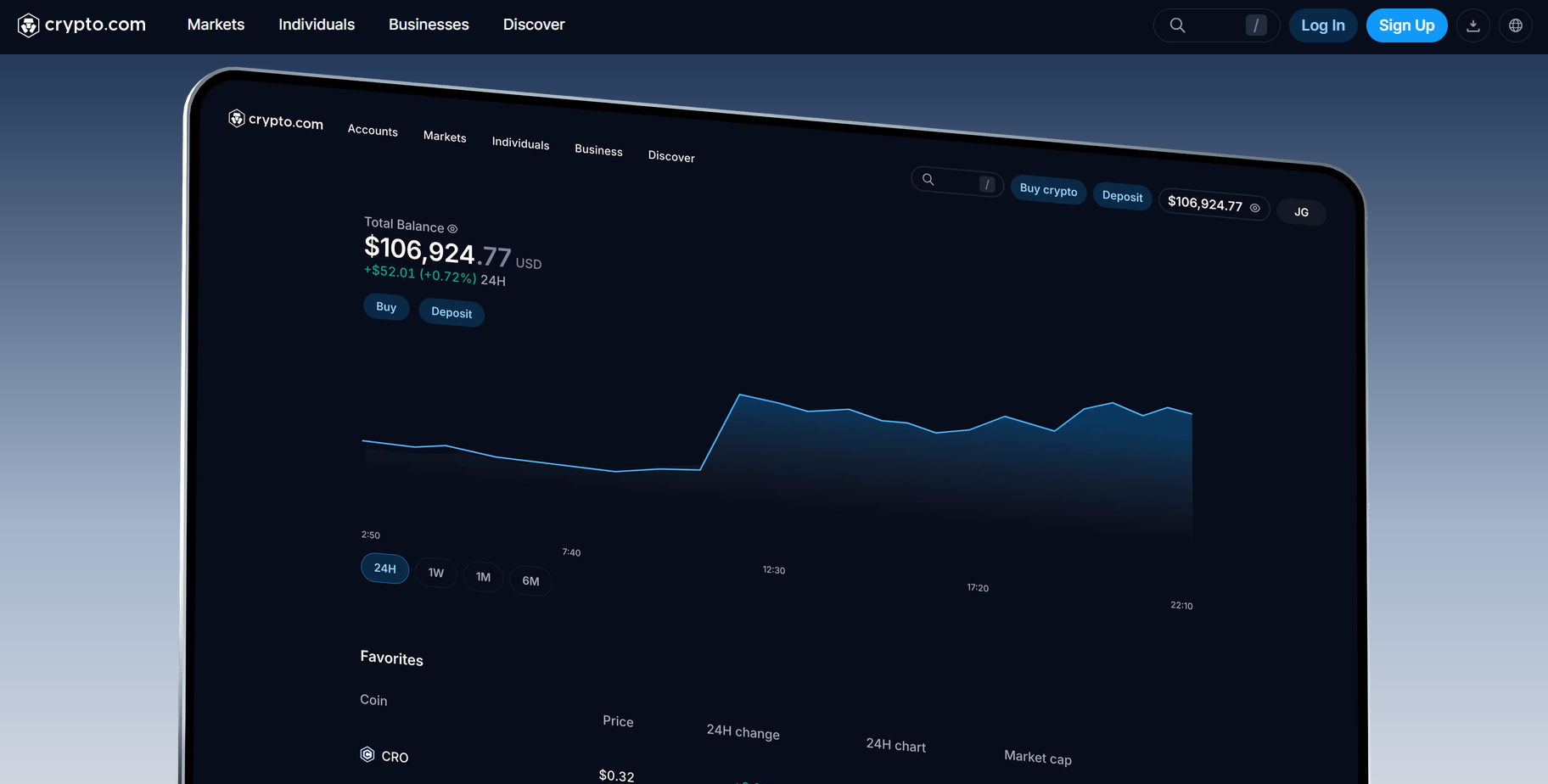
Crypto.com is one of the best crypto mobile apps in the U.S. The app is available across 49 states (except New York), but local restrictions can affect certain assets, rewards, and derivatives. The global company is based outside the United States, but its American products actually operate through US-registered entities, including a derivatives business under CFTC oversight.
The platform supports more than 350 crypto assets. You can buy coins, place spot orders, earn rewards on eligible assets, automate trades, and use the Crypto.com Visa card. The exchange side also includes TradingView charts and advanced order types.
Key Specifications |
|
|---|---|
| US License | FinCEN MSB, state money transmitter licenses |
| US State Availability | 49 states (unavailable in New York) |
| Trading Fees | 0.075% maker / 0.075% taker (App entry tier); Exchange starts near 0.25%/0.50% |
| Supported Coins | 350+ tokens |
| USD Funding Methods | ACH, wire transfer, debit/credit card, PayPal |
| Trading Features | Spot trading, CRO staking, Visa Card rewards, limited derivatives |
4. Robinhood
Robinhood is the best crypto exchange US for trading both stocks and crypto. There’s no separate commission charged on any crypto trade, which sounds great until you realize the cost gets baked into the spread instead. Now, that spread typically runs somewhere between 0.4% and 2%, and it can add up a bit more than it first appears once you trade often.
The Robinhood app supports a smaller lineup of around 20 to 30 cryptocurrencies, focusing mostly on well-known coins with solid liquidity instead of chasing every new token that launches. Staking is available for Solana, Ethereum, and Cardano, though Robinhood keeps 25% of whatever rewards you earn.
Key Specifications |
|
|---|---|
| US License | FinCEN MSB, state money transmitter licenses, FINRA/SIPC oversight for brokerage assets |
| US State Availability | 50 states (limited token list in New York; select tokens restricted in Hawaii and Nevada) |
| Trading Fees | 0% commission, spread of roughly 0.4%–2% built into price |
| Supported Coins | 20–30 tokens |
| USD Funding Methods | Bank transfer (free), debit card |
| Trading Features | Spot trading, staking (SOL, ETH, ADA), wallet transfers, combined stocks/options/crypto account |
5. Gemini
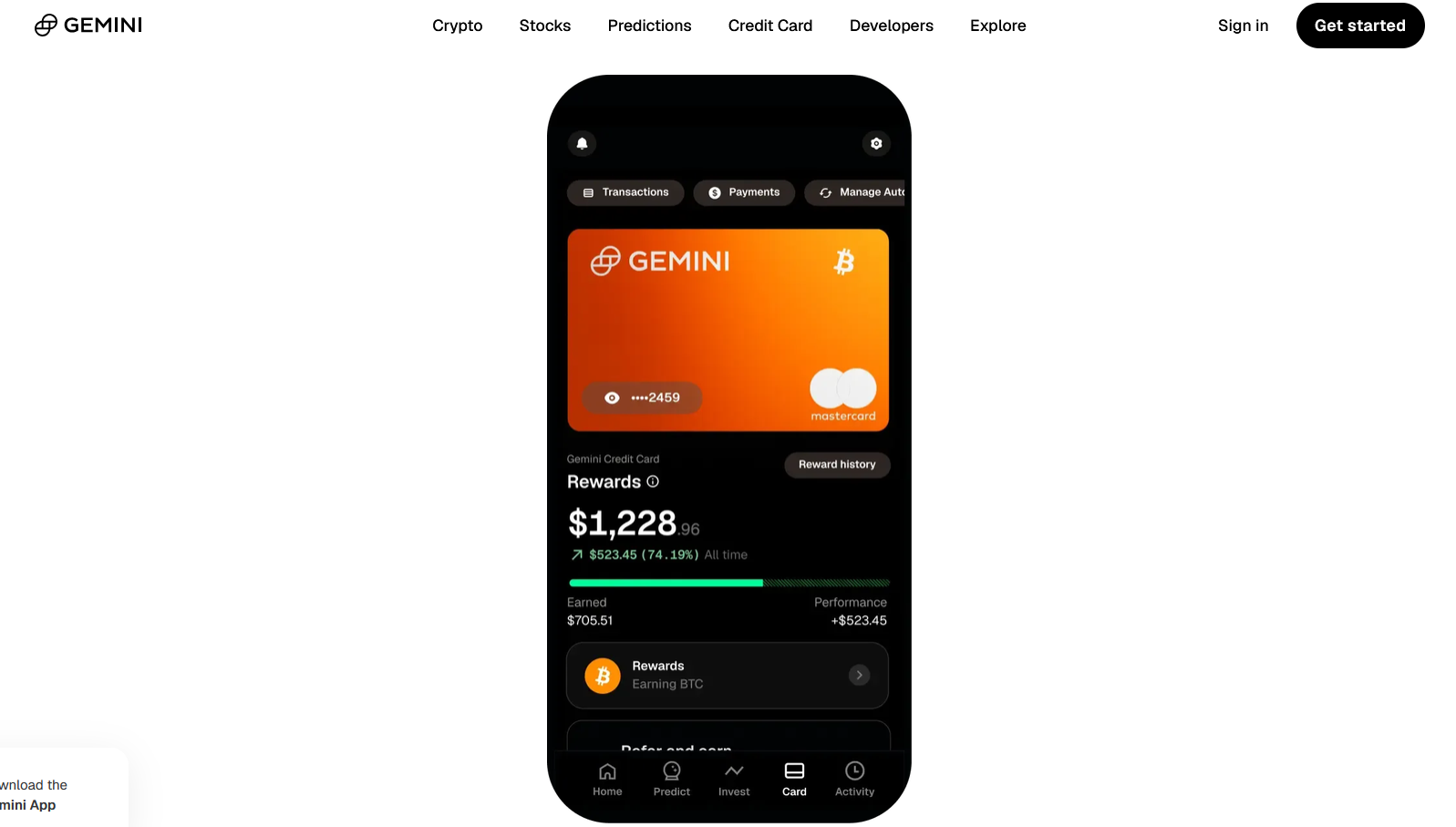
Gemini is another one of the best crypto exchanges in the US in terms of safety. The exchange runs as a New York-chartered trust company and hasn’t reported a single major hack in eight years of operation, which is genuinely rare in this industry.
Today, Gemini works in all 50 states plus DC and Puerto Rico, including New York, where plenty of competitors still can’t operate. It supports more than 90 crypto assets. You can use its basic buying screen for simple purchases or switch to ActiveTrader for charts, order books, APIs, and more order types. The coin selection is enough for major assets, but it looks pretty small beside Kraken or Coinbase.
Key Specifications |
|
|---|---|
| US License | NYDFS-chartered trust company, FinCEN MSB |
| US State Availability | 50 states plus DC and Puerto Rico, including New York |
| Trading Fees | 0.20% maker / 0.40% taker on ActiveTrader, dropping with volume |
| Supported Coins | 90+ digital assets |
| USD Funding Methods | ACH (free), wire transfer, debit card, PayPal, Apple/Google Pay |
| Trading Features | Spot trading, staking (up to 12% APR), credit card rewards, prediction markets, stock trading |
6. Binance.US
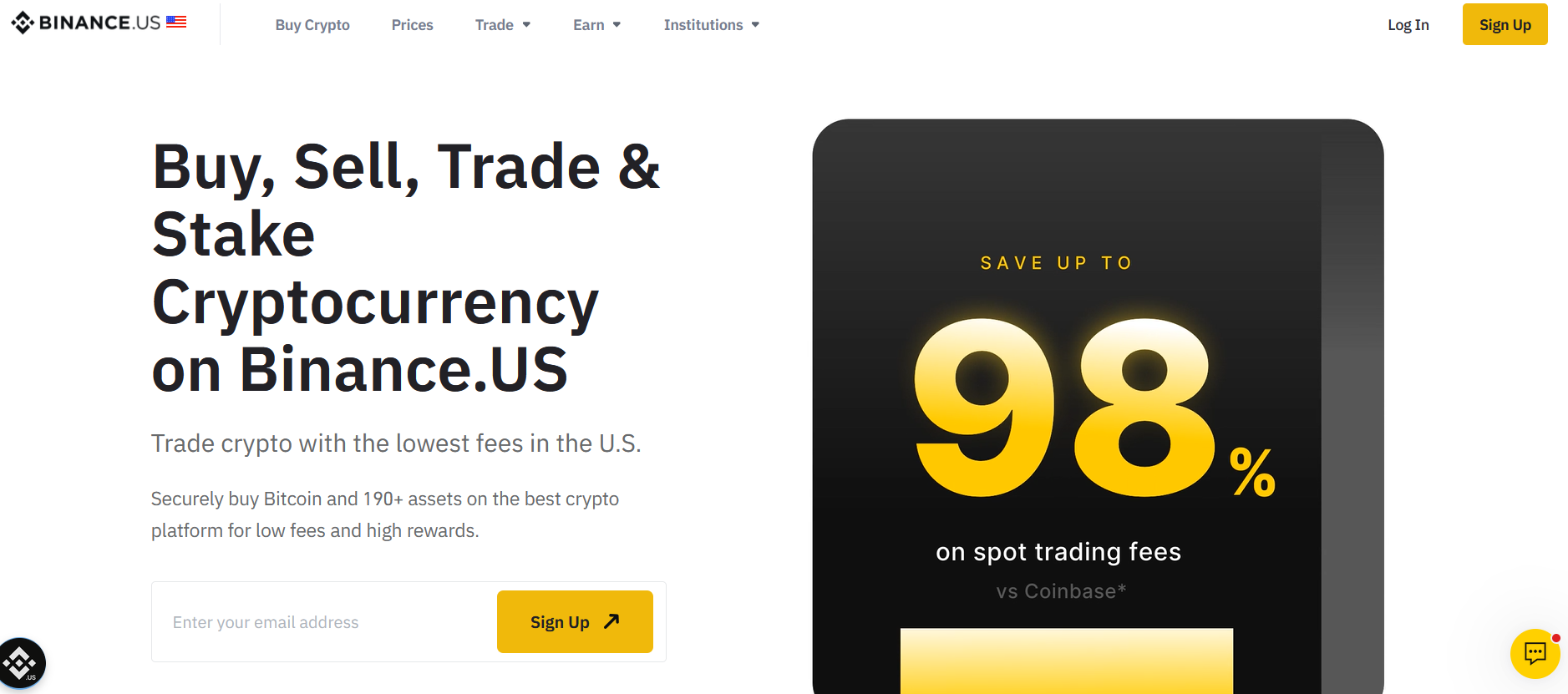
Binance.US is the lowest-fee cryptocurrency exchange in the United States. It charges a 0% maker fee and 0.02% taker fee. The fee change makes Binance.US much cheaper than most large US exchanges. You do not need a high monthly volume or paid subscription to receive the basic zero-maker rate.
You see, Binance.US made a serious comeback after clearing up its biggest legal headache. The SEC voluntarily dismissed its lawsuit against Binance and Binance.US back in May 2025, closing out a case that had scared away plenty of users for years. Since then, the exchange overhauled its entire fee structure, and now it charges 0% maker fees and just 0.01% to 0.02% taker fees on core USD trading pairs.
Key Specifications |
|
|---|---|
| US License | FinCEN MSB (BAM Trading Services, Inc.), state money transmitter licenses |
| US State Availability | 38 states plus DC (unavailable in Alaska, Connecticut, Georgia, Maine, New York, North Carolina, North Dakota, Ohio, Oregon, Texas, Vermont, and Washington) |
| Trading Fees | 0% maker / 0.01%–0.02% taker on core USD pairs |
| Supported Coins | 180+ digital assets |
| USD Funding Methods | ACH (free), wire transfer, debit card |
| Trading Features | Spot trading, staking, BNB fee discount |
7. Pionex.US/Webot
Pionex.US built its whole identity around free trading bots, and this year it rebranded under a new name: Webot. Webot, formerly known as Pionex.US, offers 16 built-in automated trading strategies, including grid bots, DCA bots, and rebalancing bots, and none of them carry an extra subscription fee.
Webot works in 47 states, with Alaska, Hawaii, and New York excluded. It operates as a FinCEN-registered money services business and uses state money transmitter permissions where required. The international Pionex platform remains separate, so American customers should use the US Webot service.
Key Specifications |
|
|---|---|
| US License | FinCEN MSB, NMLS #2284360 |
| US State Availability | 47 states (unavailable in New York, Hawaii, and Alaska) |
| Trading Fees | 0.10% maker / 0.50% taker |
| Supported Coins | Hundreds, including BTC, ETH, SOL, DOGE, and SHIB |
| USD Funding Methods | ACH (free), wire transfer |
| Trading Features | 16 free AI trading bots, grid and DCA strategies, idle cash yield |
What Are US-Approved Crypto Exchanges?
“US-approved crypto exchanges” is not an official legal label. You see, in the United States, no single government agency publishes a list of “approved exchanges.” Instead, exchanges are considered legally operating in the U.S. if they meet specific regulatory requirements at federal and state levels.
Below are the real regulatory layers that determine whether a crypto exchange can serve U.S. users:
FinCEN Money Services Business Registration
FinCEN (Financial Crimes Enforcement Network) is a U.S. Treasury bureau that enforces anti-money laundering laws. Now, a crypto exchange must register as a Money Services Business (MSB) if it: accepts and transmits cryptocurrency, converts crypto to fiat (USD), and operates custody or exchange services for users.
The exchange is legally recognized as a financial service business if it must follow Bank Secrecy Act (BSA) rules. It must implement:
- KYC (Know Your Customer)
- AML (Anti-Money Laundering)
- Transaction monitoring
- Suspicious activity reporting (SARs)
State Money Transmitter Licenses
A crypto exchange must obtain a Money Transmitter License (MTL) in each state where it operates. You see, each U.S. state regulates money transmission separately. So, an exchange can be legal in one state but restricted in another. I would say, state licensing is what actually determines where a U.S. user can legally use the exchange.
New York BitLicense and Limited Purpose Trust Charters
New York has its own strict crypto regulatory system under the New York Department of Financial Services (NYDFS). There are two main approvals:
(A) BitLicense: BitLicense is required for companies that: store or control crypto for users, operate exchange services in New York, and provide crypto transmission services.
(B) Limited Purpose Trust Charter: This is a stronger structure that allows: custody of digital assets, fiduciary-level asset protection, and banking-style compliance standards.
CFTC Oversight of Crypto Derivatives
The Commodity Futures Trading Commission (CFTC) regulates crypto derivatives markets. Remember, spot crypto trading is not CFTC-regulated, but derivatives trading is.
What falls under CFTC control:
- Bitcoin and Ethereum futures
- Perpetual contracts (in regulated environments)
- Leveraged crypto derivatives (like options and margin trading)
Read more: best crypto exchanges in Australia
Are Crypto Exchanges Legal in the USA?
Yes, crypto exchanges are legal in the United States. The U.S. does not ban crypto trading platforms. Instead, exchanges must follow federal laws like AML (Anti-Money Laundering) and KYC (Know Your Customer) rules. They also need to register with regulators such as FinCEN and, in some cases, get state-level licenses. So legality depends on compliance, not prohibition.
Is Cryptocurrency Legal in the United States?
Yes, cryptocurrency is legal in the United States. The U.S. government treats crypto as a legal asset class, not illegal money. Bitcoin, Ethereum, and other cryptocurrencies can be owned, traded, and taxed. The IRS even classifies crypto as property, which means gains and losses are taxable like stocks.
Why Crypto Exchange Rules Differ Between States
Crypto rules are different because each U.S. state has its own financial licensing system. Some states, like New York, require strict licenses such as the BitLicense, while others have lighter rules. So, this means an exchange can be legal in one state but restricted in another. Hence, crypto trading platforms must apply separately for each state they want to operate in.
Why Some Crypto Products Are Restricted in the USA
Some crypto products are restricted because U.S. regulators limit high-risk financial products. Generally, products like futures, leverage trading, staking, and certain tokens may fall under securities or derivatives laws. Hence, agencies like the SEC and CFTC regulate these areas strictly. That’s why, U.S. exchanges often remove or limit these products to avoid legal issues.
Can US Residents Use Offshore Crypto Exchanges?
Technically yes, but many offshore exchanges restrict U.S. users. Some global exchanges like Binance Global, Bybit, MEXC, Bitget, KuCoin, etc. block U.S. residents due to strict American regulations.
Even if access is possible, using them may violate the exchange’s terms of service, and that can lead to account freezing or fund restrictions, so I would say, U.S.-regulated platforms are much safer.
Can You Use a VPN to Access a Restricted Crypto Exchange?
No, using a VPN does not make it allowed or safe. You know, a VPN only hides your location, but it does not change your legal residency or the exchange’s rules. Most USA exchanges detect VPN usage and can easily freeze or close accounts. Hence, if caught, you may lose access to funds because you violated terms of service.
Crypto Exchanges That Accept USD: Which Platforms Have the Best Banking Support?
| Exchange | ACH Deposit | ACH Withdrawal | Bank Wire | Debit Card | PayPal/Other | USD Balance | Deposit Fee | Withdrawal Fee |
|---|---|---|---|---|---|---|---|---|
| Kraken | ✔ | ✔ | ✔ | ✔ (Instant Buy) | ✖ | ✔ | $0 (ACH) | $0–$25 (wire) |
| Coinbase | ✔ | ✔ | ✔ | ✔ | ✔ (PayPal withdrawals) | ✔ | $0 (ACH) | $0–$25 (wire) |
| Crypto.com | ✔ | ✔ | ✔ | ✔ | ✔ (Apple/Google Pay in some cases) | ✔ | $0 (ACH) | $0–$25 (wire) |
| Robinhood | ✔ | ✔ | ✔ | ✔ | ✖ | ✔ | $0 | $0 |
| Gemini | ✔ | ✔ | ✔ | ✔ | ✔ (PayPal withdrawals) | ✔ | $0 (ACH) | $0–$25 (wire) |
| Binance.US | ✔ | ✔ | ✔ | ✔ | ✖ | ✔ | $0 (ACH) | $0–$15 (wire varies) |
| Pionex.US | ✔ | ✔ | ✔ | ✔ (via partners) | ✖ | ✔ | $0 (ACH) | $0–$20 (wire varies) |
Fully Licensed American Crypto Exchanges by States
Best Crypto Exchanges in New York
- Coinbase: It holds a full New York BitLicense, which makes it 100% legal and safe for locals to trade. People love it because the mobile app is super simple to use, even if you are buying your very first Bitcoin.
- Gemini: This was built by the Winklevoss twins right here in New York, so it was designed from day one to follow New York’s strict rules. It’s known for strong security and for being extra careful about following the law.
Best Crypto Exchanges in California
- Coinbase is headquartered in California and already holds a California money transmitter license. This gave it a strong head start under the new DFAL rules. It’s a familiar name for millions of California users who already trust it for everyday trading.
- Kraken has been registered as a money service business in California for years and has stayed active with the state’s regulators as DFAL rolled out. It’s popular because it offers lower fees and more advanced trading tools than a lot of other apps.
Best Crypto Exchanges in Florida
- Coinbase is licensed here as well and fully open to Florida users, with the same easy-to-use app people use across the country. It’s a go-to pick for beginners who just want to buy their first Bitcoin without stress.
- Crypto.com is licensed to operate in Florida and is well known for its slick app and its crypto debit card. Mainly, people like it because it lets you spend crypto in everyday life, not just trade it.
Best Crypto Exchanges in Washington
- Robinhood meets all Washington state requirements and lets residents buy top digital assets as well as U.S. stocks safely on their phones. It is a big hit because you pay 0% commissions for crypto trading in the U.S.
- Kraken has kept its license current in Washington even as some other platforms pulled out of the state. It’s popular with Washington traders because it keeps offering advanced tools like margin trading that other apps don’t.
Crypto Taxation and Rules in the U.S.
The IRS treats cryptocurrency as property, not currency. That single classification is the root of almost every rule below. It means Bitcoin gets taxed the same way a rental property or a stock certificate does: through gains, losses, and income events, not through some special “crypto tax” category.
The IRS first clarified this in Notice 2014-21, and later expanded reporting rules through broker regulations and Form 1099-DA requirements.
Now, there is no flat crypto tax rate. Instead, taxation depends on holding period + income bracket + transaction type.
- Crypto Sales and Capital Gains: There are two main categories of capital gains in the U.S. tax system. The first one is short-term capital gains. This applies when the asset is held for 12 months or less. These gains are taxed at ordinary income tax rates, which range from approximately 10% to 37% depending on the taxpayer’s income bracket. Next, the second category is long-term capital gains, which apply when the asset is held for more than 12 months. These gains are taxed at reduced rates of 0%, 15%, or 20%, depending on total taxable income.
- Crypto-to-Crypto Trades: Swapping Bitcoin for Ethereum isn’t a neutral move in the IRS’s eyes. It’s treated as two things happening at once: you sold the Bitcoin at its dollar value on that date, then bought Ethereum with the proceeds. Here, tax applies to the first half of that transaction, even though no USD cash ever touched your bank account.
- Staking Rewards: The IRS settled this question in Revenue Ruling 2023-14, issued in July 2023. Staking rewards count as ordinary income the moment you gain “dominion and control” over them; meaning the moment you could sell, transfer, or move them, whether or not you actually do. Now, this creates two separate taxable moments for the same tokens. First, you owe income tax on the fair market value when the reward lands in your wallet. Later, if you sell those tokens, you owe capital gains tax on whatever they’ve gained or lost in value since that original receipt date.
- Form 1099-DA: Form 1099-DA, titled “Digital Asset Proceeds From Broker Transactions,” is the crypto version of the 1099-B that stockbrokers have sent for decades. Coinbase, Kraken, Gemini, and other U.S. centralized crypto exchange platforms must now file it directly with the IRS.
- Cost-Basis Reporting: Cost basis is simply what you paid for an asset, plus any fees. It’s the number subtracted from your sale price to find your gain or loss, and for now, tracking it accurately is mostly on you, not your exchange.
- Moving Crypto Between Exchanges and Wallets: A wallet-to-wallet or exchange-to-exchange transfer, by itself, is not a taxable event — as long as you’re still the owner on both ends. Sending Bitcoin from Coinbase to a hardware wallet doesn’t trigger a gain or loss because nothing was sold.
How We Ranked the Best Crypto Exchanges in the U.S.
We ranked the best USA-based cryptocurrency exchanges based on: state availability, regulatory licensing, platform security, trading fees, USD banking options, order liquidity, coin selection, trading tools, mobile app usability, and customer support quality.
U.S. Availability and State Coverage – 20%
This gets the biggest weight because it’s the first filter. Basically, if an exchange isn’t legal in your state, nothing else about it matters. New York needs a special license called a BitLicense, and California just added its own new law in July 2026 called DFAL. We checked which exchanges are actually allowed in each state, not just which ones have a U.S. website.
We check whether our listed best crypto exchange in the U.S. – accepts U.S. residents at all, operates legally in the U.S. through a registered entity, supports all 50 states or only partial coverage, excludes restricted states like New York or Washington, and has separate U.S. platforms (like Binance.US or Pionex.US).
Regulation and Licensing – 15%
We checked if each exchange has a state money transmitter license, plus federal registration with FinCEN. Well, exchanges with tougher licenses, like New York’s BitLicense, scored higher, since that one is hard to get. Exchanges that were vague about who regulates them lost our points.
Key criteria checks include:
- FinCEN Money Services Business (MSB) registration
- State money transmitter licenses
- New York BitLicense (if applicable)
- Compliance with AML and KYC rules
- Whether the U.S. entity is separate from the global company
Security and Custody – 15%
We looked past the marketing. We checked how much of each exchange’s crypto is kept in cold storage, whether they carry insurance, and if they’ve ever been hacked. Plus, we also checked if they publish proof-of-reserves reports, which show they actually have the money they claim to have.
Trading Fees and Spreads – 15%
Fees are not just “0.1% vs 0.5%.” That is only part of the story. A platform can advertise low fees but still cost more in practice because of wide spreads. That is common in most beginner-friendly crypto trading apps in the U.S., like Coinbase and Gemini.
We break this into:
- Maker and taker fees
- Instant buy/sell spreads
- Hidden execution costs
- Fee discounts based on volume or tokens
- Withdrawal fees (which often get ignored)
USD Deposit and Withdrawal Options – 10%
We checked which payment rails are supported, including standard ACH transfers, same-day Fedwire, debit cards, and instant bank connections. Plus, we also looked closely at deposit limits, hold periods before you can move funds, and withdrawal processing fees.
Strictly, a good US-based crypto exchange should not trap your money inside the system. If withdrawing USD is slow, expensive, or restricted, that is a major weakness.
Liquidity and Execution Quality – 10%
Liquidity simply means there is enough active cash and trading volume on the books. You know, if you hit the buy button for one Bitcoin, you want it at the exact price you see. On low-liquidity exchanges, big orders move the market price upward instantly. This problem is called slippage. It forces you to overpay.
High liquidity keeps the spread between bid and ask prices ultra-tight. We test order books during normal days and during volatile market crashes. Strong US-based exchanges fill orders instantly without freezing their servers, but weak exchanges crash right when prices dump. We score platforms higher if they handle massive traffic spikes without failing their users.
Supported Cryptocurrencies – 5%
Well, quality beats quantity when picking coins. Today, some offshore exchanges in the U.S. list thousands of random meme tokens that turn into scams next week. Regulated US-based crypto exchanges must be more careful about what they list.
Still, a good exchange should offer more than just Bitcoin and Ethereum. We look for a healthy mix of major Layer-1 networks, stablecoins, DeFi tokens, and top layer-2 projects. Having around 80 to 200 solid digital assets is usually the sweet spot for US traders. We give lower scores to platforms that list only five coins, but again, we also penalize platforms that list unvetted junk just to boost their total count.
Trading Features and Tools – 5%
Beginners only need a buy button, but experienced traders want real tools. So, we look at the quality of order types; can you set stop-loss orders, limit orders, and take-profit targets easily?
We check if the platform integrates with TradingView charts for technical analysis. Plus, we also check extra perks like recurring daily buys, crypto tax report exports, and automated portfolio rebalancing. Since US rules ban retail crypto margin and futures on basic spot platforms, we focus heavily on spot execution tools and API quality for algorithmic bots.
User Experience and Mobile App – 3%
A confusing app is annoying, but it doesn’t cost you money the way high fees do, so it gets a small weight. We checked how easy it is to sign up, verify your identity, and make your first trade. Plus, we also look at app store ratings, check for ugly software bugs, and test how fast pages load. Actually, crypto apps in the USA that made this simple scored better than ones with long, confusing steps.
Customer Support – 2%
This is the smallest category because most people never need to use support. We still checked response times and whether you can talk to a real person through chat or phone, or only through email. Obviously, slow support isn’t a dealbreaker on its own, but it yes, it becomes a big deal the one time your account gets locked and you need help fast.
Is The USA Becoming More Crypto-Friendly?
Yes, the US is definitely becoming more crypto-friendly now compared to a few years ago. In the past, government agencies mostly just sued crypto companies. Now, the government is making actual clear laws and letting normal banks and investors handle digital assets safely.
- January 2024 (Spot Bitcoin ETFs): The SEC finally allowed spot Bitcoin ETFs. Because of this, regular people and big Wall Street funds can now buy Bitcoin through their normal stock broker accounts.
- May – July 2024 (Ethereum ETFs & FIT21 Bill): The SEC said yes to spot Ethereum ETFs as well. Soon after, the House passed the FIT21 bill so companies can easily know whether a crypto coin is a commodity or a security.
- January 2025 (New Government Direction): The new president took office and changed the approach. The White House brought in new leaders at the SEC, dropped old court cases against crypto platforms, and told agencies to help crypto businesses stay in the US.
- March 2025 (Bitcoin Reserve): The government made an official US Strategic Bitcoin Reserve. Now, instead of selling seized Bitcoin at auctions, the Treasury now keeps it as a long-term reserve asset.
- July 2025 (Stablecoin Law / GENIUS Act): Congress passed the GENIUS Act into law. This gives clear federal rules for US dollar stablecoins, making issuers back every stablecoin dollar with real cash and liquid assets.
- 2025 – 2026 (Clear Rules for Companies): The CFTC and SEC set up simple ways for crypto exchanges to register legally. Plus, Congress also kept pushing bills like the CLARITY Act to put spot crypto trading under standard commodity rules.
Bottom Line: Best Crypto Exchanges for Americans
In a nutshell, Kraken is the best US-based crypto exchange for American users. It really offers a strong balance of security history, state coverage, competitive fees, USD funding, asset choice, and advanced trading tools.
Next, Coinbase is the best crypto exchange in the US for beginners. Its basic interface is very easy; it serves every state, and its public-company reports provide a bit more business transparency. But you should move to Coinbase Advanced once you understand order books because the simple buying screen may cost more.
Binance.US offers the lowest spot fees, but only residents of supported states can use it. Robinhood is also a good fit when you already trade stocks. Crypto.com works well for an all-in-one mobile experience, while Gemini is the most secure crypto exchange USA, and it gives you strong state oversight at a higher entry fee.
The final choice is pretty simple. You can use Kraken for the best overall balance, Coinbase for ease, Binance.US for low fees, or Webot for bots. But again, I would say you should avoid keeping long-term savings on any exchange. You must transfer them to cold wallets for extra security.
FAQs
What is the safest crypto exchange for US residents?
Kraken is the safest USA crypto exchange for most US residents. It has operated since 2011, keeps most customer assets in cold storage, and offers strong account security controls. Coinbase also stands out because it publishes public-company financial reports.
What are the most popular US crypto exchanges?
Coinbase, Robinhood, Kraken, and Crypto.com are among the most popular crypto exchanges available in the United States. Coinbase attracts many beginners, while Robinhood is best for people who already trade stocks.
What are the largest US-based crypto exchanges?
Coinbase is the largest major US-headquartered crypto exchange by overall public market presence and American customer reach. It has over 100M users and is available in all 50 US States.
Which crypto exchange in the United States has the lowest fees?
Binance.US is the lowest-fee centralized crypto exchange in the USA. Its Advanced platform charges only 0% maker and 0.02% taker on most pairs, while selected pairs even offer a 0.01% taker rate.
Can Americans trade crypto futures?
Yes, Americans can trade regulated crypto futures through US-approved trading platforms such as Coinbase, Kraken, Robinhood, and Crypto.com. The available contracts, position sizes, and state rules obviously depend on the provider. Also, offshore perpetual futures are generally not legal for US retail traders, even when a foreign crypto exchange appears easy to access.
Are US-Based Crypto Exchanges Safe?
Yes, major US-based crypto exchanges are generally safe, but “safe” means regulated and audited, not risk-free like a bank account.
Coinbase and Kraken both hold state money transmitter licenses across nearly all 50 states and register as Money Services Businesses with FinCEN at the federal level. Still, crypto itself carries price risk, and no exchange, no matter how regulated, can protect you from a coin’s value crashing.
Are Crypto Assets on US Exchanges FDIC or SIPC Insured?
No, crypto assets are not covered by FDIC or SIPC insurance under any circumstances. FDIC insurance only protects cash deposits at banks up to $250,000 per depositor, and it applies to dollars sitting in a bank, not crypto sitting on an exchange.
SIPC insurance only covers securities like stocks and bonds held at brokerages, and the SEC has been clear that crypto assets don’t qualify as covered securities under that program.
Also, yes, some US-based crypto exchanges do carry private insurance policies on their custodial holdings, but that’s a company choice, not a government guarantee, and coverage amounts vary a lot between platforms.
Can US Residents Stake Crypto on Exchanges?
Yes, US residents can stake crypto on the best crypto exchanges USA like Coinbase and Kraken; of course, rules differ by state. The IRS treats staking rewards as ordinary income the moment you gain control over them, taxed at your regular income tax rate between 10% and 37%.