
I remember Huobi Global (now HTX) from the early days when it was one of the few crypto exchanges where you could buy BTC if you lived in Asia. But today, there are 100+ cryptocurrency apps, and I know how confusing it can be to pick the right exchange. You need low fees, a good range of coins, and, most importantly, a place that feels safe.
Well, in this HTX review, I’ll share my honest experiences, break down the main features, pros, cons, and answer common questions like “Is HTX safe & legit?” and “What are the fees?”
HTX Exchange Review: What Is It?
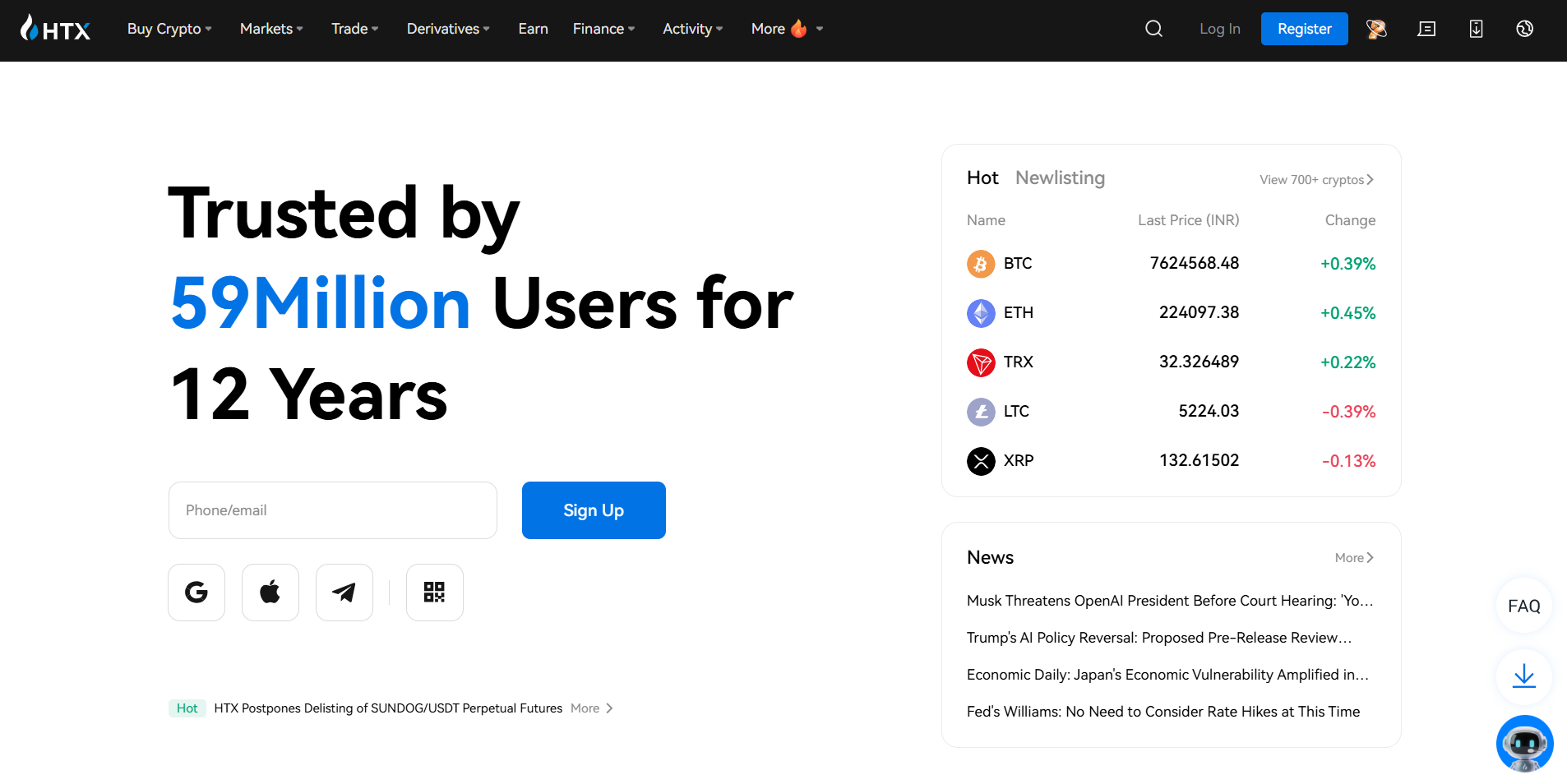
HTX is a global crypto‑asset trading platform that lets you buy, sell, and trade digital coins. It started as Huobi back in 2013 and quickly became one of the largest exchanges in Asia. Well, after a controversial few years and even changing ownership, the company rebranded to HTX. Here, the “H” stands for Huobi’s heritage, the “T” represents Justin Sun’s Tron connection, and the “X” marks the exchange.
Today, the company reports more than 59 million registered users. It offers over 700 digital assets and 800 trading pairs, including common coins like Bitcoin (BTC), Ethereum (ETH), and stablecoins such as USDT and USDC. You can trade spot, margin, futures, options contracts, and use copy‑trading bots.
| Exchange Name | HTX (formerly Huobi Global) |
| Founded Year | 2013 |
| Headquarters | Seychelles |
| Founder / Key Figure | Leon Li (Founder), Justin Sun (Advisor) |
| Total Users | 59+ Million |
| Supported Countries | 160+ countries worldwide |
| Restricted Countries | USA, Canada, China, Singapore, Japan, Hong Kong, Iran, etc. |
| Supported Cryptocurrencies | 700+ coins |
| Popular Coins | BTC, ETH, USDT, TRX, SOL, XRP |
| Spot Trading Fees | ~0.2% (can reduce to ~0.15% with HTX token) |
| Futures Fees | ~0.02% maker / 0.06% taker |
| Maximum Leverage | Up to 200x |
| Trading Options | Spot, Margin, Futures, Options |
| Earn Products | Savings, Staking, Dual Investment, Loans |
| Copy Trading | Yes (built-in feature) |
| Trading Bots | Yes (Grid, DCA, etc.) |
| Mobile App | Available (iOS & Android) |
| Payment Methods | Crypto, P2P, Bank Transfer, Card (via third-party) |
| Security Features | 2FA, Cold Storage (~98%), Anti-phishing, Protection Fund |
| Proof of Reserves | Yes (Merkle Tree) |
| Regulation Status | Limited / Offshore (not fully regulated) |
| Customer Support | 24/7 (but mixed reviews) |
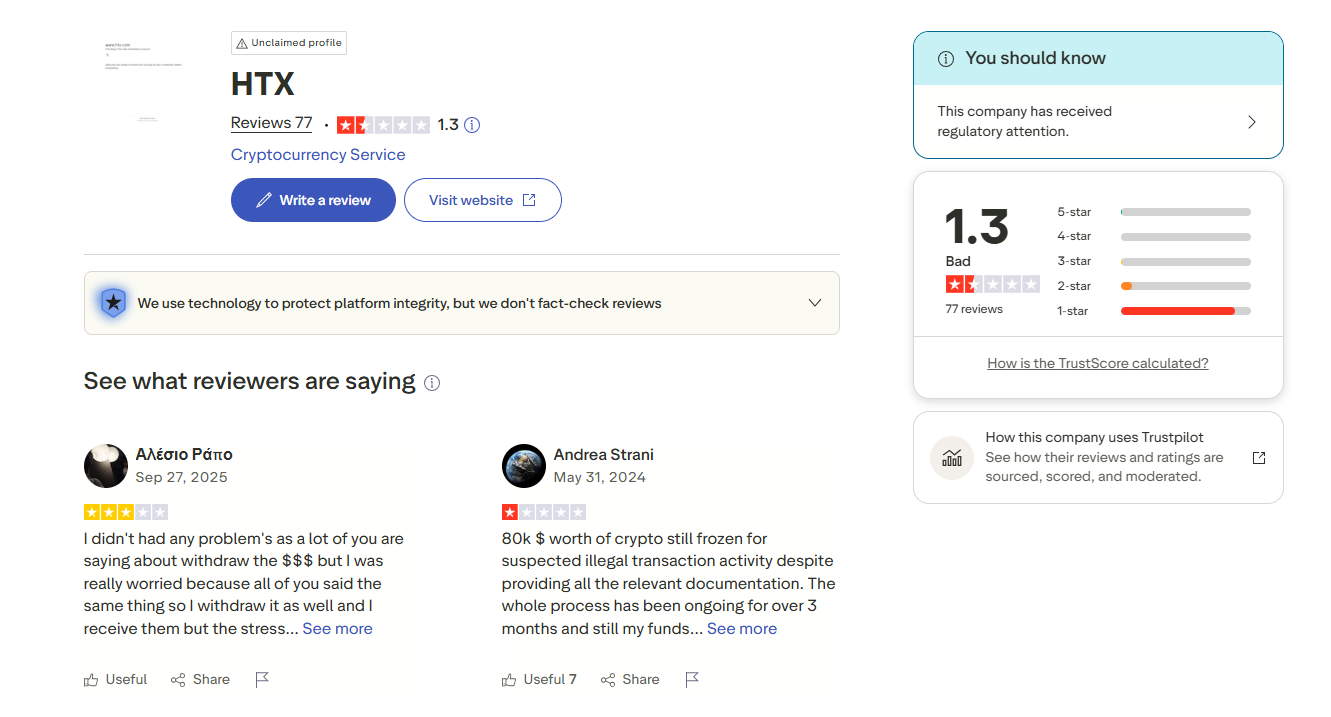
| Trustpilot Rating | ~1.3 / 5 |
| Best For | Altcoin traders, high-leverage traders, and yield seekers |
| Not Ideal For | Beginners, US/Canada users, regulation-focused users |
HTX Review: Pros and Cons
HTX Supported/Restricted Countries and Regions
The HTX crypto exchange platform works in over 160 countries, but they have a very long list of places where you cannot use its services at all. Well, most regions with full access include Pakistan, the United Arab Emirates, Saudi Arabia, Brazil, Argentina, Colombia, Indonesia, Turkey, most of Africa (South Africa, Nigeria, Kenya), and Eastern Europe.
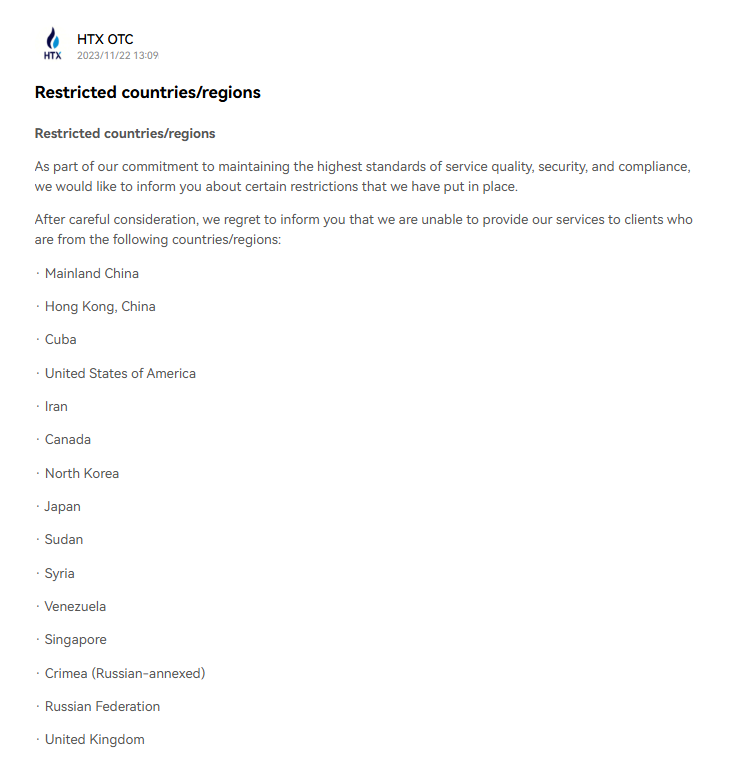
Now, even so, the list of restricted jurisdictions is long. The company explicitly bars residents of the United States, Canada, mainland China, Cuba, Iran, North Korea, Sudan, Syria, Venezuela, Japan, Singapore, and Hong Kong.
They even offer user interfaces in multiple languages (English, Chinese, Korean, Spanish, Turkish, and more) and support fiat on‑ramps for more than 20 local currencies. You can deposit in euros (EUR) through SEPA in certain European countries, pay in Australian dollars (AUD) via local bank rails, or use Turkish lira (TRY) in Turkey. Plus, there’s even support for payments in Brazilian real (BRL), Vietnamese dong (VND), Indonesian rupiah (IDR), and other regional currencies through local partners.
Is HTX Available in the US?
No. HTX is not available to U.S. residents. Basically, the exchange withdrew from the U.S. market due to regulatory pressure and does not hold a money transmitter license there.
Now, I’ve seen some people ask if using a VPN is an option. Honestly, that’s a bad idea. HTX can detect IP addresses and will request proof of residency during verification. So, if they catch you circumventing restrictions, they may lock your account and keep your funds until you prove you’re not in the United States. Don’t risk it. I would say: U.S. residents should stick to regulated exchanges like Coinbase, Kraken, Gemini, or Bitstamp.
Read more reviews:
Is HTX Available in Australia?
Yes, HTX entered the Australian market after receiving a no‑objection certificate from local authorities. Australian users can now deposit and withdraw Australian dollars (AUD) through local bank transfers, trade most spot pairs, and even access some derivatives (which are limited only).
But you still need to complete identity verification and secure your account with two‑factor authentication, but the process is smooth. The exchange also offers an OTC desk for large AUD trades and an Australian customer service team.
Who is HTX Best Suited For?
After my in-depth HTX review, I can say it suits best for:
- Experienced traders who want access to a wide variety of coins and high leverage. Plus, if you generally like to jump on new tokens or test derivatives with up to 200x leverage, HTX has you covered.
- Yield seekers who want higher returns on idle crypto. You see, HTX Earn products offer flexible savings, staking, and even dual‑investment options with attractive APYs compared to traditional banks.
- Traders in Asia, Latin America, or the Middle East, where local exchanges may not offer as many assets. Here, HTX provides localized support and deposit methods in INR, BRL, RUB, and other currencies.
HTX Background and Reputation
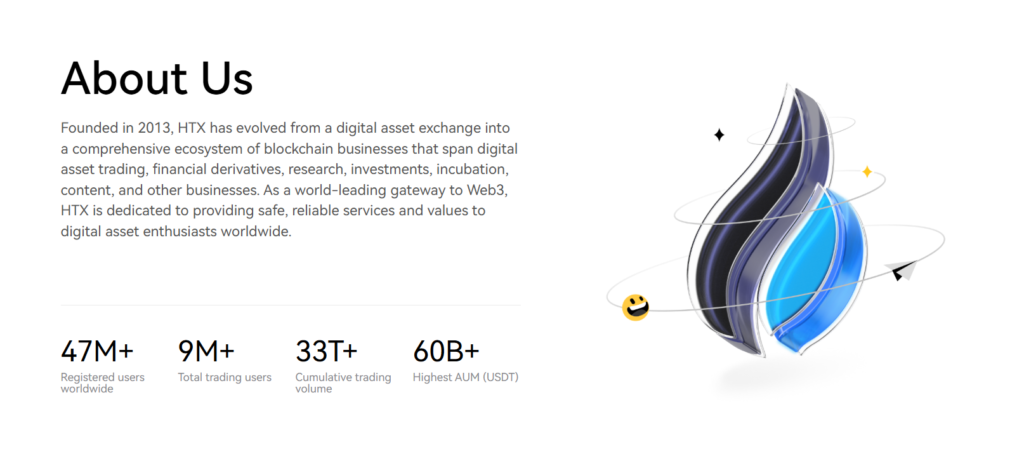
HTX began as Huobi in Beijing in 2013. The company grew quickly and expanded across Asia. But, in 2017, it moved its headquarters to Singapore after China banned ICOs and forced exchanges to cease operations. Today, over the years, Huobi has opened offices in Seychelles, Hong Kong, Japan and South Korea, each with separate legal entities for compliance.
Now, in 2021, founder Leon Li sold the controlling stake to an investment arm associated with Tron founder Justin Sun. Well, the acquisition sparked rumours because Sun is a controversial figure (not trustworthy) and has ties to multiple crypto projects. So, some long‑time users left the platform due to concerns about transparency.
Fast forward, in 2023, the company rebranded to HTX. The rebrand included a new logo, tagline (“HTX – Make Crypto Better”), and a push to distance itself from the Huobi name, which was obviously linked to regulatory issues and past hacks. Today, HTX says it has over 59 million active users and supports more than 160 countries.
Company Overview
| Founder | Originally Leon Li; controlling stake sold to a consortium led by Justin Sun (2021) |
| Headquarters | Registered offices in Seychelles, Singapore, and Dubai; corporate entity Huobi Global S.A. (Seychelles) |
| Number of Employees | Around 1,300 globally, including engineers, customer service, and compliance teams |
| Number of Users | 59 million registered accounts |
| Daily Trading Volume | Spot volume around $1 billion per day; futures volume often exceeds $10 billion |
| Native Token | HTX Token (HTX) – used for fee discounts, staking, and governance |
| Operating Regions | Asia, Middle East, Europe, Latin America; restricted in U.S. and Canada |
Regulation & Licensing
The HTX platform is not a highly regulated exchange when you compare it to something like Coinbase or Kraken. Well, they do have some licenses:
- Lithuania: HTX Technology LT UAB is registered as a Virtual Currency Exchange Operator. This covers EU anti‑money‑laundering obligations and allows the platform to offer wallet services to European clients.
- British Virgin Islands: A subsidiary, HUE Fintech Co. Ltd., holds a SIBA Investment Business License. Well, this license covers certain investment products but doesn’t replace a securities license in more restrictive markets.
- Dubai: HTX received an initial approval for a Full Market Product license from Dubai’s Virtual Asset Regulatory Authority (VARA). But yes, final approval is still pending, so services remain limited in the UAE until full licensing is granted.
- Australia: HTX is registered with AUSTRAC as a Digital Currency Exchange Provider. This registration allows the company to offer crypto exchange services, but doesn’t permit derivatives (leverage trading mainly) to retail clients without additional licensing.
- Pakistan: HTX holds a Non‑Objection Certificate (NOC) from the Securities and Exchange Commission of Pakistan. Well, this license is useless anyway, because of the obvious reasons (Pakistan, I mean).
Note: major regulators, like the U.S. Securities and Exchange Commission (SEC) and the Financial Conduct Authority (FCA) in the UK, have taken action against HTX. The FCA placed HTX on its Warning List, and UK residents risk losing funds with little recourse under the Financial Ombudsman Service.
HTX Reviews and Ratings (Reddit and TrustPilot)
Well, when I searched for reviews of HTX, I found quite a mixed bag. Basically, on Trustpilot, HTX holds a rating of around 1.3 stars out of 5. That’s very low by any standard.
Many reviewers claim that their accounts were frozen without explanation, that withdrawal requests took weeks, or that customer service kept giving scripted responses. Plus, some said they were asked to provide additional documents repeatedly with no clear reason.
But, HTX review Reddit says differently. Here, you’ll find threads where traders praise HTX for its deep liquidity, huge coin selection, and high yields. Some people say that they’ve used HTX for years without problems.
Now, in my own experience and HTX review, I haven’t had an account frozen or funds withheld. You know, the user experience can vary widely, and larger accounts or unusual activity may trigger more scrutiny.
What are the Supported Cryptocurrencies on HTX?
HTX lists over 700 different cryptocurrencies. You’ll find all the usual blue chips: Bitcoin, Ethereum, Tether, USD Coin, Solana, XRP, Cardano, Polygon, Dogecoin, and TRON. You can also trade layer‑1 networks like Avalanche, Cosmos, Algorand, Hedera, and Fantom.
Then there are DeFi tokens like Uniswap, Aave, Curve, Maker, and PancakeSwap. The list goes on to include stablecoins such as USDT, USDC, DAI, FRAX, and algorithmic stablecoins like USDD and USTC. (Read more: best crypto to buy or invest right now)
How to Get Started on HTX?
Step 1: Create an HTX Account (Registration)
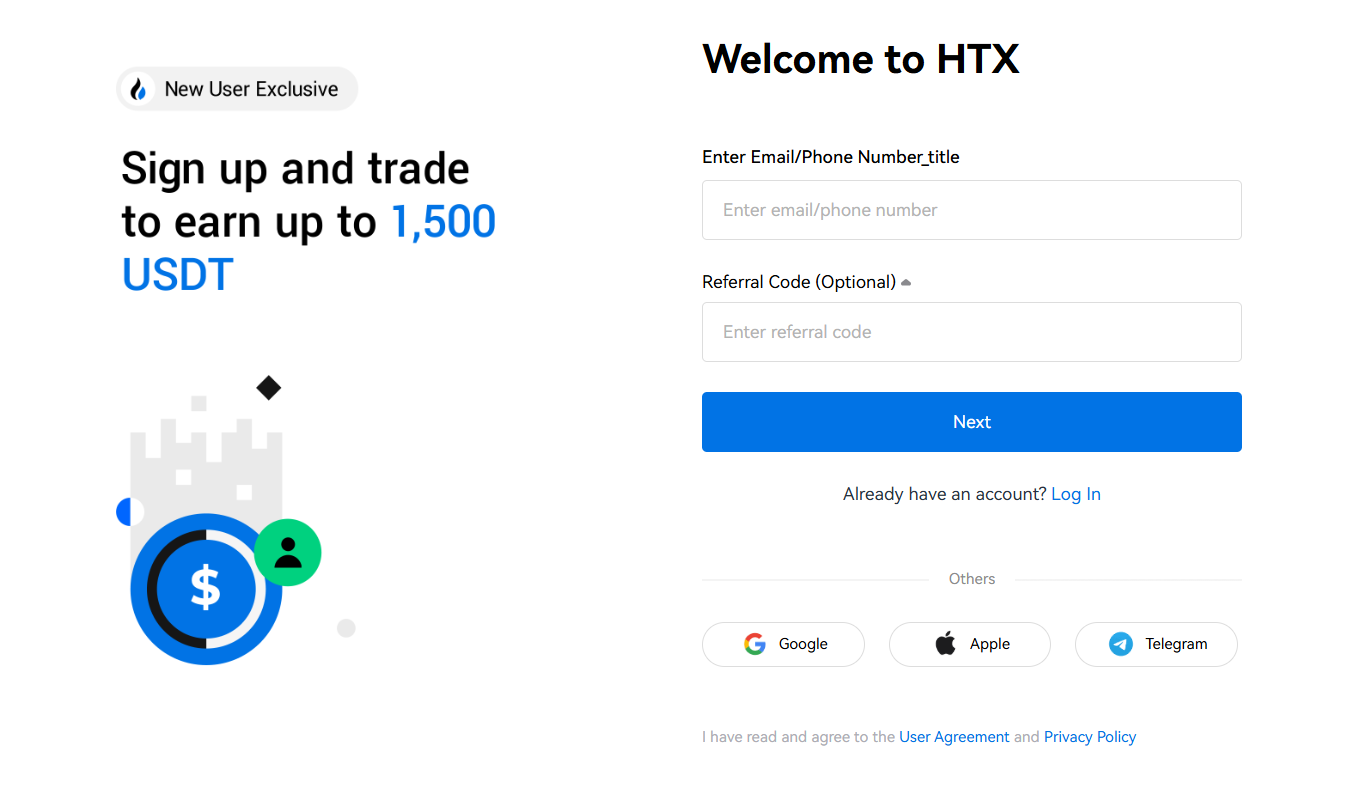
You just need to go to the HTX website and enter your email address or phone number. I guess using an email is better, so you don’t have to worry about SIM swapping as much. Anyway, they will send you a code to verify your account, and then you are basically in.
You should use our HTX referral code (bnmtb223) during sign-up to get a free welcome bonus and fee discounts.
Step 2: Set Up 2FA and Security Measures
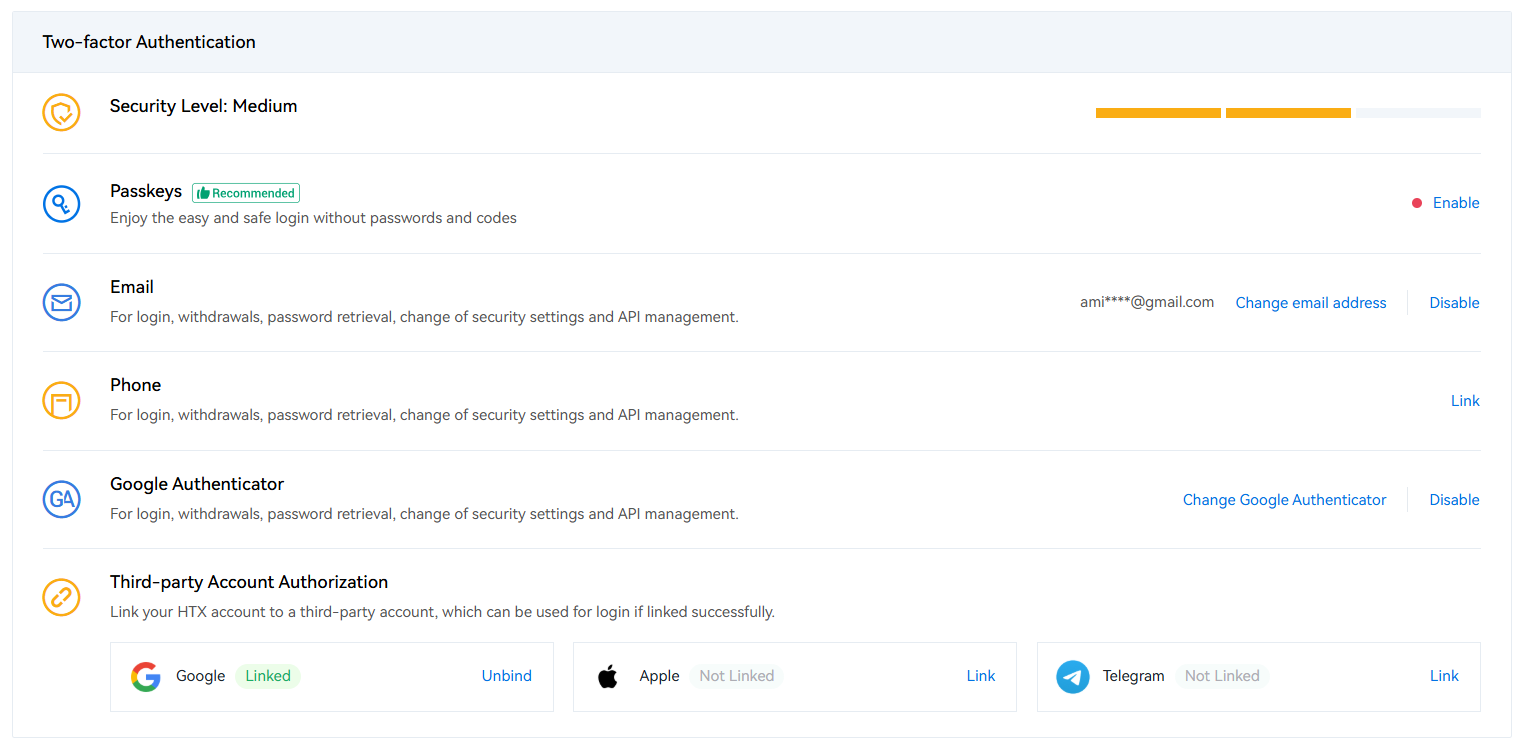
The very first thing you must do is turn on Google Authenticator for your account. Honestly, never rely on just a password because hackers are really smart these days, and they will find a way in. I also suggest you set up an anti-phishing code so you know that every email you get from them is actually real.
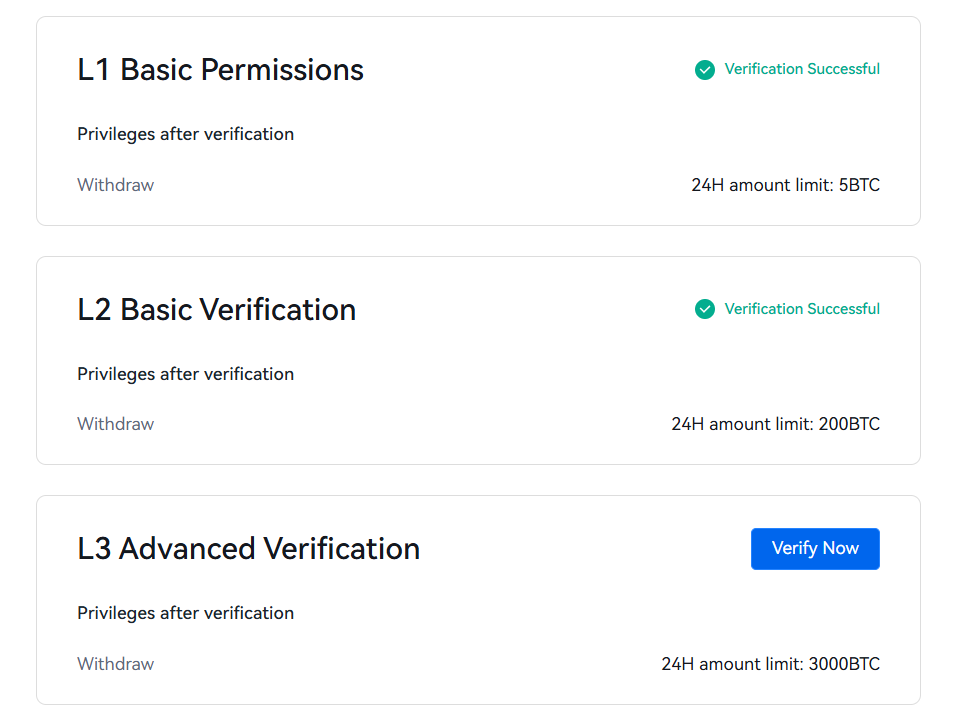
Step 3: Complete KYC Verification
You cannot do much without verifying your identity because the exchange has to follow anti-money laundering rules. Well, you have to upload a photo of your national ID and take a selfie with your phone. It took about 30 minutes for them to approve it.
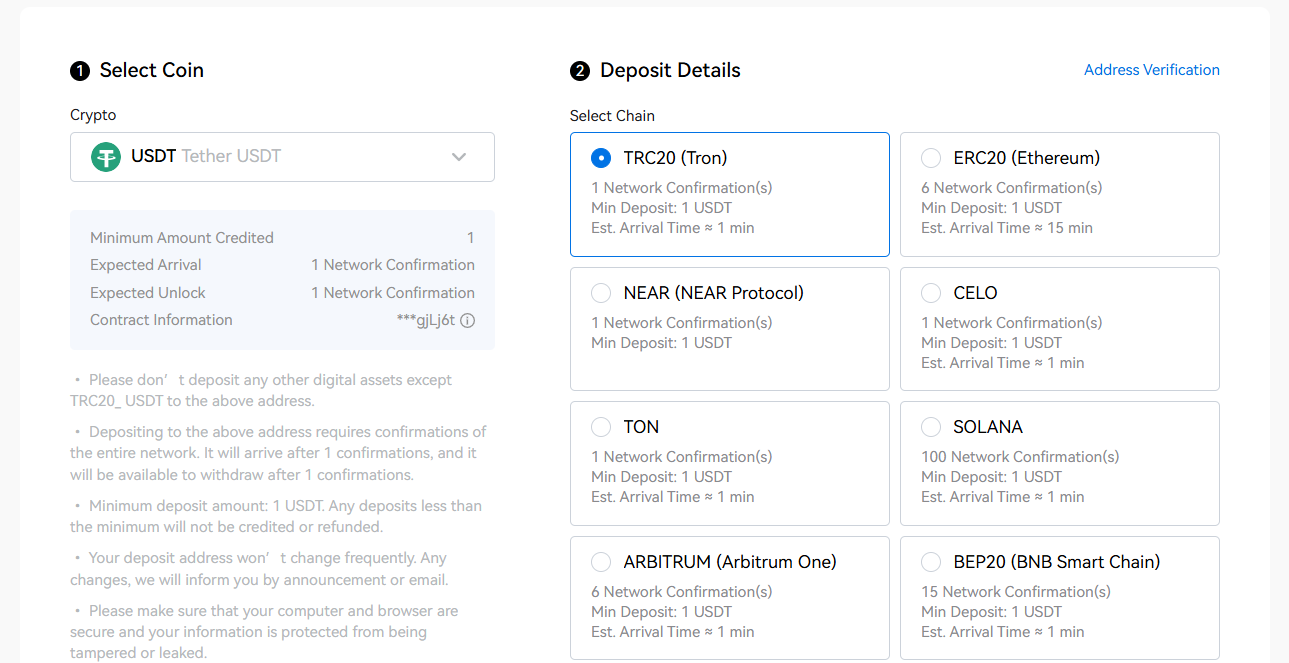
Step 4: Deposit Funds
The HTX exchange lets you deposit crypto for free, or you can buy some with your credit card using the “Quick Buy” feature. You can also just send some USDT from your other wallet because it is much cheaper than paying the credit card fees.
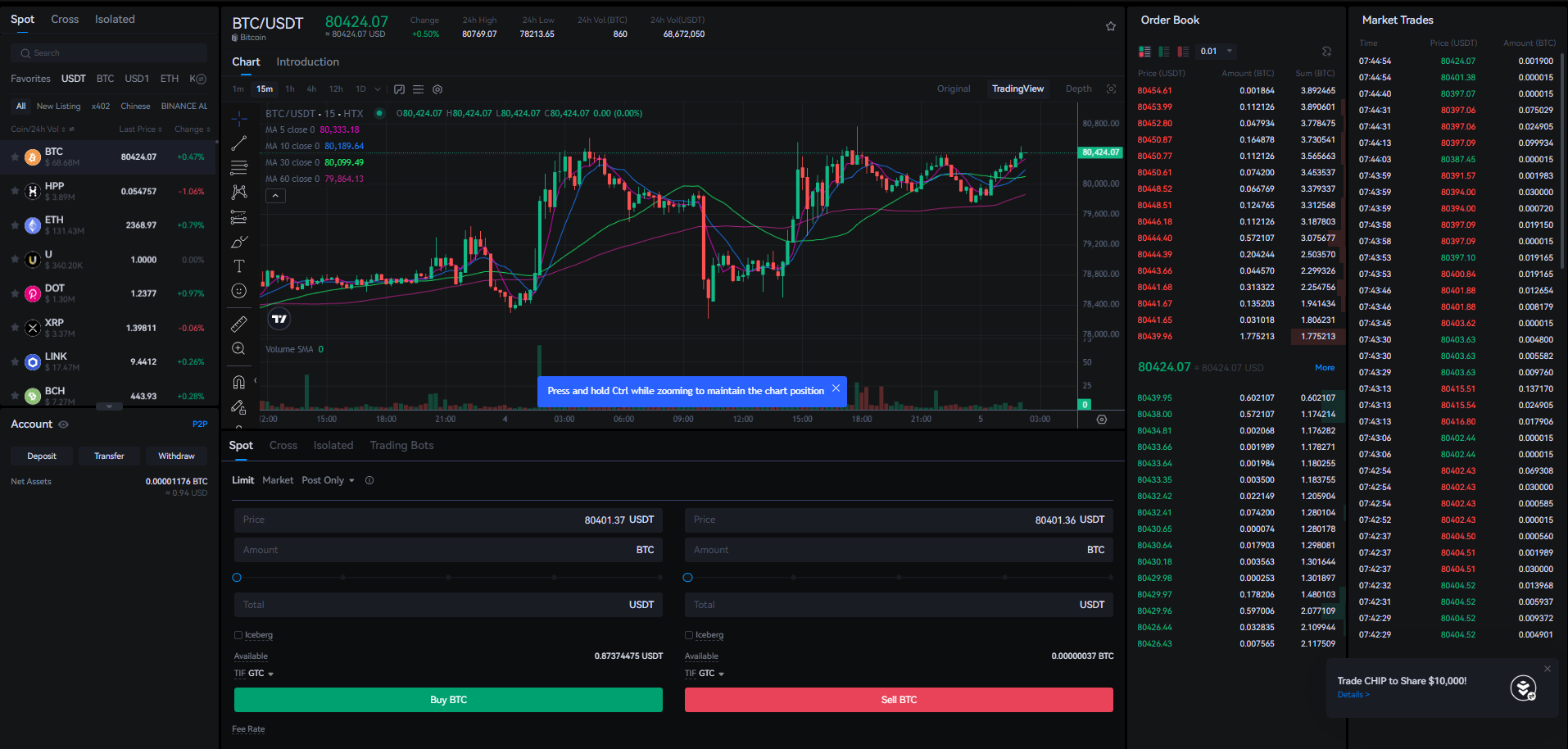
Step 5: Start Cryptocurrency Trading
You are now ready to go to the spot market and start buying your favorite coins. Well, I usually use limit orders because market orders can have a bit of a spread that eats into your profits. You just need to pick your pair, like BTC/USDT, and enter the price you want to pay.
HTX User Experience: Is It Beginner‑Friendly (Ease of Use)??
You know, the user experience can even make or break an exchange. In my HTX review and testing, I found the platform powerful but busy. The web interface loads quickly and runs smoothly even during high volatility, but there are pop‑ups for promotions, new product announcements, and competitions.
At first glance, the dashboard is cluttered. You’ll see a ticker of trending coins, a panel for your asset balance, shortcuts to Earn, Futures, and Bots, and a banner with the latest promotions. So, if you are new to crypto, that can feel overwhelming.
You need to spend some time exploring each tab, customizing your view, and hiding some of the adverts. After tweaking the settings, you will find it easier to navigate. HTX allows you to save your favorite pairs, collapse unused panels, and switch between dark and light modes.
HTX Mobile App Review
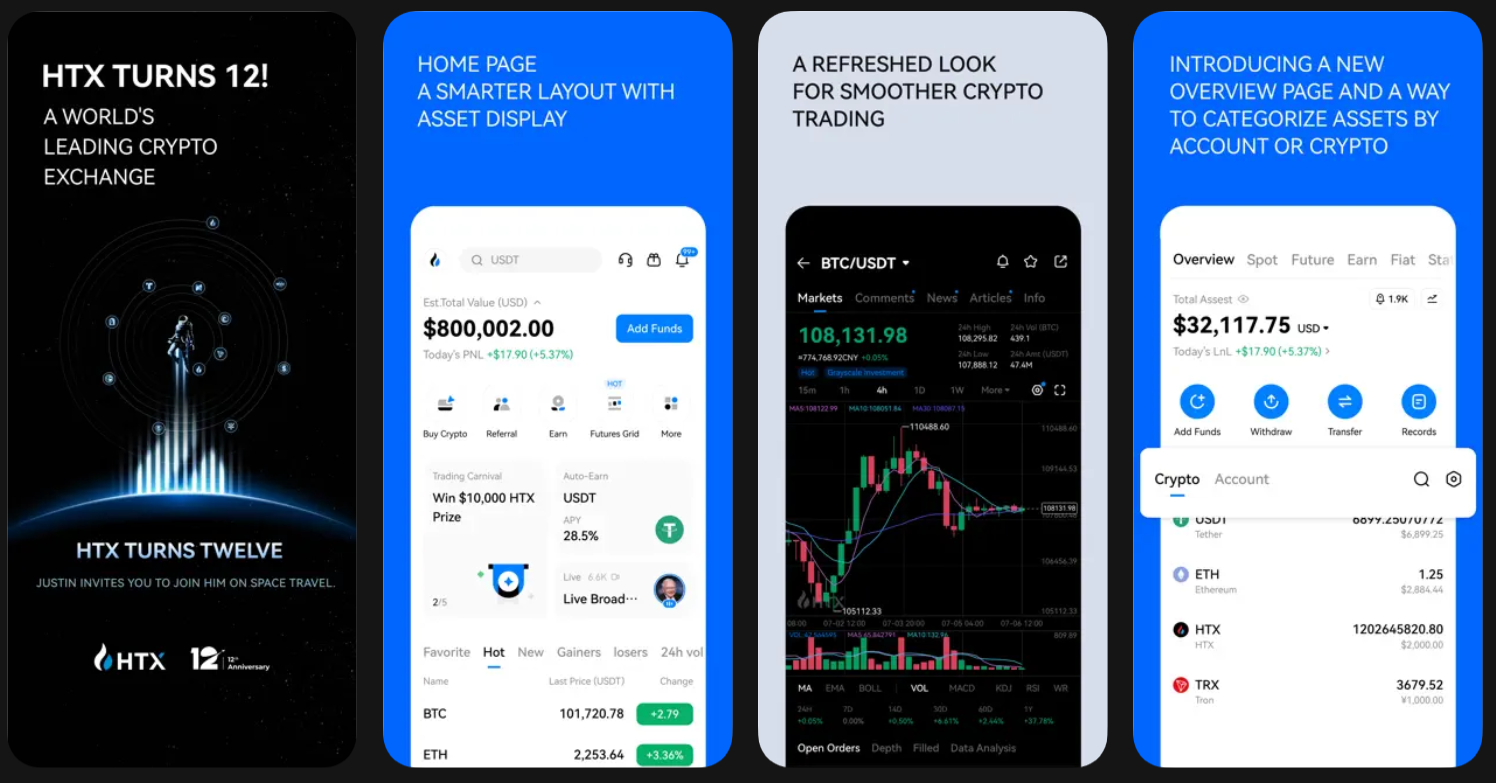
Honestly, I like the HTX app more than the desktop site. The app feels better organized, and the main tabs (Home, Markets, Trade, Earn, and Profile) are clearly labeled. Plus, when you open the app, you see your portfolio value, a list of trending coins, and quick access to deposit and withdraw.
You can swipe between Spot and Futures with a simple toggle. Here, charts load quickly, though they aren’t as detailed as on the desktop. You can enable face recognition or fingerprint login for convenience.
The app also includes a community feed where users post trade ideas, memes, and polls. It’s a bit like a social media timeline and can be fun if you like to see what other traders are thinking.
HTX Key Features & Products Reviewed
Quick Buy/Sell Crypto
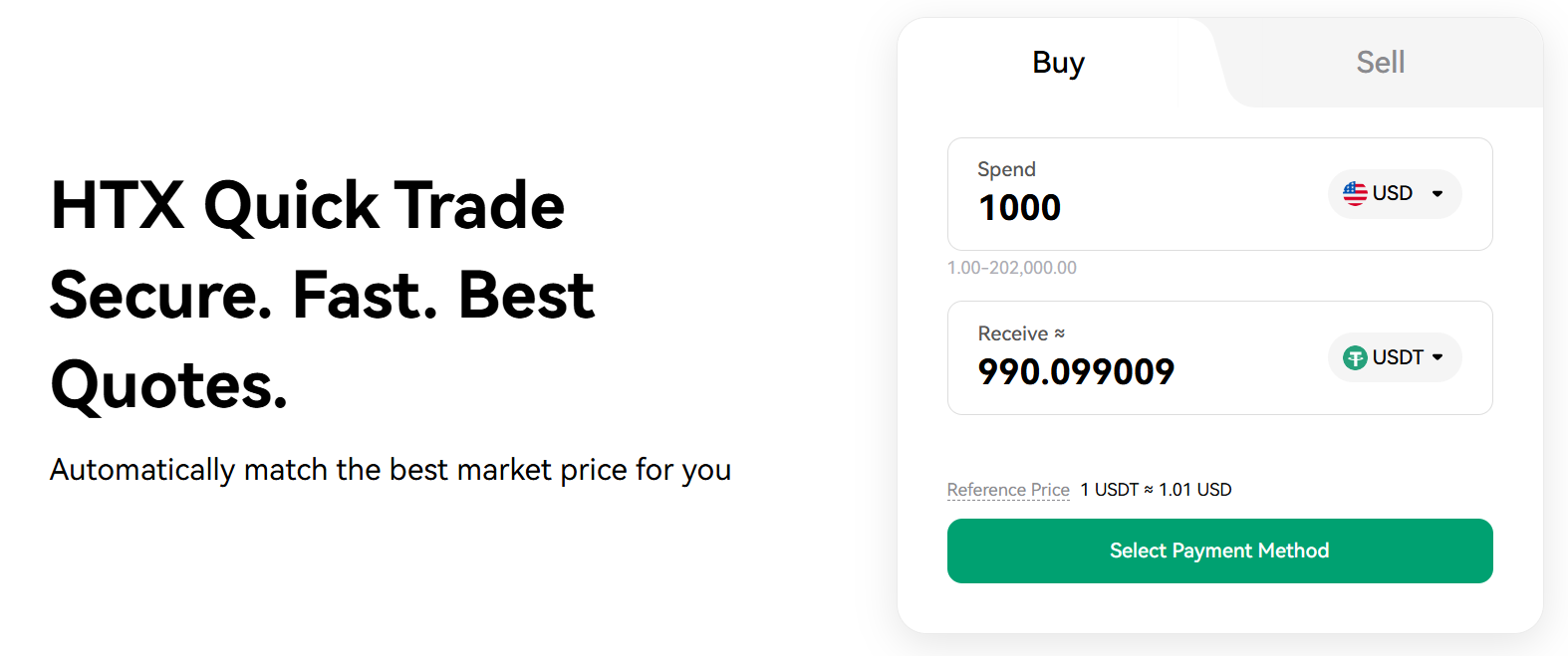
The Quick Buy/Sell button is the easiest way to purchase crypto with fiat. You can pay with a credit card, Apple Pay, Google Pay, or local bank transfer, depending on your region.
The user interface is straightforward: select the coin you want, choose your payment method, and confirm the transaction.
Well, the downside is that this convenience comes at a cost. The third‑party providers (Banxa, MoonPay, Mercuryo, etc.) charge high fees ranging from 3% to 5%. The exchange rate also tends to be worse than the spot market price. Yes, a bit of spread there. So, if you have time to wait, it’s cheaper to deposit via bank transfer or crypto and then buy on the spot market.
Derivatives Trading (Leverage Trading)
You’ll find three main types of leveraged products on HTX exchange: margin trading, perpetual futures, and options contracts. Let’s break them down.
1. Margin Trading
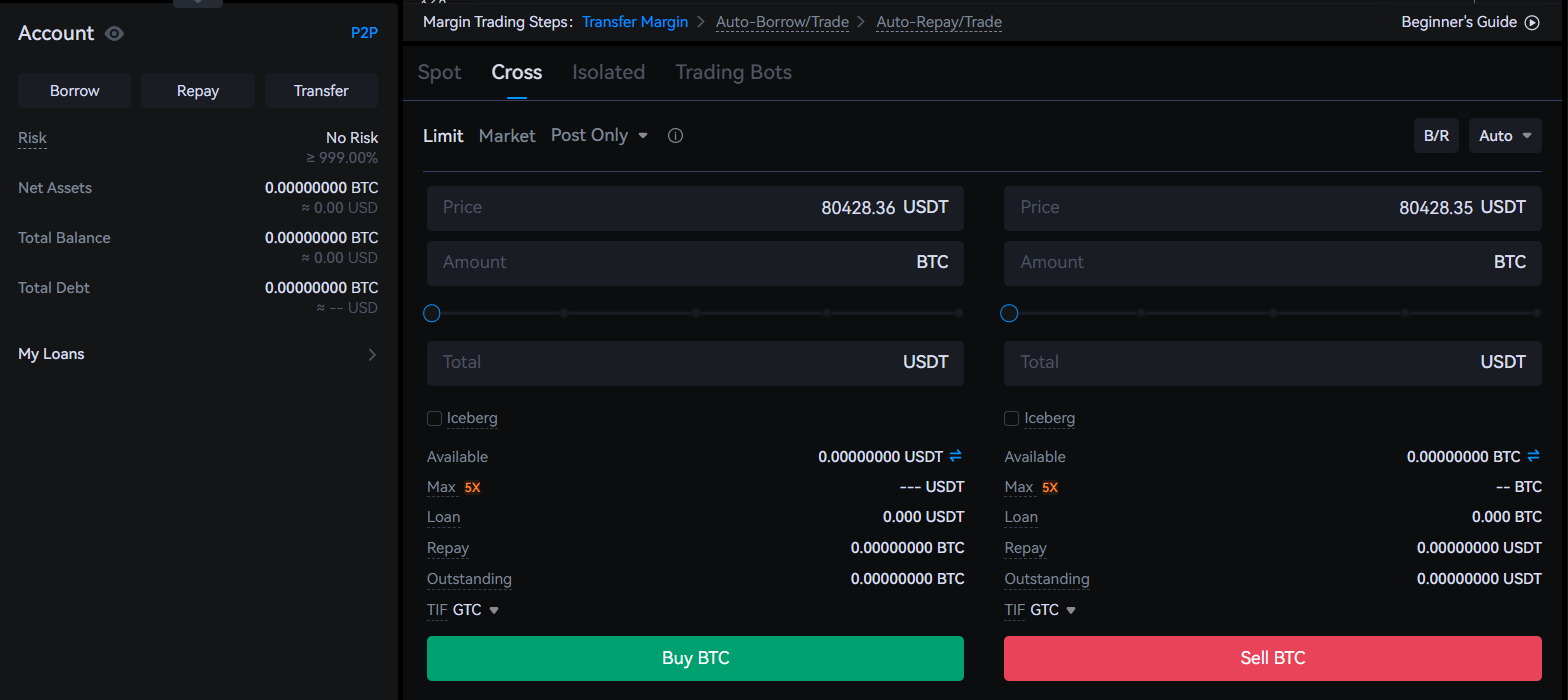
Margin trading lets you borrow funds from the exchange to increase your position size. Now, on HTX, you can choose between isolated margin, where the borrowed funds are limited to a single position, and cross margin, where your entire account acts as collateral.
The maximum leverage varies by coin, but it typically ranges from 3x to 10x on spot markets. Interest rates are charged hourly and can be higher on volatile assets. I tested margin trading with a small amount of BTC and ETH.
The interface is intuitive, showing your margin level, liquidation price, and unrealized profits. And, if the market moves against you, the margin level drops, and you could get liquidated. Well, I recommend using an isolated margin for risk control and never borrowing more than you can afford to lose. Also note that margin trading is not available to users in some countries due to local regulations.
2. Futures Trading
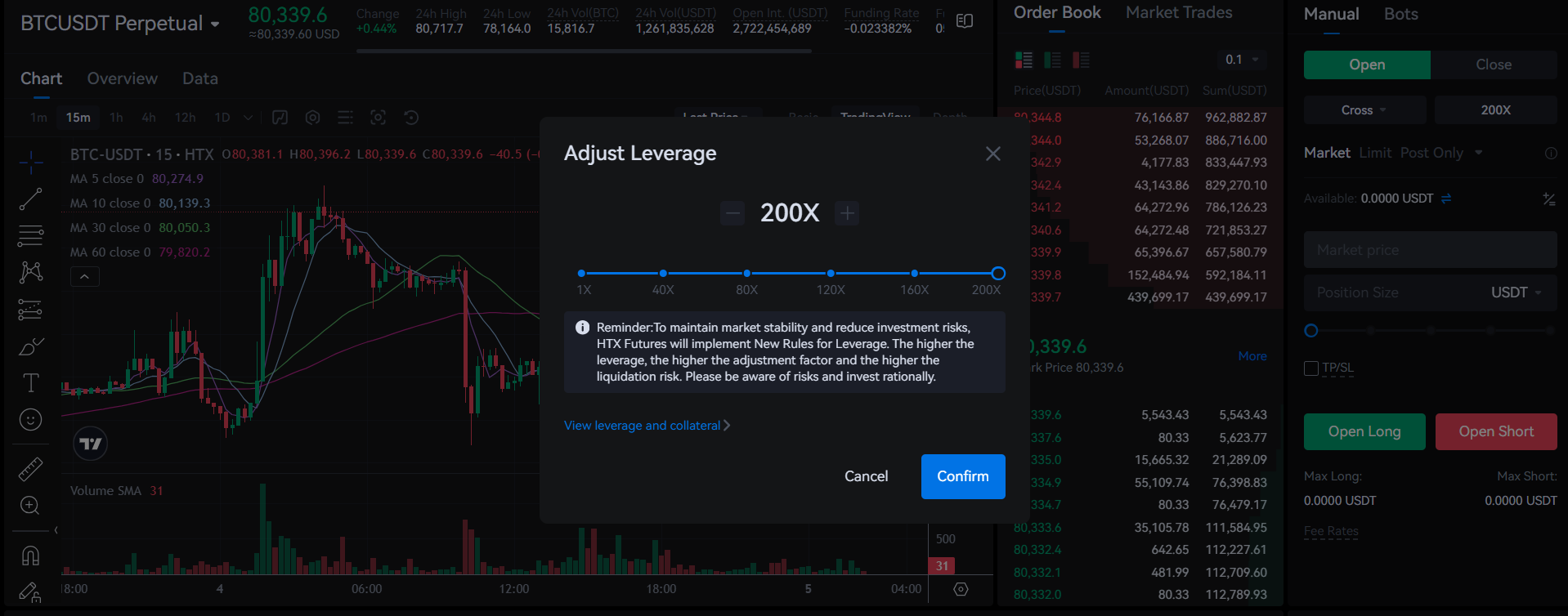
Perpetual futures contracts are the most popular leveraged product on HTX. You can trade futures denominated in USDT (USDT‑M) or denominated in the coin itself (Coin‑M).
Now, here, leverage goes up to 200x, though the default is much lower. The funding rate mechanism keeps the contract price anchored to the spot price. The interface shows your position size, entry price, liquidation price, margin mode, and unrealized P&L.
There are advanced order types like TP/SL (take profit/stop loss) in one click, and you can convert between cross and isolated margin. Also, recently in my HTX review, I found that it even expanded its futures offerings to include traditional assets like gold, silver, crude oil, major stock indices, and large U.S. tech stocks.
3. Options Contracts
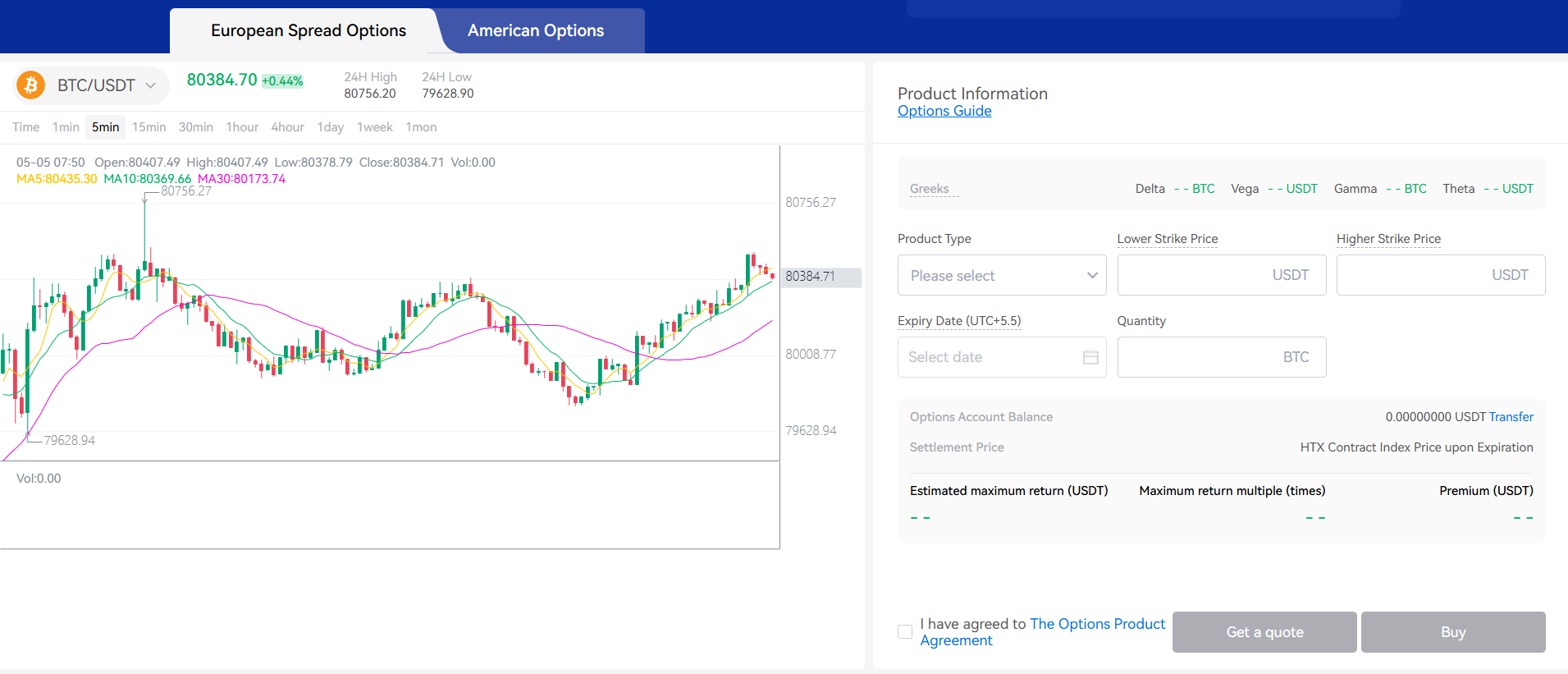
You can buy or sell call and put options on BTC, ETH, and other major coins. Options let you bet on volatility or hedge your exposure. For example, you can buy a call option if you think the price will go up or a put option if you think it will go down.
The interface on HTX shows the strike prices, expiration dates, and implied volatility. You can filter by expiration or strike and see the premium cost. The spreads can be wide, and liquidity is lower than on futures.
Copy Trading
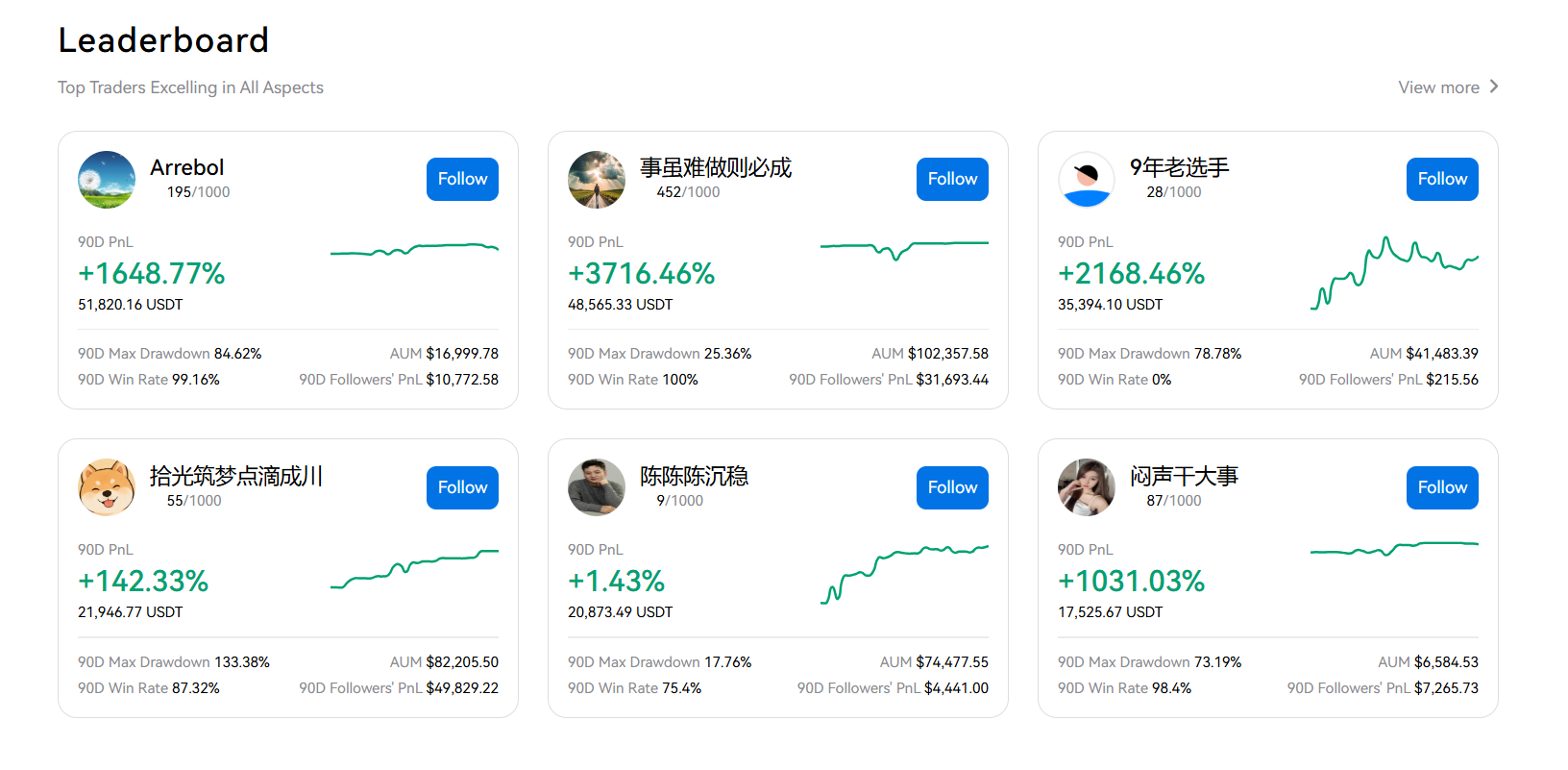
HTX’s Copy Trading allows you to follow professional traders called Lead Traders. You can view each trader’s past performance, number of followers, and risk rating. Now, if you find someone you like, you can allocate a portion of your portfolio to automatically copy their trades.
The algorithm adjusts your position size based on your account and the lead trader’s risk profile. Here, fees are usually a share of the profits or a small management fee. My advice is to start small, diversify across multiple lead traders, and monitor the positions.
Trading Bots
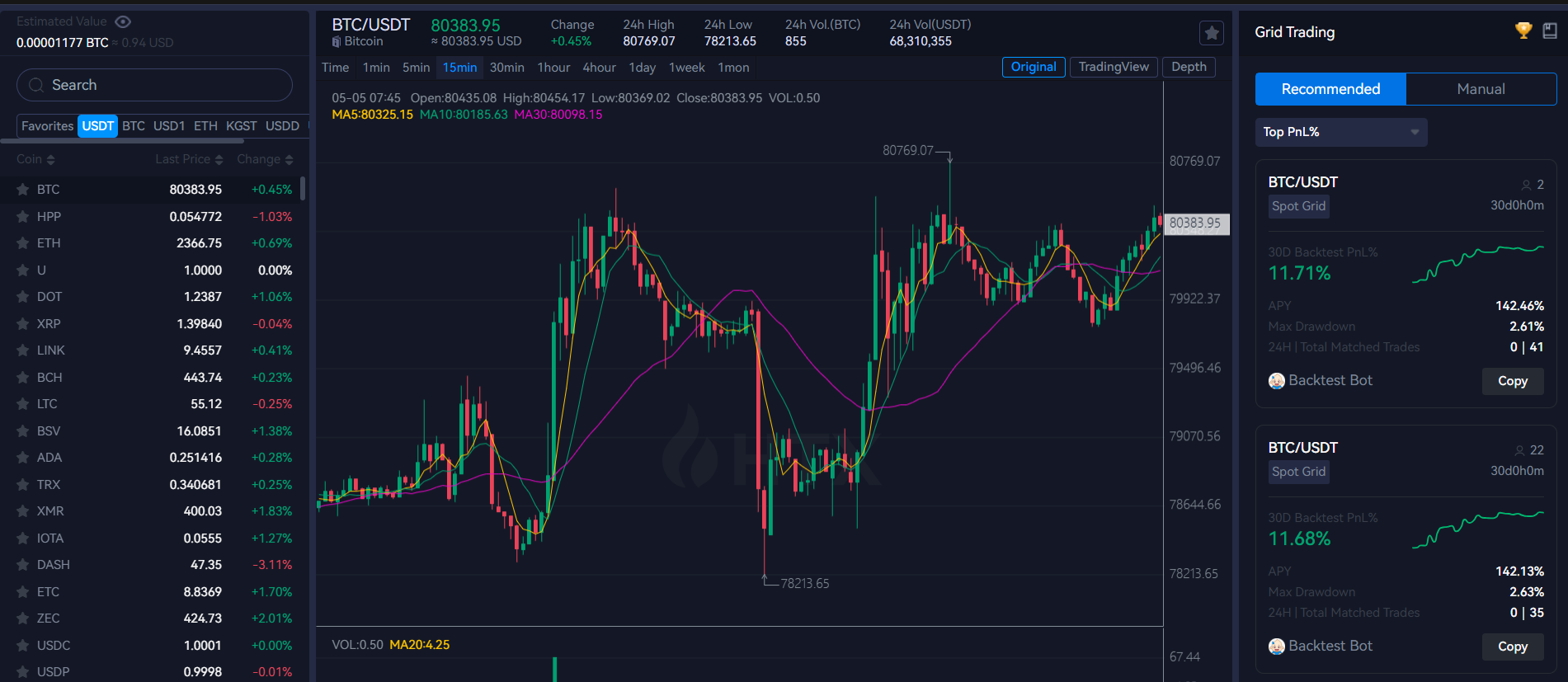
The HTX platform includes several free trading bots that can run automated strategies. The most popular bot is the Grid Trading bot, which places buy and sell orders at predefined intervals above and below the current price. Grid bots work best in sideways markets.
There’s also a Dollar‑Cost‑Averaging (DCA) bot that buys a fixed amount at regular intervals. Another is the Rebalancing Bot, which periodically adjusts your holdings to maintain a target allocation.
What are the HTX Earn Products (Passive Income Options)?
Fixed and Flexible Savings
Flexible savings accounts let you deposit coins and withdraw them anytime. You can redeem your principal instantly, and interest accrues daily. Yields on flexible savings are generally lower, ranging from 1% to 6% APY, depending on the asset.
Now, fixed savings lock up your coins for a specified term. This is usually 7, 30, 60, or 90 days. The longer the term, the higher the yield. But here, the catch is that you can’t withdraw early without forfeiting the interest. So, fixed plans are good if you have coins you don’t plan to trade soon.
Crypto Loans
Crypto loans let you borrow stablecoins or other crypto by using your assets as collateral. So, suppose you have 1 BTC but need cash for an emergency. You can deposit the BTC into HTX’s loan service and borrow USDT at a certain loan‑to‑value ratio, often around 70%.
Now, you need to pay interest on the borrowed amount, and if your collateral’s value drops too much, you might be liquidated. This service is useful if you need liquidity but don’t want to sell your coins and trigger a taxable event. The interest rates vary, but they are usually lower than those of unsecured personal loans. You can choose between a flexible loan with no fixed term or a fixed‑term loan with lower rates.
Dual Investment
Dual investment products offer high yields by selling a covered call or a put option on your behalf. Basically, you have to deposit one coin and agree to buy or sell another coin at a target price on a future date.
Now, if the market stays within a range, you keep your original asset plus a yield that can be as high as 30% APY, and if the market moves beyond the target price, your asset may be converted into the other coin.
Note: Dual investment is quite risky because you may end up holding a different asset than you started with, but the yields are attractive for short‑term plays.
On‑Chain Proof‑of‑Stake (PoS) Staking
Staking on HTX allows you to earn block rewards from proof‑of‑stake networks without running a validator yourself. You can stake coins like ETH, TRX, ATOM, SOL, DOT, and more.
HTX pools user funds and operates validators on your behalf. You will receive staking rewards minus a small fee. HTX recently added an on‑chain staking service for USDe as well that lets you mint and redeem tokens directly, bridging CeFi and DeFi.
What are the HTX Fees?
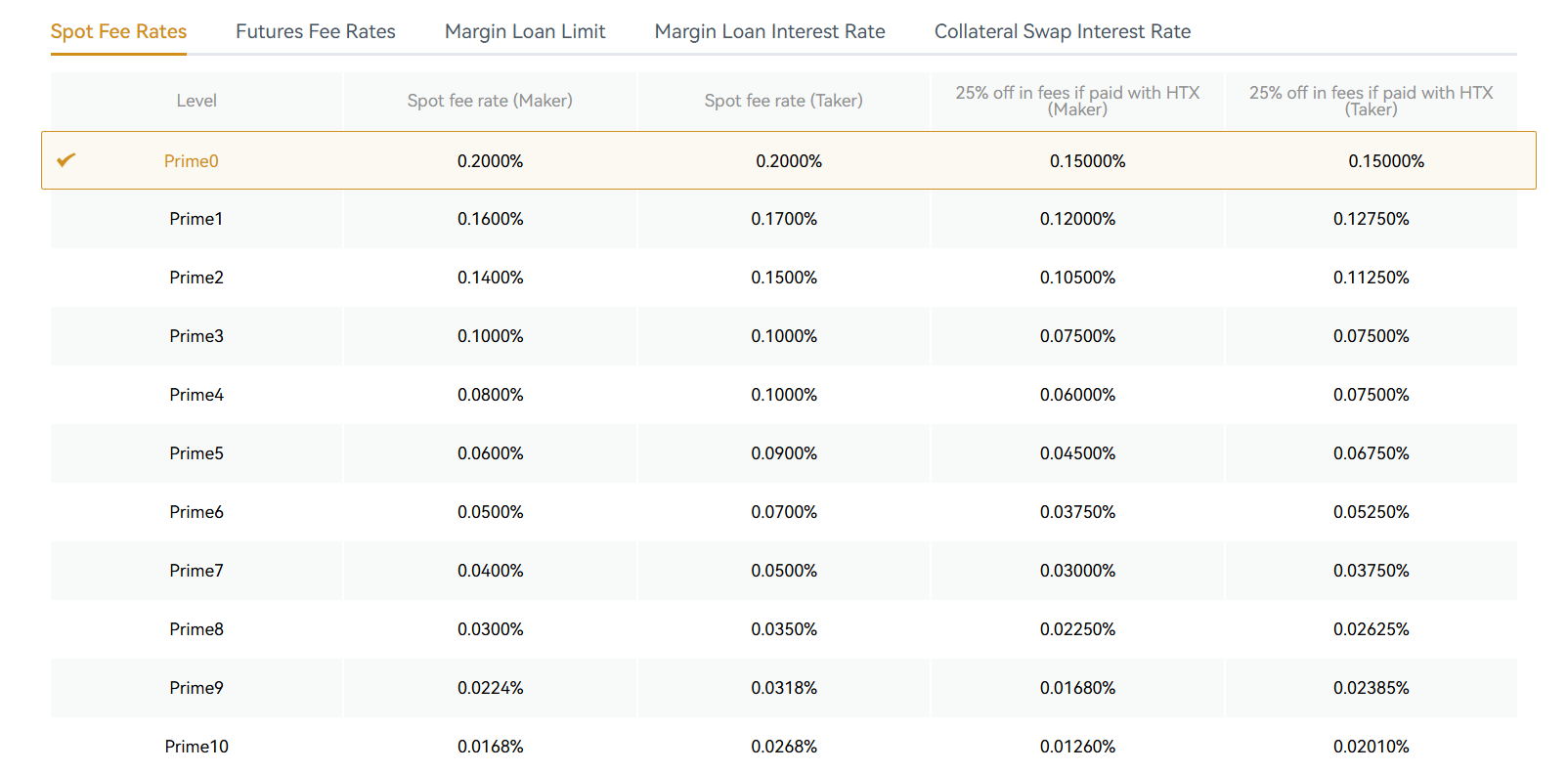
The HTX trading fee for spot trading is 0.2% for both makers and takers. Honestly, this is a bit higher than Binance’s 0.1%, but you can lower it very easily. If you hold HTX tokens, you can get a 25% discount, which brings it down to 0.15%.
Deposit and Withdrawal Fees
Depositing crypto to HTX is free. You only pay network fees on the sender’s side. That said, withdrawing crypto incurs a fee that varies by coin and network.
For Bitcoin, the withdrawal fee is currently around 0.000025 BTC, Ethereum withdrawal fees hover around 0.00021 ETH, though they can be higher during network congestion, and TRC‑20 withdrawals are much cheaper, costing roughly 1 USDT or less.
HTX Payment Methods
- Credit and debit cards: You can buy crypto directly with Visa, Mastercard, and in some regions with Apple Pay or Google Pay.
- Bank transfers: In Europe, SEPA transfers let you deposit euros directly. In Australia, you can deposit AUD via bank transfer. In Turkey, HTX partners with local banks to accept TRY.
- P2P trading: The P2P market lets you buy and sell crypto directly with other users using payment methods like bank transfers, PayPal, Revolut, Payoneer, and cash. Mainly, HTX acts as an escrow to ensure both sides fulfill their obligations. P2P trading is available in many countries and often has zero trading fees.
- Third‑party processors: Generally, in some regions, HTX works with payment providers like Banxa, MoonPay, and Mercuryo. They handle card payments, Apple Pay, or Google Pay, and deposit crypto to your HTX account.
Conclusion & Final Verdict
So, after all that, what’s my final take on HTX? In a few words, HTX is a feature‑rich exchange with a huge selection of coins, deep liquidity, and attractive earning products. The trading fees are average or quite high, but you can reduce them further with HTX tokens. The Earn section has something for every yield hunter, and new features like AI assistants, SmartEarn, and copy trading improvements show that HTX is increasing its feature list.
Now, at the same time, HTX has serious drawbacks. It is not available in many major markets, including the U.S., Canada, China, and parts of Europe. The platform operates in a regulatory grey zone, lacking full licenses in most jurisdictions. The company’s connection to Justin Sun and the history of hacks might raise eyebrows. Plus, customer support is inconsistent, and public HTX reviews are harsh.
FAQs (Frequently Asked Questions)
Is HTX Safe?
Yes, I’d say that HTX is generally safe to use if you take the proper precautions. The exchange keeps the majority of its assets in cold storage, publishes monthly proof‑of‑reserves, and offers a robust set of user security features. They also maintain a protection fund to compensate users in the event of a hack. But HTX has been hacked before, and there is always some level of risk
What is HTX Crypto?
HTX is both the name of the exchange and its native token. The token, formerly known as Huobi Token (HT), rebranded to HTX in 2024. Basically, holding HTX gives you discounts on trading fees, access to VIP tiers, and the ability to vote on governance proposals.
Where is HTX Located?
HTX is registered in Seychelles, a small island nation known for its flexible regulatory environment. The company also has offices in Hong Kong, Singapore, South Korea, Turkey, Japan, and other countries. They operate globally but choose locations that allow them to offer a wide range of products without stringent restrictions.
Does HTX Require KYC?
Yes. You cannot access most features or withdraw large amounts without completing know‑your‑customer verification. HTX asks for your name, date of birth, identification document, and sometimes proof of address.
Is HTX a Chinese Crypto Exchange?
Not anymore. HTX started as a Chinese exchange called Huobi in 2013, but after the Chinese government banned crypto exchanges in 2017, the company moved offshore. Today HTX is headquartered in Seychelles and operates globally.