
Bybit and Binance are two of the biggest crypto trading platforms. Both crypto exchanges let you trade spot, futures, and options. However, they have different trading fees, safety rules, offered features, and app designs. This guide shows you how to pick the best cryptocurrency exchange for your trading…
Quick Verdict
BYBIT
Bybit is better than Binance for traders who want a more focused derivatives trading experience. It offers advanced derivatives tools, a cleaner user interface, and a Unified Trading Account that makes different markets easier for beginners to manage. Bybit also provides one of the widest derivatives product ranges and supports users across many international markets where Binance may have restrictions.
Who should choose Bybit
- Bybit suits traders who mainly use perpetual futures, expiry futures, or options.
- One account lets you manage spot, margin, futures, and options.
- Copy Trading works well for following experienced Master Traders.
- Grid, DCA, and Martingale bots support no-code automation.
- TradFi adds access to forex, metals, indices, and stock CFDs.
Who should choose Binance
- Binance suits traders looking for 600+ cryptocurrencies and a broad spot market.
- High-volume traders benefit from deep order books and strong liquidity.
- Multiple funding routes cover cards, bank deposits, Convert, and P2P trading.
- Simple Earn, Launchpool, and Binance Alpha provide more earning opportunities.
- BNB holders can receive up to a 25% spot trading fee discount.
Exchange Overview
Binance is the larger all-around cryptocurrency exchange, while Bybit is more focused on active trading and derivatives.
Binance started in 2017 and now serves more than 320 million registered users across over 180 countries. You can trade 600+ cryptocurrencies and use Spot, Margin, Futures, Options, P2P, Earn, Auto-Invest, Launchpool, Alpha, Pay, and Web3 tools from one ecosystem.
Bybit started in 2018 and has passed 80 million users. You will get Spot, Margin, USDT and USDC perpetuals, inverse contracts, futures, options, copy trading, trading bots, Earn, P2P, a crypto card, Web3 tools, and access to selected real-world markets in supported regions.
Side-by-Side Comparison
Binance wins more categories in a direct Bybit vs Binance comparison.
| Comparison | Bybit | Binance | Winner |
|---|---|---|---|
| Launch year | 2018 | 2017 | – |
| Registered users | 80+ million | 320+ million | – |
| Main strength | Derivatives and copy trading | Liquidity and full ecosystem | – |
| Cryptocurrencies | 1,600+ | 600+ | Bybit |
| Standard spot fee | 0.10% maker/taker | 0.10% maker/taker | Tie |
| USDT-M futures fee | 0.02% maker; 0.055% taker | 0.02% maker; 0.05% taker | Binance |
| Maximum crypto leverage | Up to 125x | Up to 125x, based on pair | Tie |
| KYC | Standard KYC required | Verified KYC required | Tie |
| U.S. access | No | Binance.US only | Binance |
| Stock Exposure | Yes, xStocks tokenized equities and ETFs on spot | No | Bybit |
| Country Availability | 160+ countries, excluding the US, UK, Canada, Singapore, France | Geo-blocks the US, Canada, Netherlands, and other restricted markets | – |
| Licenses | VARA and SCA in the UAE, MiCAR via Austria’s FMA in the EU, and FIU-IND in India | ADGM FSRA Global License, Dubai VASP License, and Brazil Brokerage License | Depends |
Trading Fees Comparison
Binance and Bybit charge the same basic spot fees, but Binance is slightly cheaper for USDT-M futures taker orders.
| Trading Fee | Bybit | Binance | Winner |
|---|---|---|---|
| Spot maker fee | 0.10% | 0.10% | Tie |
| Spot taker fee | 0.10% | 0.10% | Tie |
| Native-token spot discount | 25% with MNT | Up to 25% with BNB | Tie |
| Discounted spot fee | 0.075% | 0.075% | Tie |
| USDT-M futures maker fee | 0.020% | 0.020% | Tie |
| USDT-M futures taker fee | 0.055% | 0.050% | Binance |
| Native-token futures discount | 10% with MNT | 10% with BNB | Binance |
| Discounted futures maker fee | 0.018% | 0.018% | Tie |
| Discounted futures taker fee | 0.0495% | 0.045% | Binance |
| Crypto deposit fee | Free | Free | Tie |
| Internal transfer fee | Free | Free | Tie |
| Crypto withdrawal fee | Depends on coin and network | Depends on coin and network | Depends |
| Perpetual funding fee | Variable | Variable | Depends |
Spot Fees
- Bybit: 0.10% maker and 0.10% taker as a non-VIP user for normal crypto-to-crypto pairs.
- Binance: 0.10% maker and 0.10% taker as a regular user.
- Bybit discount: You can reduce eligible spot fees by 25% when you pay with MNT, bringing the base rate to 0.075%.
- Binance discount: You can save up to 25% by paying spot fees with BNB, which can also reduce the base rate to 0.075%.
Futures Fees (USDT-M Perpetuals)
- Bybit: 0.02% maker and 0.055% taker at VIP 0.
- Binance: 0.02% maker and 0.05% taker as a regular user.
- With token discounts: Eligible MNT payment can lower Bybit fees by 10%, while BNB payment can lower Binance futures fees by 10%.
- Extra cost: You may also pay or receive a funding fee on perpetual positions. Funding changes by pair and market balance, so trading fees do not show your full cost.
Basically, Binance saves you around $0.50 in taker fees for every $10,000 of futures volume before discounts. The gap looks small, but frequent trading can eventually turn a small rate difference into real money.
Withdrawal Fees
- No fee for normal on-chain crypto deposits on either crypto exchange.
- Bybit charges a flat withdrawal fee based on your selected coin and network. You see the live amount in the withdrawal window. Binance also charges a flat fee for each crypto withdrawal, and the amount depends on the asset and network.
- You can transfer funds to another account on the same exchange without an on-chain network fee through supported internal transfer methods.
Trading Features
Bybit gives you the smoother derivatives setup, while Binance gives you the wider product range.
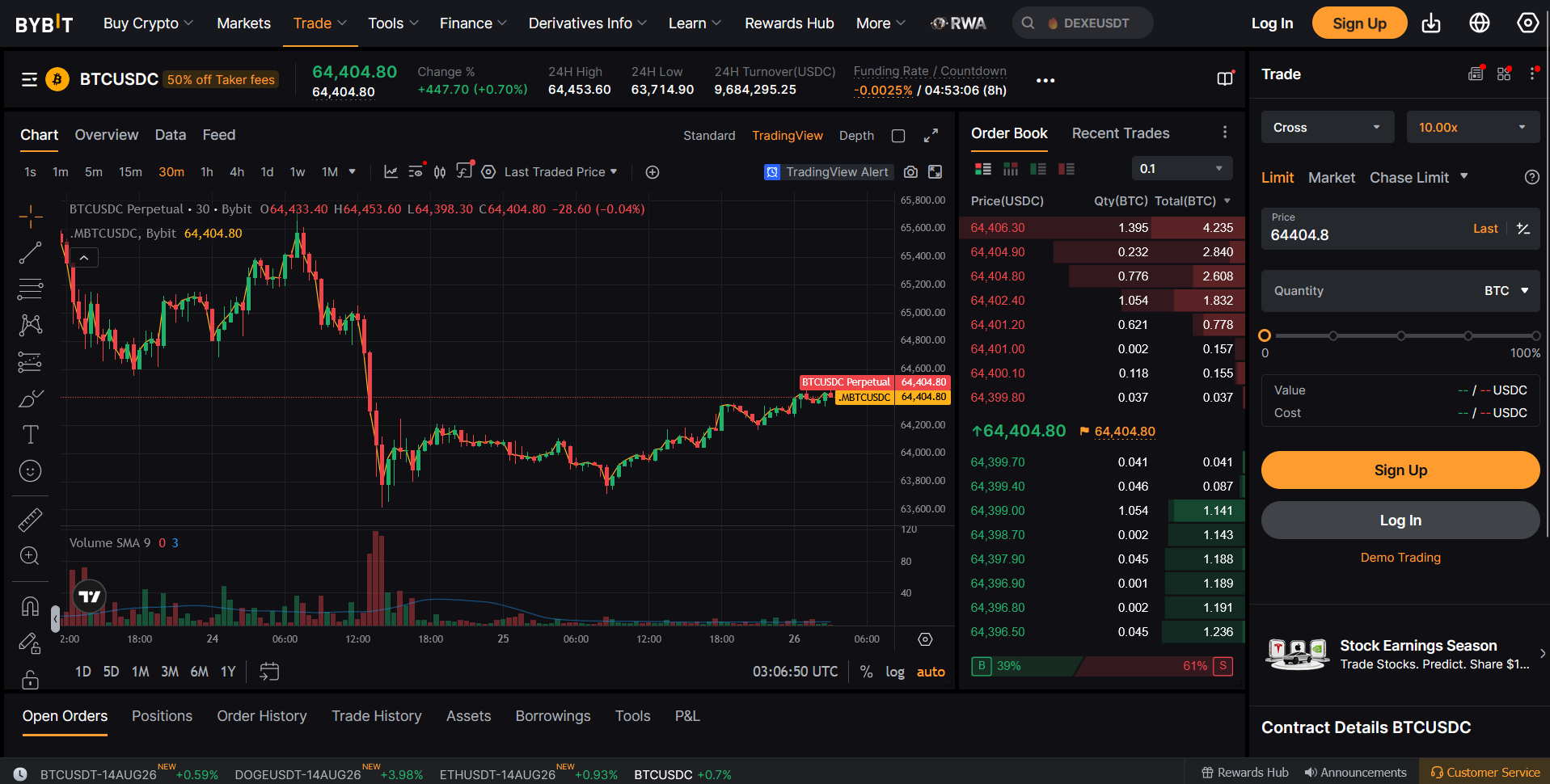
Bybit Products
- Perpetual and Expiry Futures: You can trade USDT, USDC, and inverse contracts with leverage. You see, perpetual contracts do not expire, while expiry futures settle on a fixed date. You can go long or short based on the market direction you expect.
- Options Trading: Trade USDT-settled call and put options for assets such as BTC and ETH. Bybit uses European-style, cash-settled options, so you can only exercise each option at expiration.
- Unified Trading Account: Here, you can manage spot, Spot Margin, perpetuals, futures, and options from one account. Basically, you can use supported assets as collateral across several markets without moving your money between separate trading accounts every time.
- Copy Trading: Automatically copy eligible trades from a Master Trader. Copy Trading Classic currently supports USDT, while other copy products cover different strategies and markets.
- Trading Bots: You can automate your trades with Grid, DCA, and Martingale bots. A Grid bot places buy and sell orders inside your chosen price range, while a DCA bot buys crypto at set times. Martingale bots add to a position after certain price moves, so you need to watch the risk carefully.
- Bybit Earn: You can earn rewards through Easy Earn, On-Chain Earn, and Advanced Earn. Easy Earn gives you flexible and fixed plans, On-Chain Earn lets you stake assets such as ETH and SOL, and then Advanced Earn includes higher-risk products such as Dual Asset.
- TradFi Trading: Trade more than 300 pairs across forex, metals, commodities, indices, and stock CFDs. You can access these markets through Bybit TradFi and MT5.
Binance Products
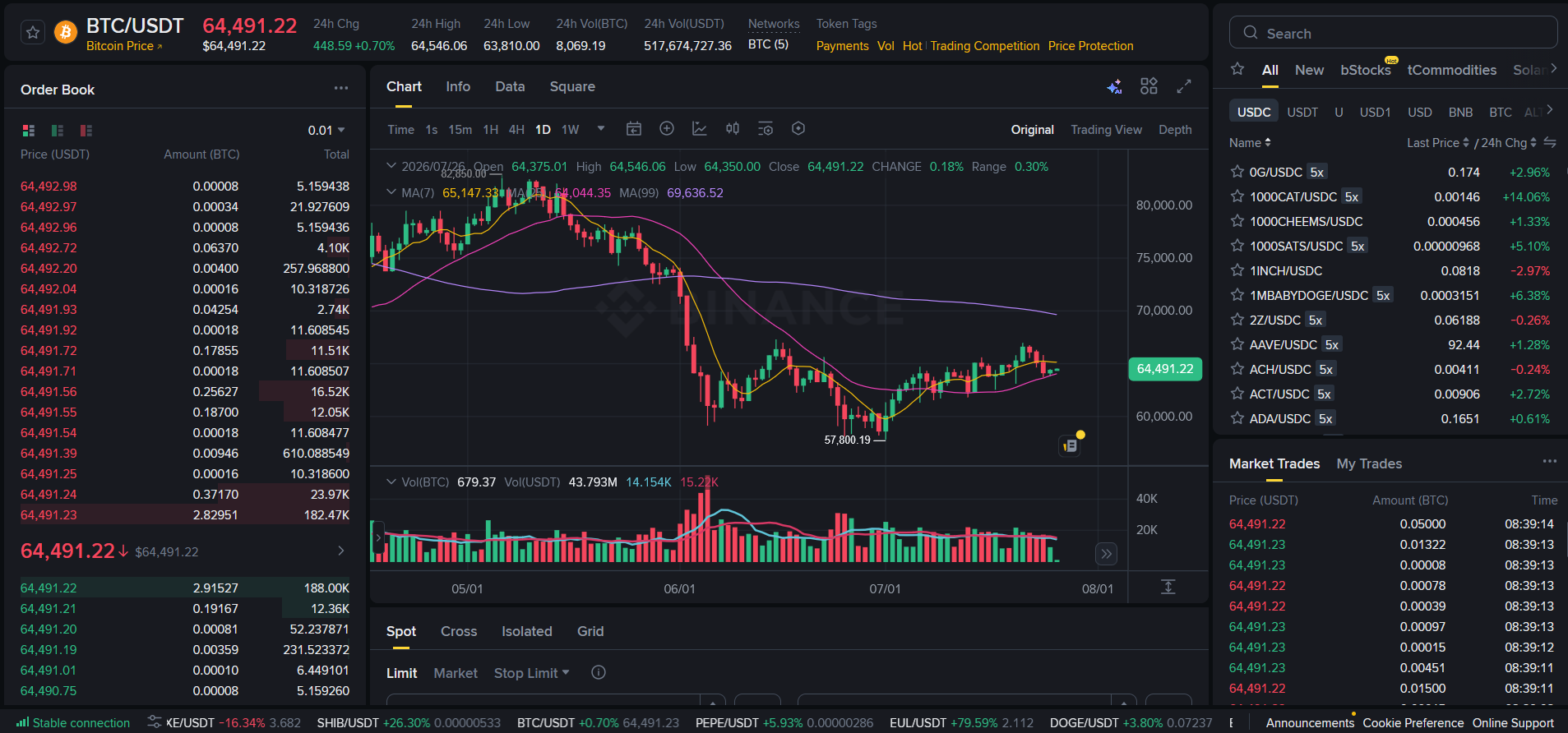
- Spot Trading and Convert: You can trade over 600 cryptocurrencies across the global Binance platform. Here, spot Trading gives you an order book and advanced order types, while Binance Convert gives you a very easy way to swap one asset for another. Well, Convert supports more than 7,000 crypto and fiat pairs in total.
- Margin Trading: You can borrow crypto and trade with up to 10x leverage here. It supports both cross and isolated margin modes. Cross Margin shares collateral across your margin positions, while Isolated Margin keeps the collateral and risk inside one trading pair. You will pay borrowing interest and may lose your collateral through liquidation.
- Futures and Options: It supports more than 250 futures and options contracts. Binance offers USDⓈ-M and COIN-M futures, including perpetual and expiry contracts. You can also trade European-style options for more advanced hedging and price strategies.
- Copy Trading: Here, you can copy selected lead traders in both the spot and futures markets. Your positions can follow the lead trader automatically based on the amount and settings you choose.
- Trading Bots: Binance offers Spot Grid, Futures Grid, Spot DCA, Futures DCA, Rebalancing, and Futures Arbitrage bots for automated crypto trading.
- Simple Earn: Place supported crypto into Flexible or Locked products to earn daily rewards. Binance Earn supports more than 180 cryptocurrencies. Flexible products give you easier access to your money, while Locked products may offer higher rewards for keeping your assets committed for a fixed term.
- Binance P2P: Buy and sell crypto directly with other users through hundreds of local payment methods. You also get an escrow system that holds the crypto until the payment process is complete.
- Launchpool and Binance Alpha: You can lock BNB or another supported token in Launchpool to receive tokens from selected projects. You can also use Binance Alpha to find early-stage Web3 projects and possible future exchange listings.
Security Measures
Binance wins on security because both exchanges maintain 1:1 reserves, but Binance also has a roughly $1 billion SAFU fund and has not faced a breach as large as Bybit’s $1.5 billion cold-wallet hack.
Bybit Security
- You get passkeys or two-factor authentication, an anti-phishing code, a fund password, address allowlisting, new-address locks, withdrawal delays, and location-based withdrawal checks.
- Bybit separates customer deposits from the operating budget and keeps most customer assets in multi-signature cold storage.
- Regular Proof of Reserves data through Merkle-tree records and open-source verification tools.
Major incidents and controversies
- February 2025 Ethereum Cold Wallet Hack: Bybit suffered the biggest crypto hack ever, losing about $1.4 billion to $1.5 billion in Ethereum. Actually, reports blamed North Korea’s Lazarus Group for the attack. Bybit kept withdrawals running, said customer balances remained backed 1:1, and closed the ETH reserve gap within 72 hours, obviously by taking loans.
- Regulatory Compliance Controversies: Bybit faces strong government rules and warnings around the world. The company had to pull out of big markets like the US, Canada, and the UK because it did not have local licenses and failed to follow strict identity and trading laws.
Binance Security
Binance offers the stronger overall safety net in this comparison.
- Passkeys, 2FA, anti-phishing codes, device controls, withdrawal allowlists, withdrawal locks, and automated risk checks.
- Binance publishes 1:1 Proof of Reserves with Merkle trees and zk-SNARK verification.
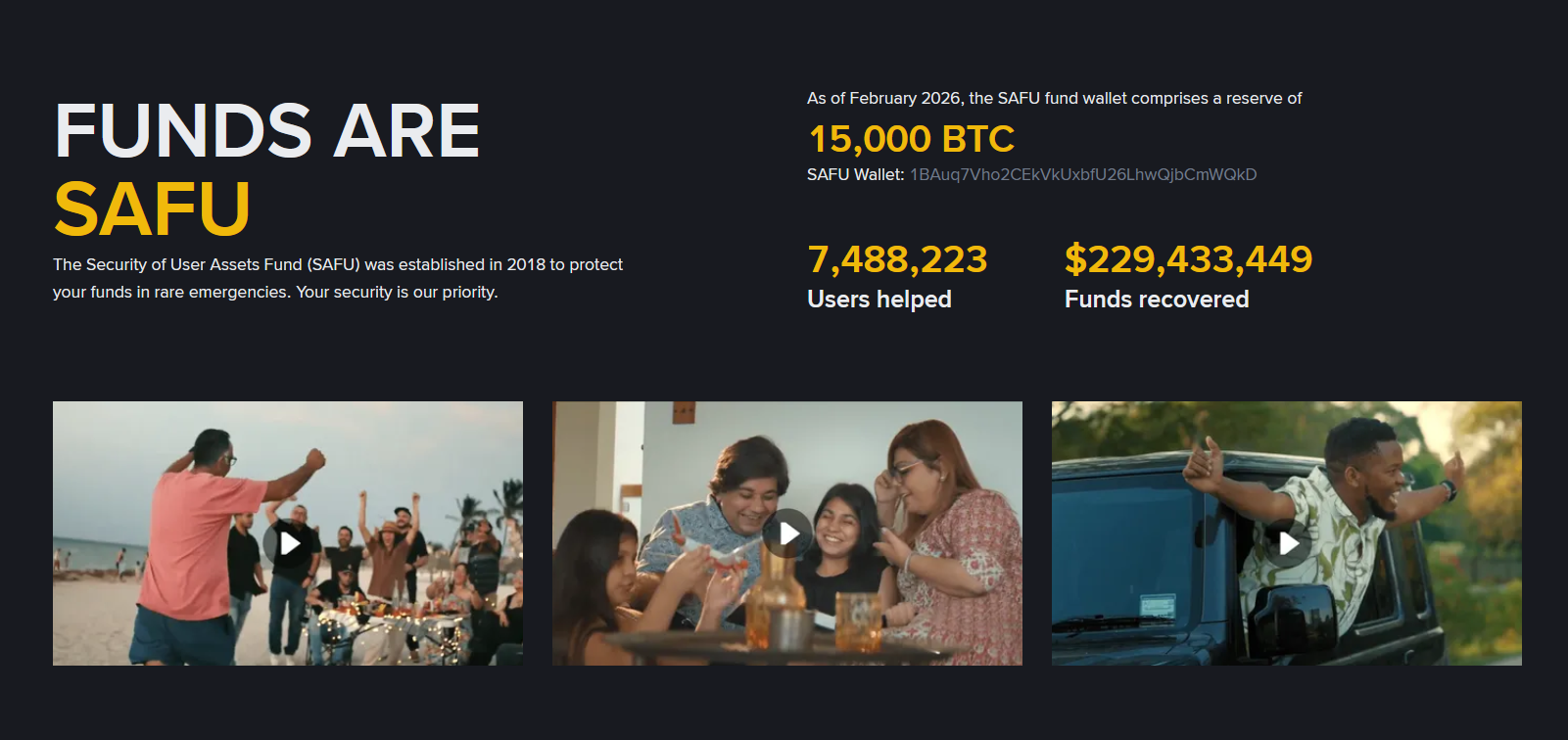
- The SAFU emergency fund held about $1 billion in crypto assets
Major incidents and controversies
- May 2019 Security Breach: Hackers used phishing emails and viruses to steal 7,000 Bitcoin (worth around $40 million back then) from Binance online wallets in one go. Binance used their SAFU fund to cover all the losses so users did not lose money.
- October 2022 BNB Chain Exploit: A bug in the BSC Token Hub bridge let hackers make 2 million fake BNB tokens (worth about $570 million). People running the network stopped the chain fast, so they saved the money before hackers could take anything from the main exchange.
- Regulatory and Compliance Controversies: Big reports and government actions (like the huge $4.3 billion US government fine in late 2023) showed Binance had weak security checks in the past. They failed to check user IDs and stop black money, which allowed criminals to use the exchange.
Regulations
Bybit holds major regulatory licenses and registrations globally, including VARA and SCA in the UAE, MiCAR via Austria’s FMA in the EU, and FIU-IND in India.
Binance also has various regional and global regulatory approvals; key highlights include the ADGM FSRA Global License, Dubai VASP License, and Brazil Brokerage License.
Bybit Licenses
- SCA License: Virtual Asset Platform Operator License from the Securities and Commodities Authority (UAE mainland)
- VARA License: Provisional/Market-peer Virtual Assets Regulatory Authority license (Dubai)
- MiCAR / CASP License: Markets in Crypto-Assets authorization via Bybit EU GmbH regulated by the Austrian Financial Market Authority (FMA) for the EEA
- FIU-IND Registration: Financial Intelligence Unit registration (India)
- AFSA License: Astana Financial Services Authority (Kazakhstan)
- NBG License: National Bank of Georgia (Georgia
Binance Licenses
- Abu Dhabi Global Market (ADGM): Financial Services Regulatory Authority (FSRA) Global Licenses (Nest Exchange Limited, Nest Clearing and Custody Limited, Nest Trading Limited)
- Dubai: Virtual Asset Service Provider (VASP) License (Binance FZE)
- Brazil: Brokerage Self-Dealing License
- India: Financial Intelligence Unit (FIU) Registration
- United States: FinCEN Money Services Business Registration & State-Level Money Transmitter Licenses (Binance.US / BAM Trading Services)
- France: Digital Asset Service Provider (DASP)
- Japan: Financial Services Agency (FSA) / Type 1 Financial Instruments Business
- Italy: OAM Registration
- Lithuania: Crypto-Asset Service Provider / VASP
- Australia: Digital Currency Exchange (DCE) Register
User Experience & Platform
Bybit is better for derivatives, while Binance works better as one app for almost every crypto need.
You get fast web and mobile apps from both exchanges. Bybit keeps order entry, position data, and risk controls pretty close together. The Unified Trading Account also saves you from moving collateral between several wallets for every trade.
Binance gives you Lite and Pro modes. Lite mode helps you buy, sell, and check a portfolio without too much detail, while Pro mode opens the complete exchange with advanced tools and features.
Honestly, I would choose Bybit for a clean futures workflow and Binance for spot buying, fiat deposits, and long-term platform use.
Read more: Best Binance alternatives to use
Frequently Asked Questions
Is Bybit better than Binance?
Bybit is not better than Binance overall, but Bybit can be better for a futures-focused trader. You get a cleaner derivatives interface, strong copy trading, and a useful Unified Trading Account. Binance still wins for liquidity, fiat access, products, and overall value.
How does Binance win over Bybit?
Binance wins through deeper liquidity, lower futures taker fees, more fiat routes, a wider Earn section, and a much larger user base. You also get a broader product ecosystem and the SAFU emergency fund.
Can US residents use Bybit or Binance?
U.S. residents cannot use Bybit or the global Binance.com platform. You may use the separate Binance.US exchange in a supported state, but you get fewer assets and no access to the full global futures platform. Here, some state-level limits can also apply. Bybit is fully unavailable in the U.S.
Is Binance cheaper than Bybit for futures trading?
Binance is cheaper for standard futures taker orders. You are going to pay 0.05% on Binance and 0.055% on Bybit, while both start at 0.02% for maker orders.
Which is safer to use, Bybit or Binance?
Binance is slightly safer based on the $1 billion SAFU fund, 1:1 reserves, wider regulatory coverage, and longer operating history. Bybit still uses strong account controls and Proof of Reserves, and customer balances remained covered after the $1.46 billion 2025 hack.