
The best crypto cards are payment cards that let you earn cryptocurrency rewards or spend digital assets through regular Visa and Mastercard networks.
The top crypto credit and debit cards are Crypto.com Visa Card, Gemini Credit Card, Bybit Card, Coinbase Card, MetaMask Card, Wirex Card, and Nexo Card due to their crypto cashback, wide merchant acceptance, supported coins, low fees, and flexible credit or debit payment options.
In this guide, we will review the top 7 best crypto credit cards and debit cards. We will also compare the best cryptocurrency debit cards for global use based on rewards, fees, card type, availability, security, and supported cryptocurrencies.
Best Crypto Credit Cards (+ Best Crypto Debit Cards) Ranked 2026
- Crypto.com Visa Card: Overall Best Credit Card for Crypto Rewards
- Gemini Credit Card: Best Crypto Credit Card for US Users
- Bybit Card: Best Crypto Debit Card For Earning Rewards (Up to 10% Cashback)
- Coinbase Card: Top Crypto Card in the United States (USA)
- MetaMask Card: Best Debit Card for Non-Custodial Crypto Spending
- Wirex Card: Best Cryptocurrency Debit Card for Cashbacks
- Nexo Card: Crypto-Friendly Credit Card to Get Loans
Comparing Best Crypto Cards for Earning Rewards
Here is a quick comparison between top crypto cards…
| Crypto Card | Type | Fees | Rewards/Cashback | Availability | Supported Coins |
|---|---|---|---|---|---|
| Crypto.com Visa Card | Credit card in the U.S.; prepaid card elsewhere | No annual fee on basic U.S. card; paid tiers available | Up to 6% in BTC or CRO in the U.S.; up to 5% CRO on prepaid cards | U.S., UK, EEA, Canada, Australia, Singapore, and selected markets | BTC, ETH, CRO, stablecoins, and 100+ assets for prepaid funding |
| Gemini Credit Card | Mastercard credit card | No annual or foreign transaction fee | 4% on gas, EV charging, and transit; 3% dining, 2% groceries, 1% other purchases | All 50 U.S. states | Rewards in 50+ cryptocurrencies, including BTC, ETH, SOL, XRP, and USDC |
| Bybit Card | Debit, prepaid, or credit card depending on region | No annual fee; 0.9% crypto conversion fee; ATM fees after free limit | 2% to 10% cashback based on card tier | Selected countries in Europe, Latin America, Australia, and Asia | BTC, ETH, XRP, USDT, USDC, and GRAM |
| Coinbase Card | Visa prepaid debit card | No annual fee; crypto conversion spread may apply | Variable crypto cashback shown inside the Coinbase app | U.S. residents, except Hawaii | USD, USDC, and supported Coinbase cryptocurrencies |
| MetaMask Card | Self-custodial Mastercard debit card | Free virtual card; Metal Card costs $199 per year | 1% mUSD cashback; Metal users get 3% on the first $10,000 yearly spending | 47 countries, including the U.S., UK, Canada, EEA, and parts of Latin America | mUSD, USDC, USDT, wETH, EURe, GBPe, and selected wrapped assets |
| Wirex Card | Crypto debit card | Free issuance; 2% ATM fee after monthly free limit | Up to 8% cashback, depending on plan and region | Selected countries across the UK, EEA, Australia, Singapore, and Latin America | BTC, ETH, LTC, stablecoins, and multiple fiat currencies |
| Nexo Card | Crypto-backed credit and debit card | No annual or monthly fee; 2% ATM fee after free limit | Up to 2% in NEXO or 0.5% in BTC | UK and selected European countries | BTC, ETH, SOL, XRP, USDT, USDC, NEXO, and 100+ assets |
Best Crypto Debit Cards and Credit Cards for Rewards Reviewed
1. Crypto.com Visa Card: Overall Best Credit Card for Crypto Rewards

The Crypto.com Visa Signature Credit Card is a real and best crypto credit cards that lets you spend in US dollars and earn rewards in Bitcoin or Cronos (CRO). Actually, it is different from the older Crypto.com Prepaid Visa Card because you receive a credit limit and repay your card balance later. Also, Comenity Capital Bank issues this card through the Visa network.
You can earn between 1.5% and 6% back on eligible purchases. The exact rate depends on your Crypto.com Level Up plan. The card has no annual credit card fee. But yes, the higher Level Up plans require either a paid subscription or a 12-month CRO stake. You should treat this as a separate cost because the Pro subscription alone costs $29.99 per month or $299.90 per year.
Read more: best cold wallets for cryptocurrency
Key Insights: Availability, Rewards, Fees, etc.
| Card type | Visa Signature credit card with a revolving credit line |
| Issuer | Comenity Capital Bank |
| Available countries | United States only |
| Minimum age | 18 years |
| Eligibility | US resident in an eligible state, verified Crypto.com App account, prequalification, and credit approval |
| New York availability | Not available to New York residents |
| Rewards | 1.5% to 6% back in BTC or CRO |
| Annual card fee | $0 |
| Foreign transaction fee | 3% of each foreign transaction |
| Purchase APR | 17.49%, 25.49%, or 31.49% variable, based on creditworthiness |
| Cash advance APR | 32.49% variable |
| Late payment fee | Up to $41 |
| Level Up requirement | Basic is free; higher plans require a subscription or a 12-month CRO stake |
| Plus plan cost | $4.99 monthly, $49.90 yearly, or $500 CRO stake |
2. Gemini Credit Card: Best Crypto Credit Card for US Users
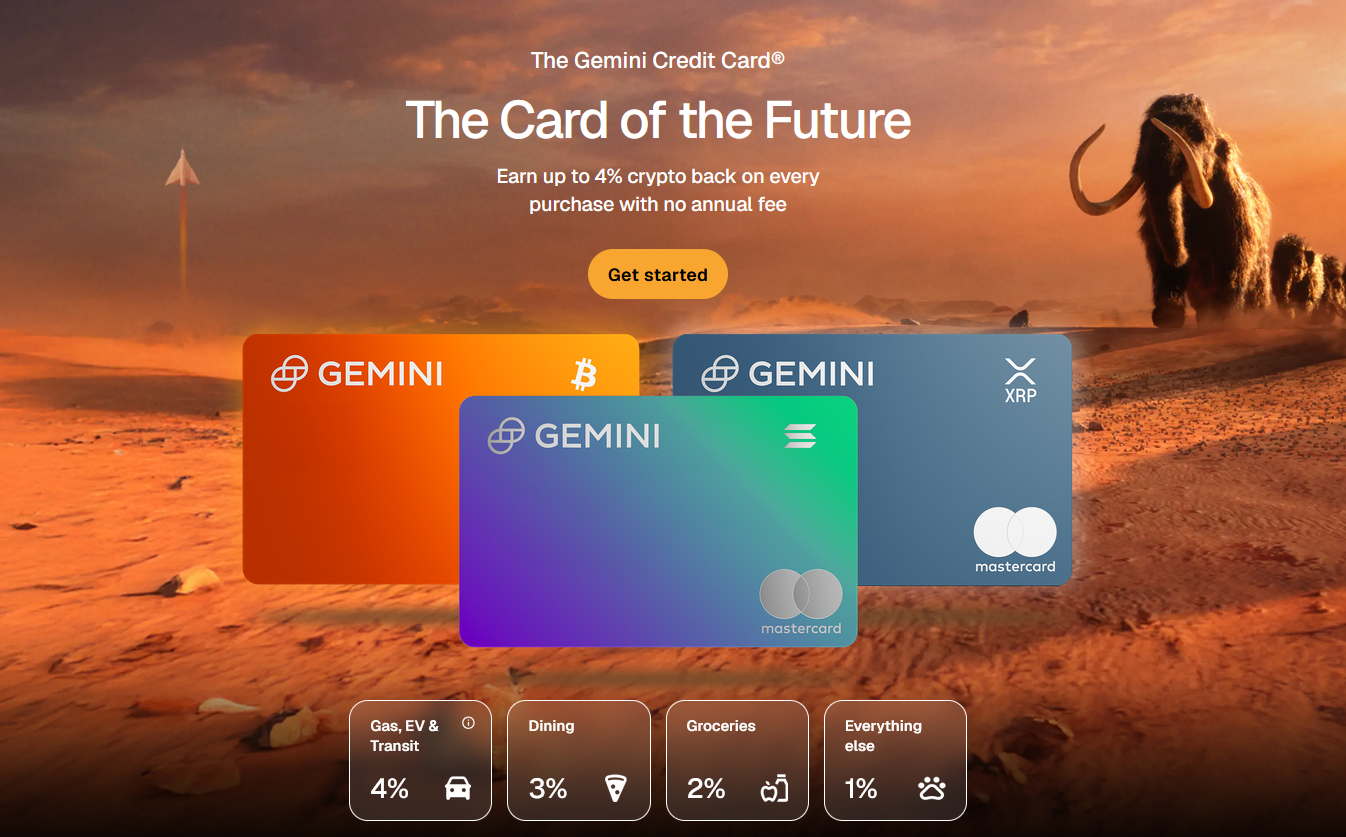
The Gemini Credit Card is a metal Mastercard World Elite credit card. It lets you earn cryptocurrency from your normal daily spending. You can pay for purchases in US dollars, just like a regular credit card, while Gemini deposits the rewards into your Gemini account. Plus, WebBank issues the card, so it is a real credit product and not a prepaid crypto debit card.
Now, the rewards structure is easy to understand. You basically earn 4% crypto back on qualifying gas, electric vehicle charging, and transit purchases. Well, this 4% rate applies to the first $300 spent in these categories each calendar month. Any further spending in the same category earns 1% for the rest of that month. The card also pays 3% back on dining, 2% on groceries, and 1% on other qualifying purchases.
You can choose Bitcoin or one of more than 50 supported cryptocurrencies as your reward. Gemini usually deposits rewards within minutes after you make a purchase, although hotel, rental car, online grocery, and even some gas station rewards may arrive after the transaction settles.
The card has no annual fee, no foreign transaction fee, and no exchange fee for receiving crypto rewards. But remember, it is only available to US residents.
Key Info: Availability, Rewards, Fees, etc.
- Card Type: Mastercard Credit Card (issued by WebBank).
- Requirements (Eligibility): You must be a United States resident and pass a standard credit check. You also need an active, approved Gemini exchange account.
- Rewards:
- 4% back on gas, EV charging, transit, and rideshares (capped on up to $300 spend per month, then drops to 1%).
- 3% back on dining.
- 2% back on groceries.
- 1% back on everything else
- Available Countries: Only available to residents in all 50 US states. It cannot be opened by people living outside the United States.
- Fees:
- $0 annual fee and 0% foreign transaction fees.
- No exchange fees to get your crypto rewards.
- Variable APR ranges from 18.49% to 34.49% based on credit check.
- Late payment fee is up to $8. Cash advance fee is $10 or 3% (whichever is higher).
3. Bybit Card: Best Crypto Debit Card With Low Fees
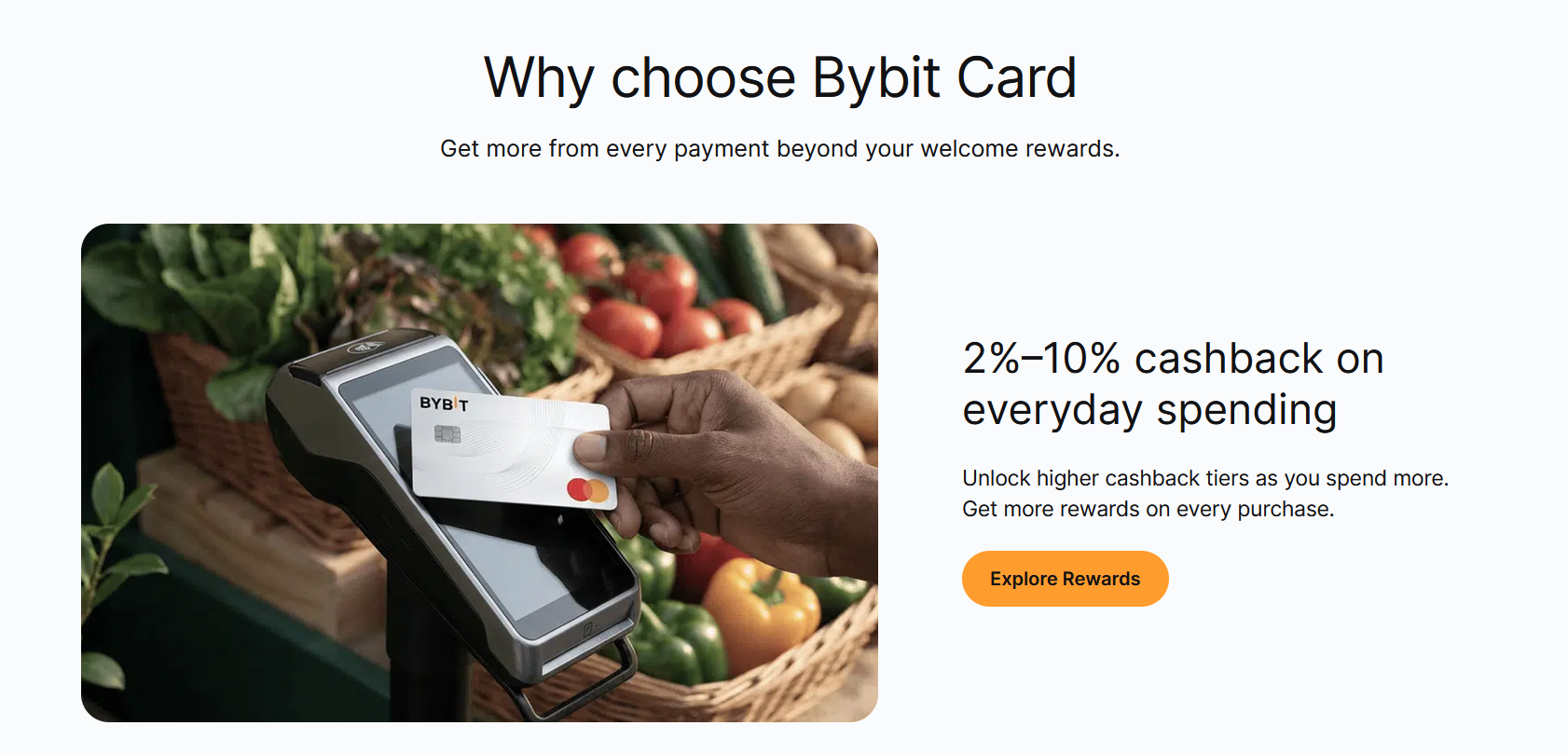
The Bybit Card is actually the best crypto debit card that lets you spend fiat money and supported cryptocurrencies from your Bybit Funding Account. It is not a credit card, so you do not borrow money or receive a monthly credit limit. Bybit provides a virtual card for online payments and a physical card for shops and ATM withdrawals.
Also, the card mainly uses your available fiat balance first. And when that balance is not enough, Bybit can convert supported crypto from your Funding Account to complete the payment. The regular reward rate starts at 2% and can reach 10%. Actually, it depends on your monthly spending tier or Bybit VIP level.
Key Features: Availability, Rewards, Fees, etc.
- Card Type: Mastercard Debit Card (Available as both an instant virtual card and a physical plastic card).
- Requirements (Eligibility): You must have a registered Bybit account and complete at least Identity Verification Level 1 (KYC) with a valid ID and proof of address.
- Rewards: You can easily earn between 2% to 10% cashback in reward points on everyday crypto purchases. These points can be changed to USDT or used to get shopping vouchers and rebates for subscriptions like Netflix and Spotify. Also, no rewards are given for ATM cash withdrawals or regular cash transfers.
- Available Countries: It is available in the United Kingdom, Australia, Argentina, Brazil, Mexico, Georgia, Kazakhstan, and several countries across the Asia-Pacific (APAC) region.
- Fees:
- Card Issuance: The virtual card is 100% free. The physical card costs a one-time fee depending on the region (e.g., $5 to $30 USD/USDT, or free in Mexico and Brazil). There are no annual or monthly maintenance fees.
- Crypto Conversion Fee: 0.5% to 0.9% whenever you spend crypto, and it converts to fiat cash.
- Foreign Exchange (FX) Fee: 1% to 2% if you spend money in a currency different from your card’s base currency (Argentina is higher at 7%).
- ATM Fee: First $100 USD (or local currency equivalent) per month is free, then a flat 2% fee applies to any extra withdrawals.
4. Coinbase Card: Top Cryptocurrency Card in the United States (USA)
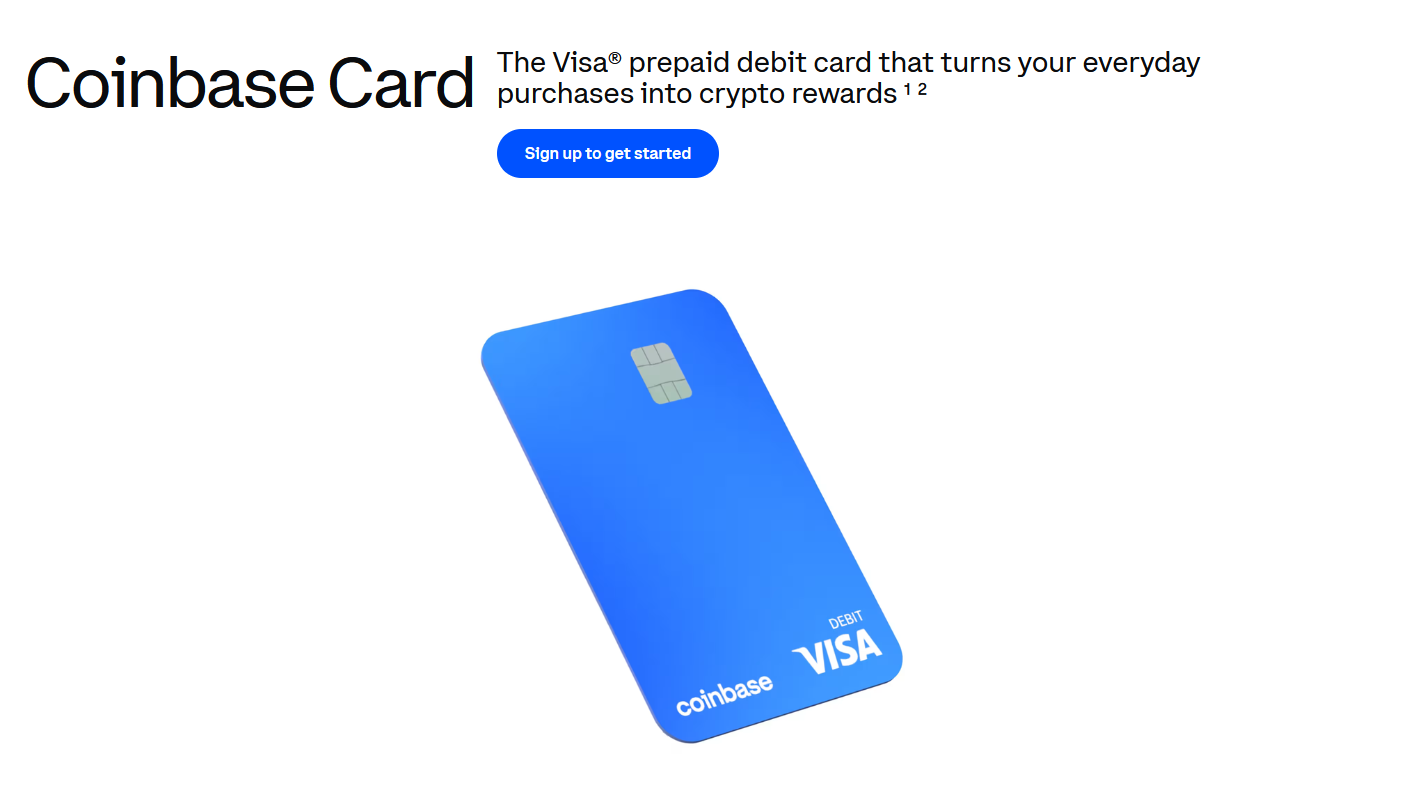
The Coinbase Card is a Visa debit card. This is also one of the best crypto debit cards that lets you spend US dollars, USDC, and supported cryptocurrencies from your Coinbase account. It is not a credit card, so you do not borrow money or receive a monthly credit bill. The card uses the available balance in your Coinbase account whenever you make a payment or withdraw cash.
Coinbase does not charge an application fee, transaction fee, or its own ATM withdrawal fee. Still, a spread applies when Coinbase buys, sells, or converts cryptocurrency. You can get crypto back as a reward when you buy things. You can pick what kind of crypto you want to earn, like Bitcoin or something else.
Note: There is also a Coinbase One credit card, but it is only for Coinbase One subscribers.
Key Insights: Availability, Rewards, Fees, etc.
- Card Type: Visa Debit Card (issued by Pathward, N.A.).
- Requirements (Eligibility): You must be at least 18 years old and have a valid, verified Coinbase account with full identity verification (KYC). Also, no credit check is required to get it.
- Rewards: Variable crypto back (up to 4% depending on which coin you choose to earn, but the rates change often). Currently, these rewards are only available for card users in the US.
- Available Countries: The United States (excluding Hawaii) and many European countries (including the UK, Austria, Belgium, France, Germany, Ireland, Italy, the Netherlands, Spain, and others).
- Fees:
- Issuance & Monthly Fee: $0 (It is totally free to get the card, and there are no monthly fees).
- Spending Fees: No card fee for spending US dollars or USDC, but spending other cryptos involves a standard Coinbase conversion spread fee (usually around 0.5%).
- Foreign Transaction Fee: Well, it’s normally 2.49% of the total amount if you use the card outside your country.
- ATM Fee: $2.50 for each withdrawal, plus whatever the ATM operator charges
5. MetaMask Card: Best Debit Card for Non-Custodial Crypto Spending
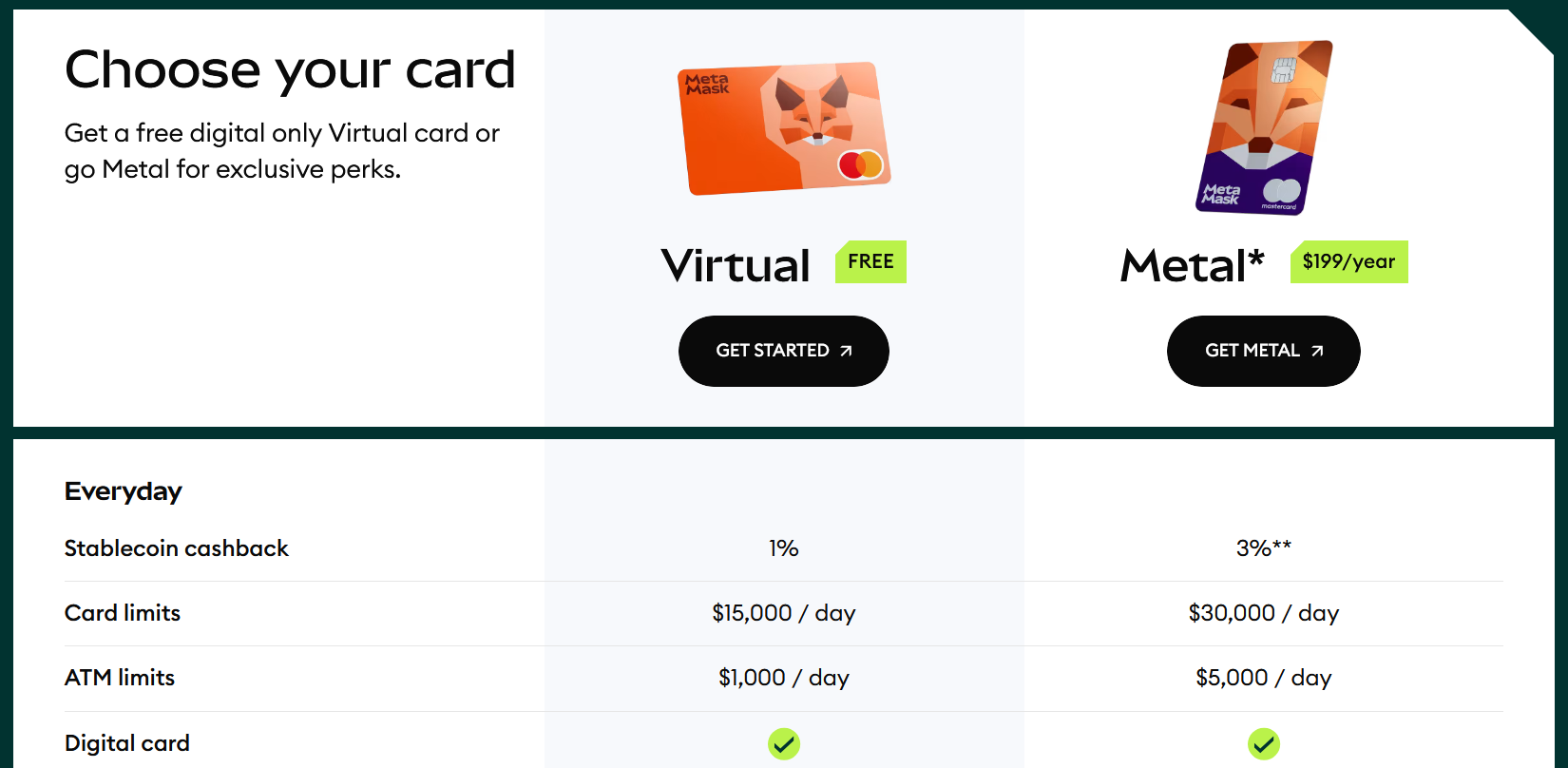
The MetaMask Card is the best cryptocurrency debit card that lets you spend assets directly from your self-custody MetaMask wallet. It works anywhere in the world where Mastercard is allowed, which is millions of places.
You can also easily add it to your Apple Pay or Google Pay to tap with your phone. Right now, it supports popular networks like Linea, Base, Monad, and Solana. It works with stablecoins like USDC and USDT, plus wrapped Ethereum (wETH).
MetaMask offers a free Virtual Card and a premium Metal Card. The Virtual Card gives you 1% back in mUSD on eligible purchases. The Metal Card gives 3% back on the first $10,000 spent each year and 1% after that. However, the Metal tier costs $199 per year.
Key features: Availability, Rewards, Fees, etc.
| Card type | Mastercard crypto debit card |
| Available versions | Free Virtual Card and premium physical Metal Card |
| Custody model | Self-custody; funds remain in your MetaMask wallet until payment |
| Credit check | No |
| Main requirements | Live in an eligible country, have a MetaMask wallet, provide an email and phone number, and complete KYC |
| Supported networks | Linea, Base, Solana, and Monad |
| Supported assets | mUSD, USDC, USDT, wETH, EURe, GBPe, aUSDC, amUSD, and aBasUSDC |
| Virtual Card rewards | 1% back in mUSD on eligible transactions |
| Metal Card rewards | 3% mUSD back on the first $10,000 spent yearly, then 1% |
| Virtual Card cost | $0 annual fee |
| Metal Card cost | $199 per year |
| Metal replacement fee | $99 |
| Stablecoin spending fee | Usually 0%, but certain foreign-currency stablecoin payments cost 0.5% |
| wETH and other crypto fee | 0.875% |
| Network fee | Small variable gas fee, normally around $0.01 |
| Virtual Card ATM fee | 2%, plus any ATM operator fee |
| Virtual Card cross-border fee | 1% |
| Metal Card ATM fee | Free up to $1,200 monthly, then 2% |
| Virtual Card spending limit | $10,000 per transaction and $15,000 per day |
6. Wirex Card: Top Pick for Crypto Card Cashbacks
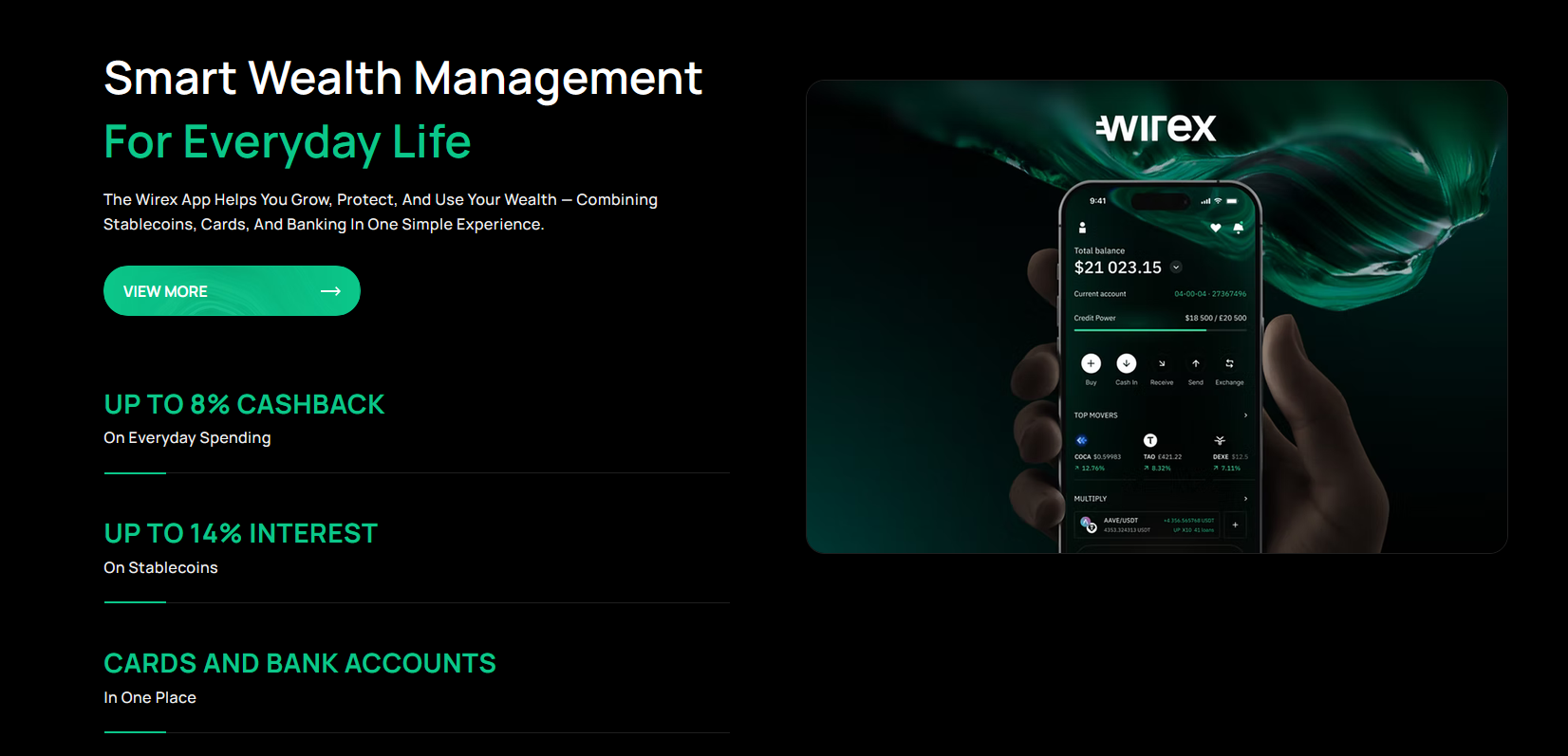
The Wirex card is a very popular crypto debit card that you can use for your everyday spending. You can get a virtual card for online purchases and mobile payments or order a physical card for shops and ATM withdrawals.
The card works anywhere its supported Visa or Mastercard network is accepted. Plus, you can also add the virtual card to Apple Pay or Google Pay. Well, the main benefit is Wirex Cryptoback. This gives you between 0.5% and 8% back on eligible card purchases. The exact rate depends on your Wirex X-tras plan and the amount of WXT tokens you lock. The free Standard Entry plan pays 0.5%, while the highest Elite Ultimate tier pays 8%.
Key Info: Availability, Rewards, Fees, etc.
| Card type | Crypto-enabled prepaid debit card |
| Card network | Visa or Mastercard, depending on region |
| Card formats | Physical and virtual cards |
| Eligibility | You must be at least 18, live in a supported country, open only one personal account, and complete identity verification |
| Documents required | Government-issued photo ID, valid phone number, personal details, and possible proof of address |
| Crypto rewards | 0.5% to 8% Cryptoback on eligible purchases |
| Reward currency | WXT, the Wirex Token |
| Free-plan reward | 0.5% Cryptoback under Standard Entry |
| Maximum reward | 8% with the Elite Ultimate tier |
| Reward exclusions | ATM withdrawals, top-ups, transfers, and certain merchant categories |
| Card issuance fee | Free |
| Monthly account fee | The standard plan is free |
| Premium plan | €9.99 monthly or €102 annually |
| Elite plan | €29.99 monthly or €306 annually |
| Foreign exchange fee | No separate FX fee on card purchases |
| ATM fee | Free within the monthly allowance, then 2% |
| ATM allowance | £200 in the UK, €200 in the EEA, A$400 in Australia, and equivalent regional limits |
| Physical-card delivery | Usually charged by region, such as £5 in the UK, €5 standard delivery in the EEA, and A$1 in Australia |
| Available countries | Selected EEA countries, the UK, Australia, New Zealand, Brazil, Argentina, Hong Kong, Taiwan, and other supported markets |
| Not currently available in | India, Singapore, the US, Canada, Japan, South Korea, the UAE, and several other countries |
7. Nexo Card: Crypto-Friendly Credit Card to Get Loans
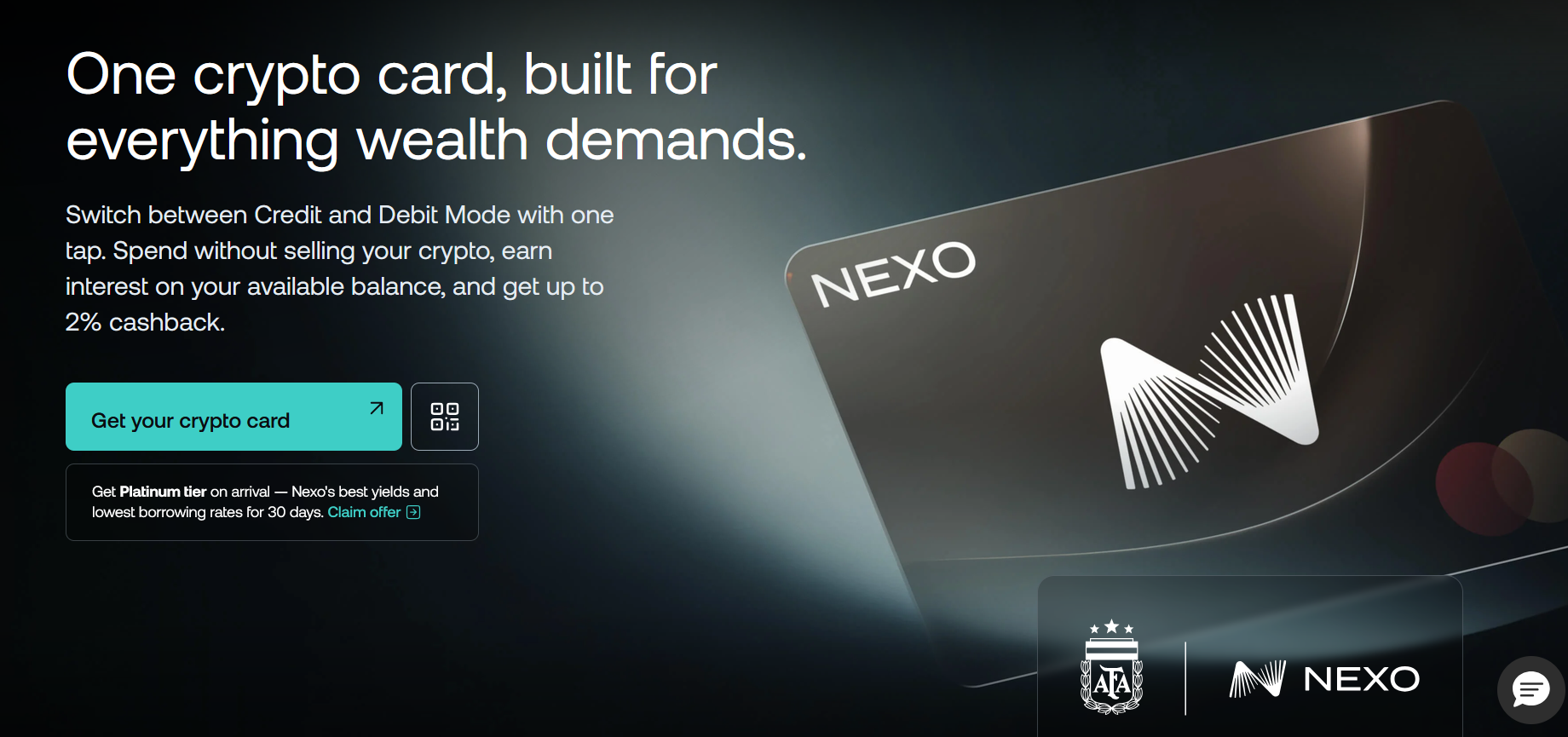
The Nexo Card is a dual-mode crypto Mastercard that lets you choose how you want to pay. Basically, you can use Credit Mode to borrow against your crypto without selling it, or switch to Debit Mode and spend the available assets in your Nexo account directly.
Credit Mode is the main attraction here. Your Bitcoin or other supported assets remain in your account and act as collateral for a Nexo Credit Line. The interest rate starts from 1.9% per year, although your actual rate depends on your Loyalty Tier, loan-to-value ratio, assets, and account terms. There is no fixed repayment schedule or traditional credit check.
You can activate a virtual Nexo Card after adding at least $50 to your account. However, the physical card requires a portfolio balance above $5,000 and at least the Gold Loyalty Tier. But yes, physical card delivery is free.
Key insights
| Card type | Dual-mode crypto Mastercard |
| Spending modes | Credit Mode and Debit Mode |
| Virtual card requirement | At least $50 in the Nexo account |
| Physical card requirement | More than $5,000 portfolio balance and Gold Tier or higher |
| Identity requirement | Completed Nexo Identity Verification |
| Credit check | No traditional credit check |
| Credit Mode interest | Starts from 1.9% per year |
| Maximum rewards | 2% in NEXO Tokens or 0.5% in BTC |
| Gold Tier rewards | 1% in NEXO Tokens or 0.3% in BTC |
| Reward mode | Cashback applies to eligible Credit Mode purchases |
| Available countries | Selected European countries, including the EEA and United Kingdom |
| Monthly fee | None |
| Annual fee | None |
| Inactivity fee | None |
| Physical card delivery | Free |
| Free ATM allowance | €200–€2,000 or £180–£1,800 monthly, based on tier |
| ATM fee after allowance | 2%, minimum €1.99 or £1.99 |
| Monthly purchase limit | Up to €60,000 or £54,000 |
| Monthly ATM limit | Up to €10,000 or £9,000 |
| Mobile payments | Apple Pay and Google Pay |
How to Pick a Top-Rated Crypto Card for Earning Rewards?
You must look at many small details before you sign up. If you want to find the best crypto credit cards, you need to check how the platform pays you back and what rules they have.
Here are the main criteria you need to look at before ordering a cryptocurrency card:
The Reward Token Type
You must check what kind of coin the platform uses to pay your cashback. You see, some cards give you cash back in popular coins like Bitcoin or Ethereum, whereas other cards force you to take their own special company tokens.
For example, Crypto.com gives rewards in CRO tokens, while Wirex uses WXT tokens. You must remember that company tokens can change in price very quickly. So, if the token price drops tomorrow, your 5% cash back might turn into 1% very fast. I always prefer crypto cards that let me choose stablecoins like USDC or USDT because they keep their value safe.
Staking and Locking Rules
You see, many companies will not give you high rewards unless you buy and lock up thousands of dollars of their own token for six months. You must ask yourself if you have that much extra money to lock away.
And if you do not want to lock up your money, you should search for the best credit cards for crypto rewards that do not have any staking rules. Well, crypto trading platforms like Nexo or Coinbase let you start earning rewards without holding huge amounts of their native coins.
Fee Structure and Hidden Costs
Generally, some crypto cards look amazing on the outside because they promise 8% cash back. But when you read the fine print, you find out they charge a 2% fee every time they change your crypto into cash at the store.
The company might also charge a monthly maintenance fee, an annual fee, or a high ATM withdrawal fee. You need to do the math carefully. If the fees are higher than the rewards you earn, you are eventually losing money on every single tap.
Spending Limits and ATM Rules
Every crypto card has limits on how much money you can spend per day or per month. Basically, if you plan to use your cryptocurrency card for big purchases like electronics or home furniture, a card with a low $2,000 monthly limit will obviously frustrate you.
You also need to look at the daily ATM withdrawal limits and see if they charge extra when you pull out physical cash.
Network Acceptability and Global Use
A crypto card is completely useless if local shops do not accept it. You must check if the card is powered by Visa or Mastercard.
Visa and Mastercard are accepted at millions of shops worldwide, making them the best crypto debit cards for global use. Hence, if a card uses a smaller, regional payment network, you will struggle to use it when you travel outside your country.
Country Support and Global Acceptance
A useful crypto card must work in your country and at the merchants you normally use.
Generally, card providers often use terms such as “global card,” but their products may only be available to residents of selected countries. A European card may support the European Economic Area but not the United States, Canada, India, or Australia. A U.S. card may not accept applications from users living outside the country.
You should check:
- Eligible countries and regions.
- Required proof of residence.
- Supported billing currencies.
- Visa or Mastercard acceptance.
- Apple Pay or Google Pay support.
- International ATM access.
- Foreign exchange charges.
- Overseas transaction limits.
The best crypto debit cards for global use should provide wide merchant acceptance, fair currency conversion, useful daily limits, and support in the countries where you live or travel.
You should also confirm whether the physical and virtual cards have the same regional availability. Sometimes, some providers offer a virtual card first but do not deliver the physical version to every supported market.
Read more guides:
What is a Crypto Credit Card and Debit Card?
A crypto credit card and debit card are payment cards that connect traditional card networks with a cryptocurrency exchange, wallet, reward account, or digital asset balance.
A crypto credit card works like a standard credit card. The issuer gives you a credit limit, and you repay the borrowed amount later. You usually pay the bill in fiat currency and receive cryptocurrency as cashback.
A crypto debit card uses money or crypto already held in your account. The provider may deduct fiat directly or sell enough cryptocurrency to complete the purchase.
Note: The merchant does not normally receive Bitcoin or another cryptocurrency. Visa, Mastercard, or another payment network settles the transaction in regular fiat currency. The crypto conversion takes place through the card provider.
| Feature | Crypto Debit Card | Crypto Credit Card |
| Source of Funds | Your own crypto balance | A bank’s credit line |
| Credit Check Needed | No credit check | Yes, requires a credit check |
| Risk of Debt | Low (You can only spend what you have) | High (You owe money at the end of the month) |
| Tax Trigger Time | Instantly at every swipe | Only when you sell crypto to pay the bill |
| Best For | Daily casual spending and quick setups | Building credit scores and holding long-term crypto |
How Do Cryptocurrency Cards Work?
Cryptocurrency cards work by connecting your card payment with a fiat balance, cryptocurrency account, credit line, or crypto-backed loan.
The complete payment process usually follows these steps:
- The Tap: You need to slide or tap your crypto card at a regular merchant payment terminal.
- The Network Check: The merchant’s machine sends a message to Visa or Mastercard to check if you have enough funds.
- The Smart Conversion: Now, if you are using the best crypto friendly debit cards, the platform instantly calculates how much Bitcoin or stablecoin matches the exact cash price of your purchase.
- The Internal Swap: The card company sells that exact amount of crypto on their internal exchange right away to turn it into local fiat cash (like USD or Euros).
- The Settlement: The card company sends the fiat cash to the merchant, and the merchant finishes the sale normally without ever touching actual crypto.
Types of Crypto Card Rewards
- Fixed Cashback Rewards: You can earn a flat percentage (e.g., 1%–2%) on all eligible purchases, regardless of category.
- Category-Based Rewards: There are even higher cashback rates on specific spending categories like groceries, fuel, or travel.
- Tiered Rewards: Cashback increases based on account balance, spending level, or holding platform tokens.
- Selectable Crypto Rewards: You can easily whoose which cryptocurrency (e.g., BTC, ETH, stablecoins) you want to receive as cashback.
- Platform-Token Rewards: Here, you can earn rewards in the card provider’s native token, but yes, often with higher rates but added price risk.
- Welcome Bonuses & Perks:These are mainly limited-time offers like boosted cashback, sign-up bonuses, or lifestyle benefits such as travel perks.
Top Crypto Card Benefits
Here are the top crypto card benefits you get when you start using one:
- Automatic Crypto Accumulation: You can build a large crypto portfolio over time without even thinking about it. Every little purchase like gas, coffee, or movie tickets adds a few satoshis or token fractions to your account balance.
- High Conversion Fees: Well, if you try to sell crypto on a normal exchange and send it to a traditional bank, you will face massive fees and long waiting days. Crypto cards remove this friction entirely. They let you spend your crypto value directly in the real world with very low conversion costs.
- Awesome Travel Perks: Many of the best crypto debit cards for global use are built for people who travel to different countries. They use the official Visa or Mastercard wholesale foreign exchange rates. Hence, this means you do not get ripped off by bad bank exchange rates when you buy things abroad. Some high-tier cards even give you free airport lounge access and free international ATM withdrawals.
- Premium Metal Designs: Many crypto companies love to give their users beautiful, heavy metal cards. These cards look very high-end and luxurious when you pull them out at a restaurant. For example, cards like the MetaMask Metal card or the high-tier Crypto.com Visa cards are made from solid steel and look incredible compared to boring plastic bank cards.
- Access Liquidity Without Selling: If you use a hybrid credit card like Nexo, you can get instant cash power without selling your precious Bitcoin or Ethereum. The platform lets you borrow fiat money against your crypto tokens as security.
How Do Taxes Work with Crypto Cards?
You must be very careful about taxes when you start using a crypto card. You see, nowadays, governments have become incredibly strict, and new rules like the DAC8 directive in Europe and Form 1099-DA in the U.S. mean tax authorities see everything.
Rules in the United States (IRS)
The IRS treats cryptocurrency as property, not as real money. So, every time you use your best crypto debit card to buy an item, it is treated as a taxable sale (disposition).
- Short-Term Capital Gains: If you held the crypto for one year or less before spending it, your profit is taxed at your regular ordinary income tax rate, which ranges from 10% to 37%.
- Long-Term Capital Gains: If you held the crypto for more than a year before spending it, you pay lower preferential tax rates of 0%, 15%, or 20% depending on your income.
- The 1099-DA Rule: Starting in 2026, custodial card issuers are mandated to report both gross proceeds and cost basis directly to the IRS using Form 1099-DA. Even a small $4 coffee swipe is a reportable event, as the IRS does not provide any minimum exemption for small crypto purchases
How to Use Cryptocurrency Credit and Debit Cards for Daily Spending?
Step 1: Check Country Eligibility
You need to start by confirming that your best crypto card is available to residents of your country. Basically, check the supported countries, minimum age, identity requirements, card delivery area, billing currencies, and physical card fee. You should also confirm whether the same crypto card benefits apply in your region.
Step 2: Create and Verify Your Account
Now, you can open an account through the provider’s official app or website.
Most providers require your legal name, date of birth, phone number, residential address, government-issued identification, and a selfie. Plus, some may also request proof of address or information about your income and source of funds.
Note: A true credit card may require a credit check. A debit or prepaid card normally focuses on identity and compliance checks.
Step 3: Activate the Virtual or Physical Card
The provider may issue a virtual card immediately after approval. You can use the best crypto virtual card for online purchases or add it to Apple Pay or Google Pay. The physical card needs to be activated after delivery, and you may need to create a PIN.
Step 4: Fund the Card Account
Next, you should add money or crypto through one of the supported methods. You may use a bank transfer, debit card deposit, crypto transfer, stablecoin deposit, or existing exchange balance. A crypto credit card does not normally require pre-funding, but you still need a repayment method.
Step 5: Choose Your Spending Asset
You have to select the cryptocurrency, stablecoin, or fiat balance that the card should use. The rule is, I would keep long-term Bitcoin separate and use fiat money or stablecoins for daily spending.
Step 6: Review the Fees and Exchange Rate
Now, go ahead and check the card’s crypto spread, foreign exchange fee, ATM charge, and transaction limits.
To be clear, you can even make a small test purchase first, and compare the market value of the crypto sold with the final purchase amount. This shows the real conversion cost.
Step 7: Use the Crypto Card at Regular Merchants
You can normally use the card anywhere its Visa or Mastercard network is accepted. Common purchases include:
- Groceries and household items.
- Fuel and transport.
- Restaurant bills.
- Online shopping.
- Mobile and utility bills.
- Travel bookings.
- Streaming subscriptions.
The merchant receives fiat currency, while the card provider handles the crypto conversion.
Step 8: Repay Credit Card Bills in Full
You have to set up automatic payment for the full monthly statement when you use your best crypto credit card. Generally, a 2% or 4% crypto reward cannot cover a high credit card interest rate. Carrying debt can remove the complete value of your cashback.
How to Earn Crypto Cashback With a Debit Card?
- Select a Card With a Useful Reward: You need to compare the normal cashback rate instead of choosing the largest welcome offer. So, just check the reward coin, monthly cap, token requirement, subscription charge, and spending exclusions. A simple 2% Bitcoin reward may provide better value than 6% in a risky platform token.
- Choose the Crypto You Want to Earn: You need to select a reward asset that fits your plan. Bitcoin can work for long-term accumulation, Ethereum may suit users building a wider crypto portfolio, and stablecoins can provide a more stable reward value.
- Fund the Card With a Low-Cost Asset: You should add fiat money or a supported stablecoin when possible. Spending a stable balance can reduce price changes during payment. It may also make your records easier (for tax) than selling small parts of Bitcoin several times per day.
- Activate the Cashback Programme: You see, some providers enable rewards automatically, while others require you to join a programme, select a reward asset, or choose a membership level. You have to read the terms before activating a paid plan. Calculate the yearly subscription against the extra cashback you expect to earn.
- Use the Card for Eligible Daily Purchases: Pay for normal budgeted expenses such as groceries, fuel, dining, transport, subscriptions, and online shopping. Do not spend extra money only to earn crypto. A 3% reward still means you lose 97% of the unnecessary purchase amount. You should also check the excluded merchant list before using your best cryptocurrency debit card for insurance, taxes, rent, gambling, financial services, or money transfers.
- Use Higher-Reward Categories First: Move your largest eligible expenses into the categories that provide extra rewards. Suppose your card offers 4% on groceries, 3% on fuel, and 1% on other purchases. Use it first for groceries and fuel, but compare the 1% base rate with your other cards. Merchant category codes decide the final cashback. Review the reward after your first purchase from each major merchant.
- Stay Within the Cashback Cap: A crypto card may offer 5% cashback on the first $500 of monthly spending and only 1% after that. In this case, the maximum higher-rate reward is $25. You can switch to another suitable best cryptocurrency card after reaching the cap.
Conclusion: Credit Cards that Accept Cryptocurrency
In a nutshell, the best crypto credit cards make it super easy to earn Bitcoin, Ethereum, stablecoins, or other digital assets from your everyday shopping.
These credit cards are perfect if you want to grow your crypto portfolio without selling the coins you already have. But you must always pay off your full balance every month. If you don’t, high interest fees will quickly eat up all the cashback value you earned.
Crypto debit cards work a bit differently because you spend the cash or crypto that is already sitting inside your account. The top crypto debit cards automatically change your chosen crypto into local cash right when you buy things, pay bills, book travel, or take money out of an ATM.
Even so, you should always check the conversion rates, ATM fees, reward limits, supported coins, tax rules, and if you need to hold the platform’s own token before you pick a card.
Hence, a cryptocurrency credit card is usually better if your main goal is just earning free rewards without selling any of your crypto. On the other side, a cryptocurrency debit card is great if you want to spend stablecoins or use the balance you already have on an exchange.
FAQs
What are the best cryptocurrency credit cards in 2026?
The Gemini Credit Card and the Nexo Card are two of the best crypto credit card choices you can find right now. The Gemini card is great for beginners because you can earn up to 3% rewards in over 50 different cryptos instantly, and you do not have to pay any annual fees. The Nexo Card is different because it is a hybrid card. Well, this means you can switch between a normal debit card and a crypto credit line with just one tap inside their mobile app.
What are the top crypto card benefits right now?
The top crypto card benefits are high interest rates on stablecoins, safe non-custodial security, and no extra fees when you travel and spend money abroad. Plus, new crypto cards let the money in your account earn up to 10% interest while it just sits there. Also, Web3 cards like MetaMask Card make sure you hold onto your own crypto until the exact second you pay for something at a shop.
Are cryptocurrency cards safe?
Yes, crypto cards are very safe to use. These cards are made together with big networks like Visa and Mastercard, so they use the same high-level security as normal banks. They also have two-factor authentication, quick card blocking features in the app, and live fraud tracking. Plus, if you choose a non-custodial card, your crypto is even safer because it is protected by smart contracts on the blockchain.
Can I buy groceries and fuel with my crypto debit card?
Yes, you can use your Bitcoin card at any grocery shop, supermarket, or petrol pump that takes normal Visa or Mastercard. The shop’s card machine reads it just like a regular bank card. The crypto app changes your digital coins into local cash instantly in the background, so the shop owner gets paid normally and you do not have to do any extra steps.
What cryptocurrencies do these credit and debit cards support?
You can easily spend main coins like Bitcoin and Ethereum, or top stablecoins like USDC and USDT. Some advanced multi-chain cards even let you use hundreds of different altcoins on popular networks like Solana, Base, Linea, and Polygon, so you can choose exactly which coin you want to shop with.